
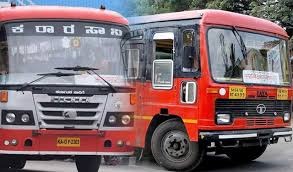
LANGUAGE DISPUTE BETWEEN MAHARASHTRA AND KARNATAKA
ABSTRACT
The long-standing language dispute between Maharashtra and Karnataka, centered around the Belagavi region, represents one of India’s most complex and enduring inter-state conflicts. Rooted in the States Reorganisation Act of 1956, the dispute arose when Belagavi—despite having a significant Marathi-speaking population—was merged with Karnataka (then Mysore). Maharashtra has since claimed that this inclusion ignored linguistic demographics and violated the principles of reorganization. Over the decades, the conflict has evolved beyond legal petitions into a larger cultural and political battle, marked by regional pride, symbolic assertion, and, at times, violent confrontations.
Recent events have reignited tensions—Maharashtra Navnirman Sena (MNS) has intensified its campaign for Marathi linguistic primacy, while Kannada groups in Karnataka have staged protests against what they perceive as Hindi and Marathi imposition, even defacing signboards and targeting non-Kannada speakers. These actions underscore the emotional charge surrounding language and identity in India’s federal framework.
This paper examines the historical evolution, legal framework, judicial inaction, and societal impact of the dispute, while highlighting the growing role of political mobilization and linguistic chauvinism. It concludes with practical suggestions rooted in constitutional values, aimed at resolving the conflict through dialogue, empathy, and cooperative federalism.
KEYWORDS
Language Dispute, Belagavi, Maharashtra, Karnataka, Linguistic Identity, MNS, Anti-Hindi, Federalism.
INTRODUCTION
India’s linguistic diversity has been both its strength and a source of recurring tension. With 22 official languages recognized in the Eighth Schedule of the Constitution and hundreds of regional dialects, language is not merely a tool of communication—it is deeply tied to regional identity, cultural pride, and political agency. Among the many linguistic conflicts that have shaped modern India, the ongoing dispute between Maharashtra and Karnataka over the Belagavi (formerly Belgaum) region stands out for its longevity, emotional intensity, and unresolved legal status.
The roots of this dispute can be traced back to the States Reorganisation Act, 1956, which reorganized India’s state boundaries based primarily on linguistic demographics. Before this reorganization, Belagavi was part of the Bombay State, which comprised both Marathi- and Kannada-speaking areas. When states were restructured, the States Reorganisation Commission (SRC) recommended that Belagavi be merged into Mysore (now Karnataka), citing administrative efficiency and economic integration, despite its significant Marathi-speaking population.
Maharashtra objected, claiming that areas like Belagavi, Karwar, and Nipani had a clear Marathi linguistic and cultural majority and should have been merged into Maharashtra instead. This territorial and cultural claim has been a point of contention ever since, with Maharashtra consistently asserting its rights, passing annual resolutions in the state assembly, and forming dedicated government cells to address the issue.
Karnataka, on the other hand, maintains that the region was lawfully included within its borders and has since invested heavily in infrastructure and governance in Belagavi. The construction of the Suvarna Vidhana Soudha in Belagavi as a secondary legislative seat is seen as a strong symbolic statement of Karnataka’s commitment to the region.
Tensions have escalated over the decades, with sporadic incidents of violence, linguistic discrimination, and street-level clashes. Political outfits such as the Maharashtra Navnirman Sena (MNS) have launched aggressive campaigns demanding the enforcement of Marathi in public spaces across Maharashtra, while Kannada groups in Karnataka have engaged in anti-Hindi protests, blacking out Hindi signboards and confronting migrant workers. These actions have contributed to a climate of cultural hostility, where linguistic identity is used to justify exclusion and even violence.
Despite the passage of time, the dispute remains legally unresolved. Maharashtra filed Original Suit No. 4 of 2004 in the Supreme Court under Article 131, seeking judicial
resolution over the status of Belagavi and adjoining areas. The case remains pending, further compounding the issue and encouraging political exploitation on both sides.
This paper aims to present a comprehensive view of the Maharashtra-Karnataka language dispute by examining its historical origins, legal basis, political developments, and societal implications. In doing so, it also attempts to offer viable solutions rooted in cooperative federalism, constitutional morality, and linguistic pluralism.
RESEARCH METHODOLOGY
The research methodology adopted in this paper is doctrinal, analytical, and qualitative. It combines traditional legal research with contemporary socio-political analysis, allowing for a holistic understanding of the Maharashtra-Karnataka language dispute. This approach ensures not only a deep dive into legal frameworks but also the integration of lived realities, public sentiment, and recent developments.
1. Doctrinal Legal Analysis :-
The paper relies heavily on primary legal sources such as the Indian Constitution, States Reorganisation Act, 1956, Supreme Court case laws, and parliamentary records. Key constitutional provisions such as Articles 3, 131, 19, 29, and 30 are critically examined to assess the legitimacy of the claims made by both states and the corresponding rights of linguistic minorities.
Article 131 is central to the ongoing legal dispute, as Maharashtra filed an original suit under this article challenging Karnataka’s administrative control over Belagavi and nearby Marathi-majority areas.
Articles 29 and 30 are crucial for understanding the cultural and educational rights of linguistic minorities, particularly Marathi speakers in Karnataka and Kannada speakers in Maharashtra.
Judgments such as T.M.A. Pai Foundation (2002) and State of Karnataka v. Union of India (1977) provide judicial interpretation of state rights, federal duties, and minority protections, and have been cited wherever applicable.
2. Historical and Policy Research :-
To understand the roots of the conflict, the methodology includes an analysis of historical documents, most notably the States Reorganisation Commission Report (1955). The report’s recommendations form the foundation of the present administrative map of India. Its rationale for assigning Belagavi to Karnataka—based on geography and economy rather than linguistic majority—forms the basis of Maharashtra’s grievance.
Further, debates from the Lok Sabha and Rajya Sabha archives post-1956 have been reviewed to understand the political context in which these decisions were made. These historical insights provide a backdrop against which the present tensions can be analyzed.
3. Qualitative Research on Socio-Political Trends :-
While doctrinal research forms the backbone of the paper, qualitative research has been used to bring in recent real-world developments, public sentiment, and political mobilization. News reports, political manifestos, and social media statements from organizations such as Maharashtra Navnirman Sena (MNS) and Kannada Rakshana Vedike have been referenced to understand the evolving ground realities.
This qualitative lens allows for a more humanized account of how language politics affect ordinary citizens—whether it’s a Hindi-speaking cab driver harassed in Bengaluru or a Marathi school underfunded in Belagavi.
4. Use of Comparative Case Studies :-
Comparative federal disputes such as the Assam-Nagaland border conflict and the Telangana-Andhra Pradesh bifurcation were briefly reviewed to understand how identity-driven disputes have been managed in India. These comparisons offer insight into best practices and judicial responses to similar challenges in federalism and can help frame policy recommendations for resolving the Maharashtra-Karnataka dispute.
5. Citation and Referencing Standard :-
All legal and factual content has been cited following the 20th edition of the Harvard Bluebook. Footnotes are included at the end of each major section in accordance with the preferred citation style for law research. This ensures academic rigor and transparency in source use while keeping the research accessible and reader-friendly.
REVIEW OF LITERATURE
The Maharashtra-Karnataka language dispute has received scholarly attention across disciplines including constitutional law, political science, history, and linguistics. While much of the early literature focuses on the historical context and legal underpinnings of the dispute, more recent studies delve into its socio-political consequences, particularly the rise of regionalism and linguistic identity-based mobilization.
This review categorizes the literature into key themes for clarity and depth.
1. Linguistic Identity and Federalism :-
Paul R. Brass, in his foundational work Language, Religion and Politics in North India, argues that language, much like religion, serves as a powerful tool for identity assertion and mass mobilization in India. He explains how regional leaders often weaponize linguistic pride to gain electoral traction, especially in states with contested cultural boundaries.
Granville Austin, in his constitutional analysis, emphasizes that while the Indian Constitution attempts to preserve diversity, it also embeds unitary features that can suppress regional aspirations if not handled with sensitivity. Austin’s work helps frame the linguistic dispute within the delicate balance of federalism and unity.
2. Historical-Political Perspectives on State Reorganisation :-
A.G. Noorani’s seminal article, The Belgaum Dispute: A Study in State Politics, examines the administrative decisions and political motivations behind the 1956 reorganization. He argues that Belagavi’s inclusion in Karnataka was not merely a linguistic decision but also a politically expedient one. Noorani criticizes successive governments for failing to address the region’s demands, allowing resentment to fester.
Similarly, B.L. Shankar and Valerian Rodrigues discuss in The Indian Parliament: A Democracy at Work how the legislature has historically avoided direct intervention in inter-state disputes, including the Belagavi issue. This has led to a legal-political vacuum,
enabling regional parties like MNS and linguistic outfits in Karnataka to dominate public discourse.
3. Cultural Assertion and Political Violence :-
Suhas Palshikar, writing in the Economic and Political Weekly, tracks the evolution of linguistic regionalism in Maharashtra and Karnataka. He observes that while language was initially used as a tool of inclusion and empowerment, it is now increasingly being employed to exclude and stigmatize “outsiders”, especially migrant workers and linguistic minorities.
Palshikar argues that identity politics around language has become a form of “soft violence” that legitimizes more explicit forms of vigilantism, hate speech, and cultural policing — patterns clearly visible in recent events involving signboard blackouts and physical attacks on Hindi-speaking citizens.
4. Institutional Responses and Judicial Review :-
The Sarkaria Commission Report (1988) is another significant reference point. Tasked with reviewing Centre-State relations, the commission emphasized the need for cooperative federalism and recommended the Inter-State Council as a platform for resolving such disputes. However, the Council remains underutilized, particularly in the context of the Maharashtra-Karnataka dispute.
Academic reviews of judicial behavior also note that the Supreme Court has historically taken a cautious approach in inter-state disputes, fearing political backlash. While this strategy may preserve judicial neutrality, it often leaves critical federal questions — like the status of Belagavi — unresolved for decades.
5. Gaps in Literature and the Way Forward :-
While extensive work has been done on the origins and constitutional aspects of linguistic disputes, there is a noticeable lack of recent, case-based documentation of violence, discrimination, and administrative bias stemming from such conflicts. This research paper attempts to bridge that gap by incorporating real incidents, legal analysis, and current political narratives into a single cohesive framework.
METHOD
This section uses a doctrinal and thematic legal methodology to analyze the linguistic dispute. It brings together constitutional provisions, judicial precedents, state practices, and real-world incidents, offering both legal insight and a human lens. Each theme is supported by relevant case laws and incidents that highlight the evolving nature of the dispute.
1. Constitutional Jurisdiction: Article 131 and Original Suits :-
The dispute between Maharashtra and Karnataka primarily hinges on Article 131 of the Constitution, which grants the Supreme Court original jurisdiction in conflicts between states. In Original Suit No. 4 of 2004, Maharashtra challenged Karnataka’s control over Belagavi and nearby Marathi-speaking areas. This legal challenge remains pending, with no resolution for nearly two decades.
Relevant Case Law:
State of Karnataka v. Union of India, (1977) 4 SCC 608: The Supreme Court here addressed whether a state could challenge the Union’s actions under Article 356. While it wasn’t about language, the case reaffirmed state autonomy and judicial oversight in federal disputes. It underlines that inter-state disagreements deserve prompt constitutional attention.
State of Maharashtra v. State of Karnataka, Original Suit No. 4 of 2004: This is the central ongoing legal dispute in the case. Filed under Article 131, it has languished in procedural delays, aggravating public mistrust and fueling agitation on both sides.
2. Language and State Reorganisation:-Historical and Policy Backdrop
The States Reorganisation Act, 1956, guided by the States Reorganisation Commission (SRC) Report of 1955, reorganized Indian states largely on linguistic lines. Despite its
significant Marathi-speaking population, Belagavi was placed in Karnataka, reportedly for economic and geographic coherence.
Relevant Case Law and Reference:
States Reorganisation Act, 1956: Legally sanctioned the inclusion of Belagavi in Karnataka, becoming the statutory root of the dispute.
SRC Report, 1955: Acknowledged the linguistic complexity of Belagavi but prioritized administrative feasibility over cultural homogeneity—sparking decades of protest from Maharashtra.
3. Educational and Linguistic Minority Rights :-
Linguistic minorities in border regions often struggle with cultural preservation, curriculum representation, and administrative bias. In this context, Article 30(1) of the Constitution becomes critical, guaranteeing linguistic minorities the right to establish and run educational institutions.
Relevant Case Law:
T.M.A. Pai Foundation v. State of Karnataka, (2002) 8 SCC 481: This landmark case affirmed the autonomy of linguistic and religious minorities in managing educational institutions. It becomes directly applicable in Belagavi, where Marathi schools have alleged biased treatment and Kannada-speaking institutions face pushback in Maharashtra. The ruling safeguards minority-run institutions from discriminatory regulation.
4. Violence and Public Sentiment: Ground-Level Impacts :-
Language-based conflict has spilled onto the streets. The politicization of linguistic identity has led to numerous cases of violence, harassment, and exclusion—particularly involving Hindi-speaking migrants and Marathi-speaking minorities.
Recent Examples:
In Bengaluru (2022), a Hindi-speaking taxi driver was physically assaulted by local residents for not responding in Kannada.
In Pune (2023), shopkeepers and street vendors were attacked for not displaying signage in Marathi, reportedly instigated by MNS workers.
Marathi schools in Belagavi have reported reduced funding and cultural suppression, while Kannada speakers in Maharashtra allege social marginalization.
These incidents demonstrate that the issue is no longer limited to inter-governmental discourse—it has become deeply personal and dangerously public.
5. Political Symbolism and Legislative Maneuvering :-
Both states continue to use symbolic gestures to reinforce their respective claims. Karnataka has declared Belagavi its “second capital”, holding winter legislative sessions there. Maharashtra, in turn, has formed a Belgaum Cell and passes annual resolutions asserting its claim over the district.
Constitutional Concern:
While such gestures may not have binding legal force, they influence public perception and deepen the emotional divide. This symbolic tug-of-war diverts focus from practical solutions like cultural coexistence, administrative collaboration, or judicial resolution.
Constitution of India, art. 131.
SUGGESTIONS
The language dispute between Maharashtra and Karnataka is multifaceted, involving legal ambiguities, political rhetoric, historical grievances, and growing social unrest. Addressing this issue requires not only judicial action but a coordinated, human-centered approach grounded in constitutional values and federal cooperation. The following multi-tiered suggestions aim to bridge the linguistic divide:
1. Expedited Supreme Court Intervention with Time-Bound Hearings:-
The Supreme Court must prioritize the pending suit filed by Maharashtra under Article 131. The delay has led to a governance vacuum in Belagavi and given rise to local tensions. A dedicated constitutional bench should be constituted to hear inter-state disputes with a strict timeline, ensuring swift justice and limiting political exploitation of judicial inaction.
2. Creation of a Linguistic Harmony Commission (LHC):-
A new central statutory body, the LHC, should be empowered to study and resolve linguistic disputes across states. Unlike the Inter-State Council, this commission should have quasi-judicial powers, enabling it to mediate and recommend enforceable measures. It should also monitor incidents of language-based violence and submit annual reports to Parliament.
3. Framing a Model Law on Language Rights:-
A “Model State Language Rights Act”, drafted by the Law Commission, could be adopted by individual states to protect linguistic minorities. It can include provisions for equal signage, educational rights, and grievance redressal for communities facing discrimination based on language.
4. Inclusion of Linguistic Discrimination under Hate Speech Laws:-
The Indian Penal Code currently addresses communal hate speech but not linguistic hostility explicitly. A new section (e.g., Section 153C) should criminalize incitement of violence or hatred on linguistic grounds. This becomes crucial in light of recurring attacks on Hindi-speaking migrants in Maharashtra and Marathi minorities in Karnataka.
5. Bilingual Education Mandates in Border Districts:-
In districts like Belagavi, bilingual education policies should be made mandatory. Every school must offer both Marathi and Kannada as medium-of-instruction options. Teachers from both linguistic backgrounds should be equally recruited, and cultural syllabi should reflect dual traditions to foster inter-community respect.
6. Cross-Border Cultural Fellowship Programs:-
Ministries of Culture and Education should jointly sponsor cultural fellowships, allowing artists, students, and educators from Maharashtra and Karnataka to spend semesters in each other’s states. These exchanges can build empathy, dismantle stereotypes, and promote dialogue through soft diplomacy.
7. Electoral Accountability and Legal Sanctions Against Hate Rhetoric:-
Political parties have frequently weaponized language for electoral gains. The Election Commission of India should amend the Model Code of Conduct to include language-based hate speech under ‘corrupt practices’. Repeat offenders must be barred from contesting elections under Section 8 of the Representation of the People Act, 1951.
8. State Human Rights Cells for Language-Based Complaints:-
State Human Rights Commissions should establish special language rights cells to handle complaints of linguistic discrimination. These bodies should coordinate with police departments to ensure FIRs are registered for violence based on linguistic identity, particularly in conflict-prone zones like Mumbai, Belagavi, Bengaluru, and Nashik.
9. Dedicated Linguistic Ombudsman in Conflict Regions:-
Appointing a Linguistic Ombudsman for regions with substantial linguistic minorities can help resolve complaints related to government service delivery, signage, education, and discrimination. This ombudsman should have powers akin to a Lokayukta and be directly accountable to the state legislature.
10. Inter-State Language Integration Summits:-
The Ministry of Home Affairs should organize annual Inter-State Language Summits, bringing together language experts, bureaucrats, and youth leaders from states facing linguistic tension. These platforms can be used to share best practices, draft cooperative MOUs, and celebrate multilingualism as a national asset.
CONCLUSION
The Maharashtra-Karnataka language dispute reflects the deep entanglement of linguistic identity, regional politics, and federal structure in India. What began as a post-reorganization territorial disagreement over Belagavi has now grown into a broader cultural conflict, often spilling into public unrest and administrative friction.
Despite constitutional remedies such as Article 131The dispute remains unresolved for decades. The lack of judicial expediency and minimal political engagement has allowed regional outfits like MNS and Kannada groups to dominate the narrative, often resorting to linguistic vigilantism—from forced signboard changes to public harassment of Hindi speakers.
The consequences extend beyond politics. Linguistic minorities in both states face challenges in education, representation, and social mobility, which contradicts the constitutional promise of unity in diversity.
However, this dispute also underscores a pressing need: to strengthen institutional mechanisms, reinforce bilingual education, and adopt policies that protect linguistic rights without fueling division. The solution lies not only in courtrooms but in collaborative governance, cultural empathy, and public accountability.
Resolving such conflicts requires us to recognize that language is not a tool of exclusion, but a medium of connection. Upholding this ideal is essential for a truly inclusive and federal India.
Name: Shreyas Shaji
College Name: Chhatrapati Shivaji Maharaj University, Navi Mumbai.