
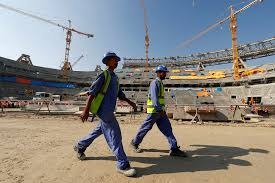
India loses 403 migrant worker who work in different countries from past 5 years.
State labour and employee’s State insurance minister Ganesh Ram Singkhuntia said 403 migrant workers from India died in other countries 2015 to 2024. The one of the recent incident that took place in Italy.
54 years old man an Indian migrant worker from Punjab died due to extreme heat and work load in Italy.
A 54 year old Indian migrant worker from Punjab dies on Italian farm due to the heat and heavy workload. While working on a flower farm in central Italy. Dalvir Singh is the second Indian worker to die on an Italian farm in past 5months. Migrant workers from India often face slave like conditions in Italy.
In July 2024, police rescued nearly 24 Indian workers kept in slave like conditions. As in case of Dalvir Singh, from Panjab he used to sent regular remittances to his family and had intended to return home within next few years as he was found increasingly difficult to work in the fields every day as he grew older. Even though he was forced to do work on regular basis and over time irrespective of his age and capability.
And the process of getting his body was done recently.
ABSTRACT
Conventions and protocols under International Labour Organization (ILO) are legally binding international treaties that member states can ratify. These treaties cover fundamental rights and principles at work. Such as freedom of association, collective bargaining and the elimination of forced labour. This legal research paper helps you to find more and to know more in detail about the International Labour Organization history, Evolution of International Labour Organization, Structure of International Labour organization, Functions of International Labour Organization, various conventions, protocols and recommendations, other welfare schemes for the migrant labours and their families, role of foreign embassies and the process of getting back the dead body of the migrant labour to India from the other countries.
INTRODUCTION
International Labour Organization (ILO)
International labour organization (ILO) is the United Nations Agency that deal with labour issues, in particular with the international labour standards, social protection and work opportunities for all.
The International Labour Organization (ILO) was established as an agency for the league of nations followed with the World War 1
The (ILO) was established by the Treaties of Versailles in year 1919. Then later it became the first specialised agency of UNO. Its plays the significant role in protecting and promoting the labour standards and human rights. The Labour right were drawn from the event Great Depression in year 1930s. It also played an important role in the achievement of South African independence. The International Labour Organization (ILO) also received the Nobel Prize in 1960s for its efforts in improving the peace among the Classes, races and States in order to promoting justice and fair work for the worker and labours.
The structure of International Labour Organization (ILO)
The International Labour Organization comprises of International labour conference , the Governing body and the International Labour Office.
International Labour Conference:
- International Labour Conference produces the progressive policies of International Labour Organization. (ILO)
- The International Labour Conference conducts its annual meeting every year which happens at Geneva, Switzerland. It brings all the representatives of ILO together.
- The most important aim and function of International Labour Conference is to review the important issues related and regarding to the labours.
International Labour Governing Body:
- The governing body is an executive body of International Labour Organization.
- The governing body meets three times annually at the Geneva.
- It is composed with Fifty six titular members , and sixty six deputy members.
- The governing body is also called as a secretariate of the International Labour Organization.
The main and significant functions of governing body of International Labour Organization are
- Conducting and electing the Director General of International Labour Organization.
- The primary function is to make the decisions and preparing the agenda for the summits
- Making and implementing the policies of the International Labour Conference.
- Adopting the draft of budget of the meeting or summit or programme and submits to the International Labour Conference. (ILC)
International Labour Office:
- It is called as the secretariat of the International Labour Organization it is permanent body.
The important functions of International Labour Office are as follows:
- It decides the activities of International Labour Organization
- It is supervised by the International labour Governing body and the Director-General of the International Labour Organization (ILO)
Functions of International Labour Organization:
The International Labour Organization (ILO) plays an important role in formulating the policies with regard and solving the labour issues and the functions of International Labour Organization are as follows:
- It adopts the international Labour standards and adopts in the forms convention. It controls and implementation of the conventions
- It Aids the member states in solving the issues and disputes of the social and labour a problems.
- It aims to work with the protection of human rights and publication of information regarding social and labour issues.
Supervisory Body of international labour organization
It implements the conventions approved by the member states. The member states hold the responsibility to send reports on the development and implementation of the conventions that they have approved.
Filing of complaints
The international Labour organization registers the complaints against the entities that are violating the international rules. It can also file the complaints on or against the member states not complying with International Labour Organization conventions that are approved. But it does not hold any sovereignty to impose the sanctions on the government.
High standards of International labour standards
International labour organization is responsible to set the international labour standards. The International Labour conventions which are set by International Labour Organization are approved by its member states and these are mostly not binding in nature. But in case any once a member accepts the convention becomes legally binding on International labour organization and its members. The convention often used to bring national laws with relevance to international standards.
Legal framework of International labour organization with relevance with fundamental principals and right at work
It suggests and recommend the member states to promote the eight fundamental principles and rights
The eight core fundamental conventions of the International labour organization are:
- Forced labour convention No.29
- Abolition of forced labour convention No.105
- Equal remuneration convention No.100
- Discrimination (employment occupation) convention No.111
- Minimum age to work convention No.138
- Worst forms of child labour convention No.182
- Freedom of association and protection of right to organised convention No.87
- Right to organise and collective bargaining convention No.98
The main reason to bring out these various convention is the different types of hardles and problems faced by the labours and workers all over the world in various fields. The most faced problems by the labours and worker are socio and economic issues and challenges.
The provisions or the other conventions or the articles of the International labour organization under which the labourers and workers hold rights and the bodies that protect them from various problematic situations and the lives of migrant labours and workers are taken into account and given an importance as an important factor
The Occupational Safety and Health Convention 1985 No.155 of international labour organization (ILO) addresses the employee or labour or worker safety. The article 16b of this act provides the necessities to the workers as follows
- To make sure that the work place or the machinery and the equipment are safe and does not have any risk to the health of the workers, labours and the employees who work in such place.
- To make sure that the criminal, physical and the biological substance which are present in the work place or within the work place does not carry any risk to the workers, or labours and the employees lives.
- To provide the required protective cloths and equipment to the labours and workers to prevent them from harmful accidents and adverse health problems.
The International labour organization also adopted other convention and recommendations to promote safety and health at work place including:
- Safety and Health in Mines Convention 1995 No.176 which states about the requires of the employers to provide training and supervision, investigate accidents and report accidents to competent authority.
- Benzene convention 1971 No.136 which addresses the safety and health concerns of about labours and workers.
- Safety and Health in Agriculture Convention 2001 No.184 which addresses the safety and health concerns of the labours and workers.
The article 1 of the forced labour convention 1930No.29 of the international labour organization (ILO) deals with forced labour. The article states that the member countries which accepts and agrees the convention must suppress all forms of forced labour
The article 1 of the Forced labour convention No.29 recommends as follows:
- It states that the member countries must supress forced labour.
- It prohibits forced labour as a form of political coercion, punishment or discrimination.
- It prohibits forced labour as a means of labour discipline or the punishment for participating in strikes.
The convention also includes:
- A transnational period during which forced labour may be used for the public purposes.
- A requirement that the forced labour for the private individuals, companies or associations are prohibited.
- A requirement of forced labour is a criminal offence with adequate and strictly enforced penalties.
The same convention was reamended in year 2014 to remove the transnational provisions which seem to be having less value as a comparison with other provisions of the convention.
The working hours (Industry ) convention 1919 No.1 of the international labour organization (ILO) addresses over time work in articles 1,2 and 6 of the convention.
- Article 1 states that the average number of hours worked per week can not exceed 48 hours.
- Article 2 states that the provision of this article can not be applied in exceptional cases.
- Article 6 states that the regulations can be made by the authorities to determine
- Permanent exceptions for preparatory or complementary work.
- Temporary exceptions for exceptional cases of pressure of work.
- The maximum of additional hours in each instance.
- The rate of pay for overtime which must be at least one and one-quarter times the regular rate of amount which is paid to him as a payment of work.
The International Labour organization (ILO) forced labour convention 1930 No.29 requires that countries that ratify the convention which impose adequate and strictly enforced penalties for the forced labour. The penalties are as follows:
- Arrest or jail: The worker may be arrested or jailed for the practice of forced labour.
- Loss of rights or privileges: The worker may be denied wages, travel or the other rights if they practice the forced labour.
- Threats of violence: The worker may be threatened with violence, physical obligations or death threats in apposing the forced labour.
- Psychological threats: the worker may be threatened with being denounced to authorities.
- Confiscation of the documents: The worker’s personal documents, such as birth certificates, school certificates, and the national identity cards may be confiscated.
The international labour organizations (ILO) has conventions that establish penalties for regulating the hours if work and violating them, these penalties include fines and other measures to ensure and protect compliance with the conventions. The purpose of convention is to protect workers from unsafe working conditions and to ensure that they are paid fairly without any discrimination.
Conventions
- Hours of work (Commerce and offices) convention 1930 No.30: This convention establishes penalties for employing people outside of the hours set forth in the convention.
- Forced labour convention 1930 No.29: This convention establishes the penalties for the illegal use of forced labour.
Penalties
- Fines: Penalties for violating work hour regulations may include fines.
- Other measures: Penalties for violating work hour regulations may include other measures to ensure compliance with the convention.
The purpose of the conventions is to protect workers from unsafe working conditions and to ensure that they are paid fairly.
International labour organization holds and works according to the International Labour organization constitution there are certain important provisions are as follows:
Article 19 this convention shall be binding only up on those members of the international labour organization who ratifies have been registered with the Director-General.
Article 37 of international labour organization constitution states that any question or the disputes relating to the interpretation of conventions can be referred for decision to the International Court of Justice. The article also provides for the possible appointment of the tribunal for resolution of such disputes.
Article 22 of international labour organization state that the each members agrees to make an annual report to International labour Office on the measures which it has taken to give effect to the previous of convention to which it is a party. These reports shall be made in such form and shall contain such particulars as the governing body may request.
Article 19 of the international labour organization constitution states that the members states are required to report at appropriate intervals, as requested by the governing body, on non ratified convention and on recommendations, intending in their reports the extent to which effect has been given or is proposed to be given to those in instruments.
The right to compensation of the migrant labour or worker.
In case of death of the migrant labour or any worker they can claim the minimum amount of compensation fixed is Rs. 1.20 Lakhs and the maximum amount up to Rs.4.56 Lakhs under the compensation for death under Workmen’s compensation Act.
Who is entitled for the compensation under the Workmen’s compensation Act?
The Workmen compensation Act aims to provide financial compensation to employees in case they meet with an unfortunate accidents while performing their duties. All the employees working full time, part time, temporary or casually are liable to receive financial protection under this Act.
Who are not covered under the compensation of workmen Act?
The employees who are covered by the other laws. The act is not applicable to those employees who are already covered by other social security laws, such as “The Employees’ state Insurance Act, 1948.
Family benefit scheme for the employees
On the separation of an employee from the service of the company on account of death or permanent total disablement or permanent medical unfitness, his nominee or the employee himself as the case may be on deposing with company the amount equivalent to the Notional Provident Fund and Gratuity of the employee, would be entitled to claim such amount under this scheme.
Indian Foreign embassies and role of Indian foreign embassies
An Indian foreign embassy serves as the official representation of the Indian government in a foreign country, primarily responsible for managing diplomatic relations, promoting economic ties. Providing consular services to Indian citizens abroad, and fostering cultural exchange all while acting as a vital link between India and the host nation.
The key functions of an Indian embassy are as follows:
- Political Diplomacy: Engaging with the host country’s government on the bilateral issues, advocating for India’s interests and participating in international negotiations on various political matters.
- Economic Cooperation: Issuing passport and Visas to Indian citizens, assisting in emergency situations like accidents or arrests providing travel advice, and managing the welfare of Indian nationals residing abroad.
- Media Liaison: Maintaining communication with the local media providing information about India’s policies and initiatives and managing the country’s public image.
- Cultural exchange: Organising cultural events like festivals, art exhibitions and lectures to promote understanding and appreciation of Indian culture.
- Development cooperations: Overseeing projects related to Indian’s development assistance programs in the host country including aid for infrastructure, education, and health care.
Composition of Indian embassy:
- Ambassador: The head of the embassy, would be held responsible for the overall leadership and representing India in high level diplomatic interactions.
- Diplomatic Officers: Staff members specializing in various areas like political affairs, economic affairs, consular services and cultural exchange.
- Administrative staff: Personal managing day to day operations of the embassy including finance, logistics and security.
Significance of Indian Foreign Embassy:
- National security: Embassies play a crucial role in gathering intelligence, monitoring regional developments and advocating for the Indian interests on the international stage.
- Economic Growth: By fostering trade and investment ties, embassies contribute significantly to India’s economic development.
- People to people contract: Embassies facilitate cultural exchange programs, promoting understanding and friendship between India and the host country.
Challenges faced by Indian Embassies:
- Geopolitical complexities: Navigating complex international dynamics and balancing relations between two different countries.
- Resources constraints: Managing a large diplomatic network with limited resources.
- Local challenges: Adapting to the unique political and social landscape of the host country.
The process of getting back the dead body of the migrant labours back tom their host countries
Carriage of human remains by the Indian carriers is governed by the Aircraft (Public health) Rules 1954 which clearly states no person shall bring into India any dead body or human remains of persons who may have died of yellow fever, plague or any such diseases as may be prescribed and notified by the central government for this purpose. If the body is properly cremated then the ashes should be brought and placed in casket having the outer packing of suitable material. Then it can be brought to India.
Terms and conditions laid by IndiGo CarGo
They carry human remains for both domestic and international sector.
The maximum accepted weight of the human remains including the coffin is 200kgs.
The dead bodies are accepted only for the carriage in coffin that are not used before for the burial purposes.
Required documents in order to get a dead body back to the host country and for International transfer of human remains:
- Conformed ticket in case any one of the passenger is accompanying or the need or approval from the destination in case no one is accompanied.
- Human remains should be embalmed from the competent authority to do so.
- Clearance should be obtained from the competent state of authority or embassy or consulate or it can be also be from the Indian Mission.
- Clearance should be obtained from the local health authority.
- All the medical, health, administrative and the legal requirements of the regulations in force in the state of destination relating to the transfer of human remains.
- Death certificate to be obtained from the competent medical authority.
- Clerance from local police authority is required is required for carriage of human remains.
- Passport of the diseased should be produced duly cancelled by the appropriate authority issuing state of authority may be embassy or consulate.
- Identity proof of the person booking for the human remains.
After receiving the required documents and satisfying the all essentials of the IndiGo Cargo the transfer of human remains takes place and the dead body of the migrant labour is handed over to their respected families.
NAME: CHENNOJU SHANMUKHA PRIYA.
COLLAGE NAME: PENDEKANTI LAW COLLEGE.