
By Rithika Cherukat
LLB 2023-2026
Alliance School of Law, Alliance University
ABSTRACT
In light of the recent controversy surrounding the misconduct in NEET UG 2024, this paper aims to examine the various steps taken by the Government in the administration of public examinations. The study shows that, in addition to various malpractices such as paper leaking and cheating by individuals and groups, technical glitches by the examination authorities can also greatly affect candidate performance and results. Legislation to govern and control examination procedure was introduced recently and mostly covers criminal acts by individuals and third-party service providers. It was observed that additional legislation is required to assess the conduct of examination authorities as well. In addition to the technical and logistical issues, the authorities’ approach to planning and designing the exams must also be revised.
Keywords: Public Examinations, Unfair Means, Conduct, Malpractice, National Testing Authority
Table of Contents
The National Testing Authority 4
Examinations Conducted by the NTA 5
Introduction
It is common knowledge that in India, competitive examinations play a pivotal role in shaping one’s career trajectory and conducted at various educational levels ranging from undergraduate to job recruitment, they often act as a measure of one’s academic calibre and success. A lot of importance is placed by society on these examinations, with lakhs of students starting preparations years before they actually attempt the exam, joining coaching institutes with rigorous study schedules and relentless practice, giving up several hobbies and other routine activities in favour of extra study hours, and families investing lots of money and time into their children’s education so that they may be able to secure a seat in a prestigious institute for their higher education, or earn great job prospects. An abundance of hopes and expectations are on the line, and often times the pressure to succeed can form a crushing weight on the aspirants.
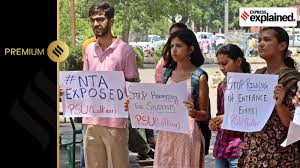
In such a scenario, it is necessary for the organizations that conduct these exams to ensure that the examination process itself runs smoothly. Any hiccups in the procedure could spell disaster for the young candidates that appear for these exams every year. Unfortunately, that is exactly what happened in June this year, when the results for the prestigious National Eligibility cum Entrance Test (Undergraduate) 2024 (hereinafter called NEET UG 2024, NEET 2024 or the Test) were declared. Conducted on the 5th of May, the 2024 edition of this exam was marred by controversy from its onset. On the day of the Test, social media posts alleged a leak of the exam paper. The National Testing Agency (NTA), which was responsible for conducting the Test, denied these allegations even as cases of malpractice started to emerge across the country. The main regions where the controversy erupted were in Patna, Bihar, Godhra, Gujarat, and Sawai Madhopur, Rajasthan. By the time the NEET 2024 results were declared on the 4th of June 2024, ten days earlier than expected, student protests were raging across the country, and several petitions had been filed in the Supreme Court citing issues in the conduct of the examination.
To add further to this chaos, the National Eligibility Test conducted by the University Grants Commission (hereinafter referred to as UGC-NET and UGC respectively) on the 18th of June 2024, and for which around eleven lakh candidates appeared for selection to research fellowships and PhD programs, was cancelled just a day later in response to inputs provided by the Indian Cyber Crime Coordination Centre (I4C) under the Ministry of Home Affairs suggesting a potential compromise in the examination process, and an investigation was initiated by the Central Bureau of Investigation (CBI).
Having occurred one after the other, the controversy surrounding the NEET UG 2024 and UGC-NET 2024 exams put the spotlight on the larger issue of malpractice and misconduct in major entrance exams that have been repeatedly taking place in this country. Given that this affects a large section of the population and the education and economic situation of India as a whole, this author believes that the matter deserves legal scrutiny. Hence, this paper aims to study the legal provisions and entities that govern the conduct of public examinations in order to provide a thorough understanding of the legal landscape surrounding these exams.
Research Methodology
This paper is of a descriptive nature, and in writing it, the doctrinal methodology of research has been adopted, whereby primary sources in the form of legislation and material obtained from relevant Government websites, and secondary sources in the form of news articles, journals, and judicial commentary have been used.
Research Method
In conducting this research, the qualitative approach has been adopted, whereby non-numerical data i.e. qualitative facts have been collected and analysed to gain insight into the problem at hand. The current laws pertaining to this topic were also collected, and the language of these statutes was analysed in order to interpret the thought process and intention of the legislators behind making such laws.
Literature Review
An overview of the controversy can be made by reviewing recent articles in the news. As stated earlier, on the day of the NEET UG 2024, several allegations of paper leaks were made via social media. These allegations were denied by the NTA. A petition was filed before the Supreme Court seeking to stay the declaration of results until proper investigation of the alleged leaks could be done; however, the Court refused to grant the stay. After the results were declared, it was noted, amongst other inconsistencies, that there was an increased number of toppers in this exam, with sixty-seven toppers for the exam having scored an unprecedented percentile of 99.997129, six of whom were from the same centre. There was an inflated cut-off, and many students were given compensatory marks, ostensibly for loss of time as explained by the NTA. This led to a final range of scores varying between -20 and 720, with students also scoring 718 and 719 marks, which was questioned by the public, given that the exam follows a scoring system whereby each correct answer receives four marks, and each incorrect answer receives a negative one mark.2 At the same time, as stated earlier, the June 2024 edition of the UGC-NET 2024 exam was cancelled on 19th June 2024, fearing discrepancies similar to those in NEET 2024 and pending investigation by the CBI.1
Many entrance examinations are conducted independently by the establishments concerned; for example, prior to 2018, the All India Pre-Medical Test (hereinafter referred to as AIPMT) and the Joint Entrance Examination – Main (formerly called All India Engineering Entrance Examinations, hereinafter referred to as JEE – Mains) were conducted by the Central Board of Secondary Education (CBSE), and the Joint Entrance Examination – Advanced was and is still conducted by the Indian Institutes of Technology. After the constitution of the NTA, JEE-Mains and NEET were conducted by this authority., The Common Admission Test (CAT) is conducted by the Indian Institutes of Management, and admissions to their institutes are done independently even today, despite them being Institutes of National Importance recognized by the All India Council for Technical Education (AICTE), and there being a separate exam conducted nationally by the NTA for admission to other management programs in the country., Also, there are many entrance exams conducted independently by private universities and institutions.
Prior to 2024, there was no legislation governing the conduct of public examinations. In 2019, the National Medical Commission Act came into force, whereby the AIPMT was replaced by NEET, and the exam was conducted by the NTA.5 Finally in February 2024, the Public Examinations (Prevention of Unfair Means) Act, 2024, was passed by the Indian Parliament, to govern the conduct of entrance exams.
Although a clear move is being made towards centralization of entrance examinations, the lack of legislation governing the same can cause a lot of chaos in the organization and conduct of these exams. Moreover, while investigations are undergoing as to how such discrepancies occurred and what steps can be taken to address them, the question as to why these discrepancies occur in the first place is not being sufficiently answered. The overarching problem is therefore not only in the conduct of these exams, but also in the Government’s approach towards testing itself.
The National Testing Authority
The National Testing Authority, or NTA, is an autonomous agency of the Government of India, under the Department of Higher Education, Ministry of Education, which is tasked with the conduct of entrance examinations for admission to educational institutions and for job recruitment.
History and Formation
The NTA was formed in 2017, as a result of the stand taken by the Government on Education after the Programme of Action, 1992, by the Ministry of Human Resource Development (now the Ministry of Education) made one of its objectives to conduct universal enrolment to higher education institutions, and by extension a national-level common entrance tests to different institutions recognized by the Government. In 2013, the Government decided to set up the Agency whose specific purpose would be to streamline examinations for admissions to higher education institutions. This eventually became the NTA.
Examinations Conducted by the NTA
The NTA conducts major exams such as JEE-Mains, NEET, UGC-NET, CMAT, National Institute of Fashion Technology (NIFT) Entrance Examination, Delhi University Entrance Test (DUET), Council of Scientific and Industrial Research National Eligibility Test (CSIR-NET), and many other major entrance exams, both for universities recognized by the AICTE as well as for recruitment to major professional and research institutes.
Examination Procedure
The NTA consists of a body of subject matter experts from different Government institutions who work together throughout the year to design the examinations. The responsibility of designing the question papers is taken up by the NTA itself. However, the administration of the examination is usually outsourced to third parties via tenders. The outsourced work includes selection of test centres, establishing security systems, arranging for copies of the question paper and sealing them, in case of online tests, arranging for computers, and arranging and training of invigilators and other staff members. However, it is unclear how the verification and vetting of the quality and integrity of these resources is done by the Agency.
Controversies
Since its inception, the NTA has not been unfamiliar with controversy. In 2024 itself, prior to the NEET 2024 and UGC-NET 2024 issues, the NTA faced problems with the JEE-Mains paper conducted in two sessions. In the January session, the NTA was faced with complaints of varying difficulty levels across the different sets of the exam paper, which led to lower scores for some students due to normalization of marks. In the second session in April, the Agency reported one case of impersonation and nine cases of cheating, due to which thirty-nine candidates were disqualified from the examination. The Agency had also faced technical issues during the 2022 edition of the engineering entrance examination, which negatively affected the scores of some of the candidates.
In 2020, the Agency faced another crisis when it wrongly declared the scores of a candidate who appeared for the NEET UG 2020 exam as six instead of her actual OMR sheet score of five-hundred and ninety. This error was detected and corrected only after she had committed suicide, allegedly and presumably over the purported low score. In the same exam, another candidate was declared as having failed the exam, when in reality according to his OMR sheet, he was the All India Topper in the Scheduled Tribes Category. Even after this discrepancy was remedied, there were errors in the candidate’s marks card. The NTA denied these errors, and this eventually led to a complaint being filed by the Agency with the cybersecurity cell.
Thus, it has been observed that, in addition to cases of cheating and use of unfair means, the NTA also faces technical and logistical challenges in the conduct of multiple examinations.
Analysis of the New Act
There was growing interest in curbing the cases of cheating during entrance examinations. Earlier, a committee comprising some members of the Indian Institutes of Technology had submitted a report recommending legislative backing for the testing agency. In February 2024, The Public Examinations (Prevention of Unfair Means) Act, 2024, was enacted. This Act was the Government’s response to the increasing number of cases of fraud and cheating that had arisen in the past few years.
The Act consists of six Chapters with nineteen sections, and one Schedule which lists the examination authorities whose exams are to be governed by the provisions within this Act. This Schedule includes the NTA. Section 2 clause k states that the examinations conducted by the authorities listed in the Schedule will be considered ‘public examinations’ and as such would fall within the ambit of this Act.
Chapter Two provides a definition and types of unfair means and acts or omissions which would amount to offences under this Act. Section 3 in particular provides fifteen specific acts which amount to unfair means and offences. These include leaking of the question paper, unauthorized assistance to candidates during examination, tampering of computer systems or networks, or of documents concerned with the evaluation and short-listing of candidates, issuance of fake identity cards, and manipulation of seating arrangements, exam shifts etc. for wrongful gain. The provisions within this Chapter strongly imply that it would be the exam candidates and service providers of the exam centres or other such resources who would be held liable for these offences. The role of the examination authorities as listed in the Schedule is not expanded upon in this Chapter.
Chapter Three outlines the various punishments for the offences listed in Chapter Two. It states that all offences covered in Chapter Two are cognizable i.e. a warrant of arrest is not required, non-bailable non-compoundable. The offences in Chapter Two are punishable with a term of imprisonment of three to five years, along with a fine of up to Rupees ten lakh. In case of an organised crime, the punishment shall be a term of imprisonment between five and ten years, and a fine which shall not be less than Rupees one crore. Here, among the persons mentioned who may be punished for organised crime under this provision, examination authorities are listed. However, as their role and the acts done by them which would amount to offences are not listed in Chapter Two, there is an apparent vagueness in the language of the provision. It is also stated that in case of default in the payment of the fine, the offender may further be imposed with a term of imprisonment following the provisions laid down in the Bharatiya Nyaya Sanhita.
Under Chapter Four, the procedure for investigation and inquiry into these offences is laid down. According to this, only a police officer having the rank of Deputy Superintendent of Police or Assistant Commissioner of Police or higher may be authorised to investigate such cases. It is also stated that members of the public examination authority acting in pursuance of the provisions within this Act would be deemed to be public servants as defined in the Bharatiya Nyaya Sanhita, 2023, and that no legal proceeding under this Act can be instituted against them for any such act done in good faith. This means that vast powers have been granted to such members, and compounded by the vague language of the previous sections, establishing any wrong-doing on part of the examination authority could become a cumbersome task.
Chapters Five and Six deal with miscellaneous provisions and amendment to the Criminal Law (Amendment) Ordinance, 1944, respectively.
In addition to these provisions, the Parliament stated that there would also be a High level National Technical Committee on Public Examinations that will develop protocols and foolproof security systems for online examinations.
Suggestions
After a thorough study of the existing material pertaining to the issues concerning the conduct of entrance examinations, the following suggestions can be made:
1. The NTA needs to have a robust procedure for verification and vetting of third-party service providers to whom tenders are given. Simply outlining the offenses and punishments is not enough, as this is not a preventive measure, and these punishments would not be sufficient compensation for the lives and futures of thousands of young students that get jeopardized by delays due to such acts. This verification procedure must be done well in advance of the examinations and must ideally be done at the exam venues while simulating a test environment in real-time. If these procedures are done by the third parties themselves, it would rather be better for the NTA to directly take up the verification procedure instead. Sufficient backup must also be provided to curtail any problems that might arise on the test day. Such measures can prevent technological glitches and logistical mishaps in the future.
2. Additional legislation is required to govern the conduct of the examination authorities listed in the Schedule of the Public Examinations (Prevention of Unfair Means) Act, 2024. The present Act does not elaborate on the involvement of the authorities, and rather provides them with more powers and extremely limited responsibilities. While malpractice harms the integrity of the examination, issues with the planning, organisation and execution of exam procedure by the examination authorities are more likely to affect the candidates appearing for their exams. Hence, such authorities must be held responsible for their errors and misconduct through effective statutory provisions.
Conclusion
After a thorough study of the law concerning the conduct of public examinations, it can be concluded that while the statutory provisions against cheating and use of unfair means are quite robust with stringent punishments to hinder potential offenders, there is still a long way to go in terms of better organisation of the examination procedure and holding the examination authorities accountable. As the conduct of the examination itself can affect the performance of candidates appearing for it, with greater centralization of such examinations, it becomes more important to ensure a smooth process for aspirants and provide them with the best opportunity to succeed in their careers.
By Rithika Cherukat
LLB 2023 -2026
Alliance School of Law, Alliance University, Bengaluru
REFERENCES:
[1] ET Online, UGC-NET exam cancelled over integrity concerns, CBI to probe: Education Ministry, THE ECONOMIC TIMES (June 20th 2024, 9:23 AM IST), UGC-NET: UGC-NET exam cancelled over integrity concerns, CBI to probe: Education Ministry – The Economic Times (indiatimes.com)
[2] Puniti Pandey (Editor), Explainer: What Is The Controversy Surrounding NEET UG 2024 Results, NDTV EDUCATION, (June 8th 2024, 10:43 AM IST) Explainer: What Is The Controversy Surrounding NEET UG 2024 Results (ndtv.com)
[3] Anmol Kaur Bawa, NEET-UG 2024 : Supreme Court Refuses To Stay Declaration Of NEET Results Over Alleged Paper Leak, LIVE LAW (May 17th 2024, 5:50 PM IST), SC Refuses NEET UG 2024 Results Halt Despite Paper Leak Allegations (livelaw.in)
[4] George, A Shaji (Dr.), Insights into the Competitive Landscape of Indian Entrance Exam Market: A Comprehensive Survey, PARTNERS UNIVERSAL INTERNATIONAL INNOVATION JOURNAL (PUIIJ), Vol. 1 Iss. 2, April 2023, 01. 63-89. 10.5281/zenodo.7855578
[5] Engineering Exam, NATIONAL TESTING AGENCY National Testing Agency (nta.ac.in)
[6] Medical Exam, NATIONAL TESTING AGENCY National Testing Agency (nta.ac.in)
[7] About Us, CAT 2023, CAT 2023 (iimcat.ac.in)
[8] Common Management Admission Test (CMAT), DEPARTMENT OF HIGHER EDUCATION, MINISTRY OF EDUCATION, Common Management Admission Test | India
[9] The Public Examinations (Prevention of Unfair Means) Act, 2024
[10] The National Policy on Education 1986, Programme of Action, 1992, MINISTRY OF HUMAN RESOURCE DEVELOPMENT, DEPARTMENT OF EDUCATION, POA_1992.pdf (education.gov.in)
[11] Nanda, Prashant K, Government sets up agency to streamline entrance exams, MINT (June 1st 2013, 12:03 AM IST) Government sets up agency to streamline entrance exams (livemint.com)
[12] Governing Body, NATIONAL TESTING AGENCY, National Testing Agency (nta.ac.in)
[13] News Desk, While NEET & NET Row Spirals, Here’s How NTA Conducts Exams | Explained, NEWS18, While NEET & NET Row Spirals, Here’s How NTA Conducts Exams | Explained – News18
[14] Shankar, Ravi, JEE Mains Result 2024: Students raise concerns over alleged error in percentile calculation, THE TIMES OF INDIA (February 13th 2024, 4:00 PM IST), JEE Mains Result 2024: Students raise concerns over alleged error in percentile calculation – Times of India (indiatimes.com)
[15] Press Release: Declaration of the Result/NTA Scores for the Joint Entrance Examination [JEE (Main) – 2024] of Paper 1 (B.E./ B.Tech.) – reg., NATIONAL TESTING AGENCY (April 24th 2024), press-release-for-the-release-of-rank-and-nta-scores-for-jee-main-2024-session-2-dated-24-april-2024.pdf
[16] News Desk, NEET Results : MP Student Dies By Suicide After Getting 6 Marks, OMR Sheet Actually Shows 590!, INDIA.COM (October 23rd 2020, 3:24 PM IST), NEET Results: MP Student Dies by Suicide After Getting 6 Marks, OMR Sheet Actually Shows 590! | India.com
[17] HT Correspondent, NTA refutes NEET aspirant’s claim of AIR 1 Rank in ST category, HINDUSTAN TIMES (20th October 2020), NTA refutes NEET aspirant’s claim of AIR 1 Rank in ST category – Hindustan Times
[18] Acharya D. (Prof.) et al, Alternative to IIT-JEE, AIEEE, and State JEEs: An Interim Report (Archived 15th December 2016), ramasami-ann3.doc (live.com)
[19] The Public Examinations (Prevention of Unfair Means) Act, 2024, §2(k)
[20] The Public Examinations (Prevention of Unfair Means) Act, 2024, §3
[21] The Public Examinations (Prevention of Unfair Means) Act, 2024, §9
[22] The Public Examinations (Prevention of Unfair Means) Act, 2024, §10(1)
[23] The Public Examinations (Prevention of Unfair Means) Act, 2024, §11(1)
[24] The Public Examinations (Prevention of Unfair Means) Act, 2024, §12(1)
[25] The Public Examinations (Prevention of Unfair Means) Act, 2024, §13
[26] The Public Examinations (Prevention of Unfair Means) Act, 2024, §14
[27] Press Release, MINISTRY OF PERSONNEL, PUBLIC GRIEVANCES AND PENSIONS (February 5th, 2024, 4:17 PM IST), pib.gov.in/PressReleaseIframePage.aspx?PRID=2002592