
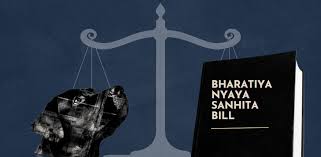
“An analysis Of Bharatiya nayay sanhita on Juvenile Law”
“History will judge us by the difference we make in the everyday lives of children.”
-Nelson Mandela
ABSTRACT:
This paper constitutes a comprehensive analysis of the Bharatiya Nyaya Sanhita, with a focus on its relevance to juvenile law in India. The historical evolution of juvenile justice is examined in the context of the Indian legal system, and the extent to which conventional wisdom has been altered to suit contemporary demands is evaluated. The study aims to demonstrate how contemporary juvenile law practices have been shaped by legislative and jurisprudential changes through an examination of case laws. This study identifies a more adaptable legal framework that considers the developmental needs and transformative potential of children and teenagers as an alternative to the rigid regulations now in place. The Bharatiya Nyaya Sanhita has undergone recent changes that suggest a shift towards harsher penalties for juvenile offenders. This has sparked a debate about striking a balance between punishment and rehabilitation while also offering crucial insights into the effectiveness and legitimacy of the system. The report concludes with recommendations for policy changes aimed at striking a balance between the public interests in rehabilitation and punishment with the objective of bolstering the legal safeguards for minors
KEYWORDS:
Indian Penal Code, Bharatiya Nyaya Sanhita, Kidnapping, Abduction, Minor, Thug, Child Trafficking
INTRODUCTION:
The 163-year-old Indian Penal Code, which was created in 1834 by the first Law Commission under the direction of Thomas Babington Macaulay, will be replaced by the Bharatiya Nyaya Sanhita Bill, 2023. In addition to listing various infractions and assigning appropriate punishments, Macaulay’s code aimed to provide uniformity and consistency across the Indian legal system. But as technology has advanced, crime patterns have unavoidably changed to reflect the growth of civilization. Given this, the BNS shows an effort to keep up with the times by listing contemporary offenses and revising the penalties attached to them. After being condensed, BNS will now only have 358 Sections as opposed to the IPC’s 511 Sections.
Notwithstanding their focus on other matters, the BNS regulations significantly affect children’s rights. It has a significant impact on the development of juvenile law, which currently prioritizes protecting children’s wellbeing while they are in the judicial system. The main change is that the Indian Penal Code of 1860’s Chapter 5, which was formerly broken up into several sections, now includes a detailed list of crimes against women and children. The inclusion of a definition for younger readers is another important change.
According to Section 2(3), a person under the age of eighteen is considered a kid. The term “child” is used constantly in the BNS, whereas the terms “minor” and “under the age of eighteen” were used frequently in the Indian Penal Code, 1860. Most regulations now utilize the same meaning when referring to “child,” which makes things simpler and more useful for the public. Examples of this include: -The phrase “minor” refers to human trafficking in Sections 370(5) and (6) of the Indian Penal Code; however, Sections 141 (4), (5), and (6) of the Bharatiya Nyaya Sanhita have replaced this term with “child.” Comparably, in Section 363(A) of the Indian Penal Code, which deals with kidnapping or maiming a minor for the purpose of begging, the term “minor” was used; but, in Section 137(1) of the Bharatiya Nyaya Sanhita, “child under eighteen years of age” eventually replaced it. Sections 96 and 97 of the Bharatiya Nyaya Sanhita, which dealt with prostitution, also showed the same modifications. The laws concerning the rape of minors have also undergone substantial modification. Women under the ages of twelve and sixteen were subject to an age-based threshold for gang rape under the Indian Penal Code of 1860.The Bharatiya Nyaya Sanhita later removed this threshold. Simplifying the legal framework, gang rape of a woman under the age of eighteen is punishable by life in prison or death under Section 70(2) of the Bharatiya Nyaya Sanhita. To further improve children’s safety, Section 63 of the Bharatiya Nyaya Sanhita has raised the consent age from 15 to 18. But the exclusion for rape committed during marriage has stood.
INCLUSION AND ELIMINATING
Certain offences have been eliminated and others have been added to increase kid protection and create a more favourable legal system overall. The Indian Penal Code Section 310, which defined a thug as “Whoever, at any time after the passing of this Act, shall have been habitually associated with any other or others for the purpose of committing robbery or child-stealing by means of or accompanied with murder, is a thug”. has been modified to remove all references to thugs.
As previously mentioned, one step taken to enhance child safety is the implementation of a BNS provision that makes it illegal to hire, engage, or employ a minor to commit an offense: Section 93 states that anyone who hires, employs, or engages someone under the age of eighteen to commit an offense would be penalized with either type of imprisonment or a punishment specified for that offense, as if the offense had been committed by that individual alone. This section covers the hiring, employing, engaging with, or utilizing of a kid for pornographic or sexual purposes.
INCLUSIVITY
Several laws have been changed to attain more gender equality. To promote gender inclusion, the definition now includes the word “child” in several clauses that previously only applied to women. A provision on the procurement of young girls is found in Section 366 A of the Indian Penal Code, and it is biassed against men. However, Section 94, which deals with procurement, now covers any minor under the age of eighteen because of BNS revisions. Similarly, Section 366 B of the Indian Penal Code contains a clause that is obviously prejudiced in favour of boys and pertains to the importation of girls from other nations. Only girls under the age of twenty-one are covered by it. How ever due to modification to the BNS, males under the age of eighteen are now covered by Section 139 on the same topic. This legal modification will protect young boys and girls from being forced to participate in compelled sexual behaviour. A significant case known as “Tania Begum@ Hazra vs. State of West Bengal” transpired on September 5, 2023, just prior to the implementation of BNS in December 2023. The victim, a young girl, was brought to Kolkata from Bangladesh with the promise of work, where she was sexually abused. This is only one example of several incidents and situations when youngsters who are brought in are exploited.
RESEARCH METHODOLOGY:
The present study employs a highly descriptive technique, drawing on secondary research methodologies, to investigate the fundamental notion of juvenile laws and its modifications. It offers a thorough and in-depth review of recent research on juvenile legislation in India as well as practices, case studies, and literature. This study aims to give a summary of the reasons why the reforms would also have a fundamental effect on our legal and social system. Scholars investigating the reasons for undergoing such changes have focused their attention on one of the most straightforward yet fundamental reforms to be implemented during the upgrading of the criminal laws, known as Bharatiya Nayay Sanhita.
CONCLUSION:
In broad strokes, the Bharatiya Nyaya Sanhita Bill, 2023 significantly alters the Indian legal system in several ways. The adoption of the BNS has marked a crucial turning point in the advancement of children’s rights inside the Indian legal system. The measure addresses the complexities and challenges faced by children, demonstrating a commitment to ensuring their safety and well-being. An important step forward in safeguarding the future of the next generation has been made with the modifications, additions, and deletions done with the goal of enhancing children’s safety. By valuing inclusivity, these changes close existing disparities and pave the way for a more equitable and supportive environment for all kids. The emergence of BNS represents a significant improvement for children’s rights and protections inside the Indian legal system, but its implementation will determine its fate. Everyone is in favour of an updated legal system, but for it to protect and benefit society, it must be implemented correctly.
Khushi Sahu
Institute of Law, Nirma University