
Abstract
The juvenile justice system in India has undergone significant transformations since independence, reflecting evolving societal attitudes toward child welfare and rehabilitation. This study examines the institutional framework established for the care and protection of juveniles in India, analyzing their effectiveness, challenges, and impact on juvenile rehabilitation. Through a comprehensive review of legislative provisions, institutional structures, and ground-level implementation, this research evaluates how India’s juvenile care institutions address the dual mandate of child protection and societal safety. The study reveals substantial gaps between policy intentions and practical outcomes, highlighting the need for systemic reforms in infrastructure, human resources, and procedural mechanisms. The findings suggest that while India has established a robust legal framework, the execution remains fragmented, with significant variations across states and regions. This analysis contributes to understanding the complexities of juvenile justice administration and offers insights for policy improvements in institutional care systems.
Keywords: Juvenile Justice, Child Protection, Institutional Care, Rehabilitation, India, Child Welfare
1. Introduction
The treatment of juveniles who come into conflict with the law represents a critical intersection of criminal justice, child welfare, and social policy. In India, the institutional framework for juvenile care has evolved from a punitive colonial legacy to a more rehabilitative and restorative approach, reflecting international standards and constitutional commitments to child welfare. The juvenile population in India constitutes approximately 40% of the total population, making the effectiveness of juvenile care institutions a matter of national significance.
The Indian juvenile justice system operates on the fundamental principle that children are not miniature adults and require specialized treatment that prioritizes their rehabilitation and reintegration into society. This philosophical shift from retributive to restorative justice has shaped the development of various institutional mechanisms designed to address juvenile delinquency while protecting the rights and interests of children.
The complexity of juvenile issues in India is compounded by factors such as poverty, family breakdown, educational inadequacies, and social marginalization. These underlying causes necessitate a comprehensive institutional response that goes beyond mere containment to address root causes and facilitate meaningful transformation in young lives.
This study examines the various institutions established under Indian law for juvenile care and protection analyzing their structure, functioning, and effectiveness in achieving stated objectives. The research explores how these institutions balance the competing demands of child welfare, public safety, and resource constraints while attempting to fulfill their mandate of rehabilitation and reintegration.
2. Literature Review
2.1 Historical Context and Evolution
The foundation of juvenile justice in India can be traced to the colonial period, when the Apprentices Act of 1850 first recognized the need for differential treatment of juvenile offenders However, the modern framework emerged with the Juvenile Justice Act of 1986, which was subsequently replaced by the Juvenile Justice (Care and Protection of Children) Act, 2000, and later amended in 2015.
Scholarly research on Indian juvenile justice institutions has highlighted the tension between traditional punitive approaches and modern rehabilitative philosophies. Kumar and Sharma (2018) observed that institutional care in India has struggled to move hevond custodial
models toward therapeutic and educational interventions. This transition reflects broader changes in understanding childhood, delinquency, and the role of state intervention in family matters.
2.2 Theoretical Frameworks
The institutional approach to juvenile care in India draws from multiple theoretical perspectives. The welfare model emphasizes the state’s parens patriae role, positioning government institutions as surrogate parents responsible for child welfare. The justice model focuses on due process rights and proportionate responses to juvenile misconduct. The restorative justice framework emphasizes healing relationships and community
involvement in addressing juvenile issues.
Research by Menon (2019) suggests that Indian juvenile institutions attempt to synthesize these approaches but often struggle with implementation challenges that undermine theoretical coherence.
The gap between policy intentions and ground-level realities creates institutional confusion about primary objectives and appropriate interventions.
2.3 Comparative Perspectives
International research provides valuable context for evaluating Indian juvenile care institutions. Studies from developed countries emphasize the importance of individualized treatment plans, family involvement, and community-based alternatives to institutional care. The Nordic model, characterized by small-scale residential facilities and intensive therapeutic interventions, contrasts sharply with the large-scale institutional approach prevalent in many Indian states.
However, direct comparisons must account for significant differences in resource availability, social structures, and cultural contexts. What works in Scandinavian countries may not be directly applicable to Indian conditions, necessitating indigenous solutions adapted to local realities.
3. Legal and Policy Framework
3.1 Constitutional Provisions
The Indian Constitution provides the foundational framework for juvenile care through several articles that establish children’s rights and state obligations.
Article 15(3) empowers the state to make special provisions for children, while Article 21 guarantees the right to life and personal liberty, interpreted by courts to include children’s rights to development and protection.[1]
Article 24 prohibits child labor in hazardous occupations, and Article 39(e) and (f) direct the state to ensure that children are not abused and have opportunities for healthy development.
[2]These constitutional provisions create a mandate for specialized institutions capable of addressing juvenile needs while protecting their fundamental rights.
The directive principles of state policy, particularly Article 45 (providing free and compulsory education) and Article 47 (improving public health and nutrition), establish the broader context within which juvenile care institutions must operate. These provisions require institutions to address not just immediate behavioral issues but also underlying developmental needs.
3.2 Juvenile Justice Legislation
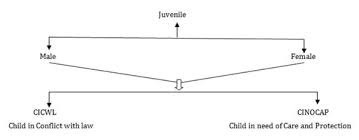
The Juvenile Justice (Care and Protection of Children) Act, 2015, represents the current legislative framework governing juvenile care institutions in India. This act establishes two categories of children requiring institutional intervention: children in conflict with law and children in need of care and protection.
The legislation mandates the establishment of various institutions including Juvenile Justice Boards, Child Welfare Committees, observation homes,
special homes, place of safety, specialized adoption agencies, and fit facilities. Each institution has specific functions, target populations, and operational standards designed to address different aspects of juvenile care.
The 2015 amendment introduced significant changes, including the provision for trying certain categories of heinous crimes committed by juveniles aged 16-18 years in regular courts. This controversial provision reflects ongoing debates about the appropriate balance between child welfare principles and public safety concerns.
3.3 Rules and Regulations
The Juvenile Justice (Care and Protection of Children) Rules, 2016, provide detailed operational guidelines for implementing the act. These rulesfor implementing the act. These rules specify infrastructure requirements, staffing patterns, admission procedures, treatment protocols, and monitoring mechanisms for various institutions.
The rules emphasize the principle of best interest of the child, requiring institutions to develop individualized care plans based on comprehensive assessments. They also mandate regular review of cases, family involvement in treatment planning, and preparation for reintegration into society.
State governments have the authority to adapt these rules to local conditions while maintaining compliance with central guidelines. This flexibility allows for regional variations but also creates potential inconsistencies in standards and practices across different iurisdictions
4. Institutional Framework
4.1 Juvenile Justice Boards
Juvenile Justice Boards (JJBs) serve as the primary adjudicatory mechanism for children in conflict with law. Established at the district level, these boards consist of a metropolitan magistrate or judicial magistrate first class as chairperson and two social workers with experience in child welfare.
The composition of JJBs reflects the specialized nature of juvenile justice, requiring both legal expertise and child welfare knowledge. However, research indicates significant challenges in finding qualified social workers willing to serve on these boards, leading to frequent vacancies and continuity issues.
JJBs have broad powers including the
authority to order various interventions ranging from counseling and community service to institutional placement. The diversity of available options allows for individualized responses, but implementation depends heavily on the availability and quality of community resources and institutional facilities.
4.2 Child Welfare Committees
Child Welfare Committees (CWCs) address the needs of children requiring care and protection, including those who are orphaned, abandoned, abused, or otherwise vulnerable. These committees function as the first point of contact for identifying and responding to child welfare concerns.
CWCs consist of a chairperson and four members, including at least one woman and one person with expertise in child welfare. The committees are empowered to conduct inquiries, order investigations, and direct appropriate interventions including institutional placement when necessary.
The effectiveness of CWCs varies significantly across jurisdictions, depending on factors such as member qualifications, resource availability, and coordination with other agencies. Some committees function proactively to identify at-risk children, while others operate primarily in response to crisis situations.
4.3 Observation Homes
Observation homes serve as temporary residential facilities for children in conflict with law during the inquiry process. These institutions are designed to provide safe custody while assessment and treatment planning occur. The temporary nature of placement is intended to minimize disruption to children’s lives and maintain family connections.
However, many observation homes face challenges related to overcrowding, inadequate facilities, and extended stays due to delayed proceedings. The quality of care varies significantly, with some institutions providing educational and recreational programs while others function primarily as detention facilities.
The staff structure in observation homes typically includes superintendents, case workers, counselors, teachers, and security personnel. The effectiveness of these institutions depends heavily on staff training, supervision, and turnover rates, which vary considerably across different states.
4.4 Special Homes
Special homes provide longer-term residential care for children who require extended institutional intervention.
These facilities are designed for children whose cases have been disposed of by Juvenile Justice Boards and who require structured treatment programs before reintegration into society.
The program structure in special homes typically includes education, vocational training, counseling, and life skills development. The goal is to address underlying issues that contributed to delinquent behavior while preparing children for successful community reintegration.
However, many special homes struggle with resource constraints, inadequate programming, and limited aftercare support. The transition from institutional care to independent living remains a significant challenge, with many youth lacking the support systems necessary for successful reintegration.
4.5 Place of Safety
Places of safety provide temporary care for children in need of protection who cannot be immediately restored to their families. These facilities serve children who are victims of abuse, exploitation, or neglect and require safe haven while permanent arrangements are made.
The operational model for places of safety emphasizes trauma-informed care, recognizing that many children have experienced significant harm. Staff training focuses on understanding trauma responses and providing therapeutic interventions that promote healing and recovery.
However, the availability of places of safety varies significantly across regions, and many areas lack adequate facilities to meet demand. This shortage often results in inappropriate placements or delayed interventions that may compound children’s trauma.
5. Methodology
This analytical study employs a mixed-methods approach combining
quantitative analysis of institutional data with qualitative examination of policy documents, case studies, and expert interviews. The research methodology is designed to provide a comprehensive understanding of institutional effectiveness while identifying areas for improvement.
5.1 Data Collection
Primary data collection involved visits to selected juvenile care institutions across different states, including observation homes, special homes, and places of safety. These visits allowed for direct observation of institutional conditions, program implementation, and child outcomes.
Secondary data sources included government reports, judicial decisions, academic research, and civil society documentation. Statistical data from the National Crime Records Bureau, Ministry of Women and Child Development, and state-level reports provided quantitative insights into institutional performance.
5.2 Sampling Strategy
The study employed a purposive sampling strategy to select institutions representing different geographical regions, organizational models, and performance levels. This approach ensured diversity in institutional experiences while allowing for comparative analysis across different contexts.
The sample included institutions from both urban and rural areas, government and non-government operated facilities, and institutions serving different categories of children. This diversity enabled examination of how contextual factors influence institutional effectiveness.
5.3 Analytical Framework
The analytical framework examines institutional performance across multiple dimensions including structural adequacy, process quality, and outcome effectiveness. Structural factors include infrastructure, staffing, and resource availability. Process quality encompasses program implementation, case management, and inter-agency coordination. Outcomes are measured through indicators such as recidivism rates, educational achievement, and successful reintegration.
6. Findings and Analysis
6.1 Infrastructure and Physical Conditions
The physical infrastructure of juvenile care institutions varies dramatically across the country, ranging from modern facilities with adequate space and amenities to overcrowded buildings with basic survival conditions. Many institutions operate in structures originally designed for other purposes, creating challenges in meeting specialized needs of juvenile populations.
Overcrowding emerges as a persistent problem, particularly in observation homes located in urban areas. Some facilities accommodate twice their intended capacity, leading to compromised living conditions, reduced program effectiveness, and increased tension among residents. The lack of adequate space affects not only physical comfort but also the ability to implement individualized treatment programs.
Educational facilities within institutions show significant variation in quality and comprehensiveness. While some institutions provide well-equipped classrooms, libraries, and computer labs, others lack basic educational infrastructure. This disparity directly impacts children’s academic progress and future opportunities for successful reintegration.
Recreational facilities are often inadequate or absent entirely, despite their importance for physical and mental development. Many institutions lack proper playgrounds, sports equipment, or spaces for creative activities. This deficiency is particularly concerning given the extended periods many children spend in institutional care.
6.2 Human Resources and Staffing
Staffing patterns in juvenile care institutions reveal significant challenges in recruitment, retention, and capacity building. Many institutions operate with substantial vacancies, particularly in specialized positions such as counselors, social workers, and educational staff.
High turnover rates compound these problems, creating instability in programming and relationships with children.
The qualifications and training of existing staff vary considerably across institutions. While some facilities employ qualified professionals with relevant experience, others rely on staff with minimal training in child development, psychology, or juvenile justice principles. This variation directly affects the quality of care and intervention provided to children.
Professional development opportunities are limited in many institutions, preventing staff from staying current with best practices in juvenile care. The lack of ongoing training contributes to institutional stagnation and missed opportunities for improving service quality.
Supervision and support systems for staff are often inadequate, leading to burnout and reduced effectiveness. Many institutions lack clear job descriptions, performance standards, and regular supervision mechanisms that could improve staff performance and job satisfaction.
6.3 Program Implementation and Service Delivery
The implementation of treatment and rehabilitation programs shows considerable variation across institutions. Some facilities have developed comprehensive programs addressing education, vocational training, counseling, and life skills development. However, many institutions struggle to move beyond basic custodial care due to resource constraints and capacity limitations.
Educational programs face particular challenges in accommodating children with diverse academic backgrounds and learning needs. Many children entering institutional care have experienced educational disruption, requiring individualized approaches to learning that many institutions cannot provide.
Vocational training programs, where they exist, often focus on traditional trades that may not reflect current labor market demands. The lack of market-relevant skills training limits children’s employment prospects upon release and may contribute to recidivism.
Counseling and mental health services are frequently inadequate, despite the high prevalence of trauma and psychological issues among institutionalized children. Many institutions lack qualified mental health professionals and rely on staff with limited training in therapeutic interventions.
6.4 Case Management and Individual Treatment Planning
The development and implementation of individualized treatment plans varies significantly across institutions. While regulations require personalized approaches based on comprehensive assessments, many facilities struggle to conduct thorough evaluations and develop appropriate intervention strategies.
Case management systems are often informal and inconsistent, lacking standardized procedures for assessment, planning, implementation, and review.
This inconsistency affects the quality and continuity of care provided to children throughout their institutional stay.
Family involvement in treatment planning is limited in many institutions, despite its recognized importance for successful reintegration. Geographic distance, family dysfunction, and institutional barriers often prevent meaningful family participation in care planning.
Regular case reviews, as mandated by law, are not always conducted systematically. Many institutions lack formal mechanisms for monitoring progress and adjusting treatment plans based on changing needs and circumstances.
6.5 Inter-Agency Coordination and Community Linkages
Coordination between juvenile care institutions and other agencies shows mixed results across different jurisdictions. Some areas have developed effective partnerships between institutions, courts, police, education departments, and civil society organizations. However, many regions lack systematic coordination mechanisms, resulting in fragmented services and missed opportunities for comprehensive intervention.
Community linkages are often weak, limiting institutions’ ability to facilitate successful reintegration. Many institutions operate in isolation from community resources and supports that could enhance programming and provide ongoing assistance to children after release.
Aftercare services are particularly inadequate, with many institutions providing minimal follow-up support once children are released. This gap in services contributes to higher recidivism rates and unsuccessful community reintegration.
Partnership with non-governmental organizations varies considerably, with some institutions benefiting from extensive NGO support while others lack any external partnerships. These relationships often depend on individual initiative rather than systematic policy frameworks.
7. Challenges and Limitations
7.1 Resource Constraints
Financial limitations represent perhaps the most significant challenge facing juvenile care institutions in India. Many facilities operate with inadequate budgets that restrict their ability to provide quality care, implement effective provide quality care, implement effective programs, and maintain appropriate infrastructure.
Budget allocations for juvenile justice often compete with other social programs and may not receive priority attention from policy makers. This situation is exacerbated by the relatively small number of juveniles in the system compared to adult offenders, leading to proportionally less political attention and resource allocation.
The lack of dedicated funding streams for specific program components, such as mental health services or vocational training, creates gaps in service delivery that compromise institutional effectiveness.
7.2 Systemic Issues
The juvenile justice system operates within broader social and economic contexts that create systemic challenges for institutional effectiveness. Poverty, family breakdown, educational inadequacies, and social discrimination contribute to juvenile delinquency and complicate rehabilitation efforts.
Coordination between different levels of government and various agencies remains problematic, with unclear roles and responsibilities creating gaps in service delivery and accountability.
The lack of standardized procedures and quality assurance mechanisms across different states creates inconsistencies in service delivery and makes it difficult to ensure minimum standards of care.
7.3 Capacity Building Needs
Professional development opportunities for staff working in juvenile care institutions are limited, preventing the system from developing the expertise necessary for effective intervention.
Training programs, where they exist, often focus on basic procedural requirements rather than advanced skills in child development, trauma-informed care, and evidence-based interventions.
The lack of research and evaluation capacity within the system limits opportunities for learning from experience and improving service delivery based on evidence of what works.
8. Recommendations
8.1 Infrastructure Development
Investment in appropriate physical infrastructure should be prioritized to ensure that institutions can provide safe, healthy, and developmentally appropriate environments for children. This includes adequate space, proper sanitation, educational facilities, and
recreational areas.
Specialized facilities should be developed to meet the diverse needs of different categories of children, including those with mental health issues, substance abuse problems, and special educational needs.
8.2 Human Resource Development
Comprehensive recruitment and retention strategies should be implemented to address staffing shortages and high turnover rates. This includes competitive compensation packages, career advancement opportunities, and supportive work environments.
Professional development programs should be expanded to ensure that staff have the knowledge and skills necessary to provide effective intervention and care.
8.3 Program Enhancement
Evidence-based programs should be developed and implemented to address the specific needs of children in institutional care. This includes educational interventions, mental health services, and life skills training.
Individualized treatment planning should be systematically implemented with regular monitoring and review to ensure that interventions are appropriate and effective.
8.4 System Strengthening
Coordination mechanisms should be established to improve cooperation between different agencies and organizations involved in juvenile justice.
Quality assurance systems should be developed to ensure consistent Quality assurance systems should be developed to ensure consistent standards of care across all institutions and regular monitoring of performance.
Research and evaluation capacity should be built to support evidence-based improvements in service delivery and policy development.
9. Conclusion
The institutional framework for juvenile care and protection in India represents a significant commitment to child welfare and rehabilitation. However, the analysis reveals substantial gaps between policy intentions and practical implementation that compromise the effectiveness of these institutions.
While India has established a comprehensive legal framework that incorporates international best practices and constitutional commitments to child welfare, the execution of this framework faces numerous challenges. Resource constraints, capacity limitations, and systemic issues prevent many institutions from fulfilling their mandated functions effectively.
The diversity of institutional experiences across different states and regions highlights both the challenges and opportunities within the current system. Some institutions demonstrate that effective juvenile care is possible within the Indian context, while others struggle with basic operational requirements.
The path forward requires sustained commitment to addressing identified
challenges through increased investment, capacity building, and system strengthening. The stakes are high, as the effectiveness of juvenile care institutions directly impacts not only individual children but also broader social outcomes related to crime prevention and social cohesion.
Future research should focus on developing culturally appropriate interventions, evaluating the effectiveness of different institutional models, and exploring innovative approaches to addressing resource constraints. The ultimate goal must be the development of a juvenile care system that truly serves the best interests of children while protecting society and promoting justice.
The commitment to juvenile welfare reflected in India’s legal framework provides a strong foundation for improvement. However, translating this commitment into effective institutional practice requires sustained effort, adequate resources, and systematic attention to implementation challenges.
Only through such comprehensive reform can India’s juvenile care institutions fulfill their promise of rehabilitation and protection for vulnerable children.
References
1. Ahuja, R. (2016). Juvenile Justice System in India: Issues and Challenges. Indian Journal of Criminology, 44(2), 123-145.
2. Bajpai, A. (2018). Child Rights in India: Law, Policy and Practice (3rd ed.). Oxford University Press.
3. Central Bureau of Investigation. (2020). Crime in India 2019: Statistics. National Crime Records Bureau.
4. Deb, S. (2019). Institutional Care for Juveniles: A Comparative Study of Select States. Journal of Social Work Research, 15(3), 45-67.
5. Government of India. (2015). The Juvenile Justice (Care and Protection of Children) Act, 2015. Ministry of Law and Justice.
6. Government of India. (2016). The Juvenile Justice (Care and Protection of Children) Rules, 2016. Ministry of Women and Child Development.
7. Gupta, M., & Singh, P. (2017). Effectiveness of Observation Homes in Juvenile Rehabilitation. Child Welfare Quarterly, 28(4), 78-92.
8. Kumar, S., & Sharma, N. (2018). Evolution of Juvenile Justice in India: From Punishment to Rehabilitation. Law and Society Review, 32(2), 234-256.
9. Menon, K. (2019). Challenges in Implementation of Juvenile Justice: A Ground Level Study. Social Action, 69(1), 56-74.
10. Ministry of Women and Child Development. (2020). Annual Report 2019-20. Government of India.
11. National Commission for Protection of Child Rights. (2018). Study on Functioning of Juvenile Justice Boards and Child Welfare Committees. New Delhi.
12. Pradhan, R. (2017). Aftercare Services for Juveniles: Policy and Practice Gaps. Indian Journal of Social Work, 78(3), 412-428.
13. Rao, V. (2020). Mental Health Services in Juvenile Care Institutions: Current Status and Future Directions. Journal of Child Psychology, 25(2), 189-205.
14. Sinha, D. (2018). Role of NGOs in Juvenile Justice System: Partnership and Challenges. Voluntary Action, 20(1), 34-48.
15. Supreme Court of India. (2014). Sampurna Behura v. Union of India AIR 2014 SC 1381
16. Verma, A., & Patel, S. (2019). Infrastructure and Human Resources in Juvenile Care Institutions: A Multi-State Analysis.
Child Development Research, 41(3), 167-185.
17. World Health Organization. (2018). Guidelines for Mental Health Promotion in Juvenile Justice Settings. Geneva: WHO Press
ESHA GUPTA
A61011120056
B.A. LLB (H)
AMITY UNIVERSITY MADHYA PRADESH, GWALIOR
[1] Art 15 (3) , 21 of COI
[2] Art 24, 39(e)&(f) of COI
[3] Art 45 ,47 of COI