
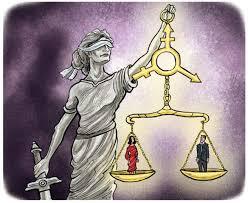
ABSTRACT
The paper examines how the criminal statutes in India promote gender neutrality, taking into consideration the BNS, which replaced IPC in the year 2024. Sections like 354A (sexual harassment) and 498A (marital cruelty), restricted protections to women while neglecting male and non-binary victims, leading to biases and misuse. Positive changes, like replacing “minor girl” with “child” in sections 366A and 366B, reflect progress toward neutrality. The article highlights the judiciary’s evolving stance, in cases like NLSA v. UOIrecognising rights of transgenders, and adopting gender-neutral terminologies for all individuals under the law, ensuring them fairness and equality. This situation has resulted in the improper use of laws and insufficient safeguards for men and individuals of other genders in instances such as sexual harassment and domestic violence. As the society needs to ensure inclusivity by eliminating gender-specific terms and biases in legal language and provisions. The document emphasizes the importance of balancing protections while preventing misuse of laws in a diverse society. Over the time, the judiciary in India has undergone a significant transformation, reflecting the changing needs of society and its growing emphasis on equality, equity, and justice. Initially in the legal framework, courts have historically enforced strict interpretations of the law, frequently shaped by preconceived notions and prejudices in society. The judiciary began adjusting to a more inclusive approach as an outcome of changing constitutional principles and progressive societal standards. A shift toward inclusivity was illustrated by paradigm shifting judgements like Maneka Gandhi v. Union of India, broadening the definition of fundamental rights, and NALSA v. Union of India, that established transgender rights. The reference emphasizes that the necessity to address gender imbalances in India is one of the primary reasons for the presence of numerous legal laws. To advance gender equality and shield vulnerable populations especially women from violence and prejudice, numerous laws have been enacted.
However, these provisions can sometimes lead to misuse, resulting in challenges within the legal system. Evolving times has evolved societal needs. That which once was considered protective has become restrictive, questioning age old concepts behind gender-specific laws leading to “protective discrimination.”
KEYWORDS
Gender Neutrality, Criminal Law, Biasness, Punishment, Marginalized communities
INTRODUCTION
In recent times, the bar and the bench has played a critical part in disassembling gender impulses, decriminalising and permitting homosexuality in the case of Navtej Singh v. Union of India promoting gender impartiality.
While The Indian Constitution establishes equality before the law and equal protection of laws under Article 14 and Article 15, still keeping specific restrictions on them.
The existing biases in society, has made numerous communities face marginalization for centuries, particularly women, for whom gender-specific laws are present in nearly every country around the world as a measure of protection to prevent women from exploitation and becoming victims of severe crimes. Accordingly, measures are appertained to “defensive demarcation”, to address literal imbalances, promote social justice by granting special boons to those having faced systemic discrimination. This approach is an established in numerous countries, including India, where specific laws have been legislated for underprivileged communities.
What was formerly seen as a defensive measure is being increasingly viewed as restrictive, as more and more cases arise that focus and highlights the abuse of rights and remedies designed to cover individualities under these laws. Therefore, gender neutral laws are a necessity now to dispense justice without creating a bias against the victim or the perpetrator only because of their gender.
This paper shows a comparative study regarding how far of the concept of gender neutrality has penetrated the newly formed BNS, 2023 with comparison to that of the IPC, 1860.
A COMPARATIVE STUDY ON GENDER EQUALITY AND NEUTRALITY
The BNS has unwittingly overlooked the issue of gender inequality by making no provisions for the transgenders and LGBTQ community. Moreover, the Act has clubbed together the issues pertaining to women and children in a common chapter. Initially, the IPC in the instances of dowry death, held the entire family of the husband liable for the crime. Since, the provision was cognizable, non-bailable and compoundable, this gave rise to widespread abuse of the law.
If we take the example of rape (Sec 375 IPC now Sec 63 of BNS), we find that the definition of rape to be still gender biased. This is largely because in mostly all the cases it is the men who are considered to be the perpetrators of rape as given under the seven conditions of the section. Though unusual but not uncommon that men and also women are sexually abused by other women. Even though the question of gender neutrality of rape laws arose in Sudesh Jhaku vs. KC Jhaku, but it has not yet been addressed by the Indian legislature. It is difficult to overlook the fact that the Indian legislative system does not provide any protection to men or transgenders against sexual offences.
Sec 498A and 304B of the IPC were created with the aim to provide maximum protection to women through strict punishments for the offences relating to dowry, falling under the specific sections. The enactment of the Act prohibiting dowry in the year 1961, led to a strengthening of women’s rights in our country. But recent trends showed that women have often started to abuse these Acts, gaining an unfair advantage in terms of inflicting cruelty and mental torture upon their husbands and their family members. This came into light through the judicial pronouncements made in 2010 and 2014. Furthermore, the Law Commission of India stated the abuse of Sec 498A, presently Sec 85 & 86 of BNS as ‘Legal Terrorism.’
Slowly in the present scenario, increasing number of boys are being subjected to sexual violence in comparison to girls. The image below provides a comparative analysis showing the ratio of boys who were subjected to sexual abuse in relation to girls, a statistics published by the Ministry of Women and child welfare of India.

Image 1: Sexual abuse of boys in India: Overall statistics
In a paper published in the Indian Journal of Community Medicine, in the year 2019, it was found that gender-based violence affected 52.4% of men. Of 1000 men, 10.5% had been victims of violence from their wives or intimate partners in the past 12 months, and 51.5% had been victims of violence at least once in their lives. Emotional abuse accounted for 51.6% of all spousal violence, with physical abuse coming in second at 6%. Physical assaults were only severe in a tenth of the cases. The husband was the one who started the mental and physical abuse in over half of the cases. In India, there is no gender parity when it comes to physical violence. Risk factors were lower family income, middle-class education, a nuclear family structure, and an alcoholic offender. The risk factor for bidirectional physical violence is an earning spouse who has completed their education.

Image 2: Gender-Based Violence against Men in the Rural Area of Haryana, India
In a report published by National Integrated Biological and Behavioural Surveillance (NIBBS), the National AIDS Control Organisation (NACO), and the Ministry of Health and Family Welfare, it was stated that about 31.5% transwomen have non-consensual/forced sexual encounter with men. About 30% have forced sexual encounters around the age of 15-17 years and 26% around the age of below 14 years.
It is pertinent to mention here that whilst under the criminal laws of the land maximum punishment for rape may involve a death sentence, but u/s 18 of the Transgender Persons (Protection of Rights) Act, 2019, the imprisonment is only for a period between 6 months to 2 years with fine for the physical, verbal, emotional or sexual abuse suffered by a transgender person.
RESEARCH METHODOLOGY
This paper employs doctrinal research methodology, to address the research objectives effectively. The primary aim is to illuminate the legal, regulatory, and practical challenges faced by genders that are most recognized in society. The study collects and analyses textual and data. The qualitative research framework is designed to provide a comprehensive and detailed description of the observations made. This research method strategically combines secondary data collected from various literature review to leverage the strength and mitigate weaknesses of the research. By integrating diverse data sources, the researcher has tried to gain deeper insights into the phenomena under study and enhance the credibility of her findings.
REVIEW OF LITERATURE
The primary statutes that has been reviewed for the purpose of this research are the IPC, 1860, the Dowry Prohibition Act, 1961, the Transgender Persons (Protection of Rights) Act, 2019, and the BNS, 2023. Other literatures that has been reviewed include the paper by Khajanchi, Priyam who focuses on the gender inequality prevalent in India and shows the abuse of the legal system made by women hiding behind the protection of statutes like the Dowry Prohibition Act, 1961. Further review of literature published by Malik, Jagbir Singh & Nadda, Anuradha shows the gender based violence against men in rural Haryana, as, there is no gender parity when it comes to physical violence. Risk factors were lower family income, middle-class education, a nuclear family structure, and an alcoholic offender. The risk factor for bidirectional physical violence is an earning spouse who has completed their education. A further study of the report published by Outlook India shows that about 31.5% transwomen have non-consensual/forced sexual encounter with men. About 30% have forced sexual encounters around the age of 15-17 years and 26% around the age of below 14 years.
METHOD
In this paper the descriptive research has been used where the collection of data about the study subject without intervening is done through the secondary data that is already been published and available in the online platforms. Secondary research is data that has already been collected by other researchers in a government census or previous scientific studies. The aim of the research paper was to synthesize existing knowledge, analyze historical trends, identify patterns on a large scale. Hence the use of secondary data has been preferred.
SUGGESTIONS
The use of ‘default’ genders in criminal and family laws creates harmful generalizations, limiting the scope and creating disadvantaging to those who fall outside the pre-determined terminologies. To counter this, it’s essential to adopt gender-neutral language, using terms like ‘they,’ ‘people,’ and ‘other person’ instead of gender-specific terms.
Homosexuality is still considered as taboo amongst the public, despite being decriminalized a few years ago, the society has still not being able to adapt to it. If a man is sexually harassed or assaulted by another man, it can be misinterpreted as an indication of his sexual orientation, leading to discrimination and unjust shaming of the victim. This stigma often causes male victims to hesitate in disclosing their experiences or seeking justice, as society may not take their claims seriously and might blame their sexual preferences. With globalization, concepts such as gender neutrality and feminism have gained traction worldwide, raising awareness about their importance and encouraging their integration into national legal frameworks. Many countries are now adopting more gender-neutral laws and language to foster inclusivity among their citizens. However, in nations like India, there are still many areas where gender neutrality has not been fully incorporated into legal provisions. While numerous laws globally are gender-neutral, some laws specifically designed for women or transgender individuals whether for protection or empowerment remain necessary due to the significant disparities between genders in many societies. Additionally, these gender-specific laws can inadvertently marginalize the experiences of those not explicitly covered by these provisions, such as male and transgender rape victims under Section 375 of the Indian Penal Code.
Furthermore, these gender-specific laws can often suppress the experiences of genders not mentioned under their provisions, such as male and transgender rape victims under Section 375 of the IPC.
CONCLUSION
In conclusion, this paper navigates through the jurisprudential aspect of criminal laws and effect of biasness that has effected it at some extent. In recent constitutional trends, the inclusion and recognition of communities such as LGBTQIA+, has made this aspect of biasness more complex. This progressive constitutional trend has to be accompanied with noble principle of equality and neutrality. This paper further contains the atrocities that has been created in the society due to criminal laws lagging the noble principles of equality.
It further contains statistical data that reflects on injustice to male section of the community being generalized. In case of grievous offences such as sexual offences, domestic violence are being ignored and not prioritised when it happens to the male section of the community, which itself violates the fundamental principles of natural justice.
The intent of any statute or law including criminal laws has to be dedicated towards serving the society with elements of complete justice, but due to the factors of gender biasness in the criminal laws has prevented the former to do complete justice with respect to citizens of the nation. It has been discussed in the later section of the paper that the provisions of the statute contains offences which can only be commenced by men, which prima facie is vitiating the noble principles of equality and justice. As we progress towards a modern society the possibilities of criminal offences against different sections of society has been comparatively increasing without any distinction on the particular section in the society, thus this discrimination or biasness has opened a Pandora box in which the male section of the society has become vulnerable towards the felonious crimes. Since, women is considered to be the most vulnerable section of the society, we as a society have
certain duties and responsibilities towards their upliftment, but these criminal laws have created a scope of being misused by the women, this scenario is not genuinely improving the condition of women rather it makes them more vulnerable towards the society as they have upper-hand in case of rights than any other sections of society.