
Abstract
The research paper focuses on understanding the development of menstrual leaves policy in context of India. It also delves into the complexity of menstrual pain and the need for such a policy in India. It analyses the previous attempts to bring a nationwide policy dealing with menstrual leaves and reproductive health of women in India, while also understanding both sides of the story by understanding the conflicting views and their underlying principles with the help of legislations of other countries. The research also tries to make an attempt to suggest policy measures which will help reduce the drawbacks of the same the measures include providing students with menstrual leaves along with increasing awareness among the male students to reduce myths and percept. Mainly focusing on how to reduce the taboo around menstruation and a way forward to balance between Women’s Rights and Empowerment and Practical Workplace implications.
Keywords
Menstrual Leave Policies; Women’s Rights; Gender Equality; Policy Development; Menstruation Taboo; Menstrual Laws; Menstrual Health;
Introduction
Recently while hearing a Public Interest Litigation (PIL) which sought a direction from the apex court to the government for framing rules and policies to provide for Menstrual Leaves for women, the Chief Justice of India DY Chandrachud said “Mandating such leaves will lead to women being shunned from workforce. We do not want that what we try to do to protect women can act to their disadvantage”. Further the court denied the petition on the grounds that SC could not intervene in the matter because it deals with policy making and it’s not for the court to decide. The court referred the matter to secretary in the Ministry of Women and Child Development and requesting to look into the matter.
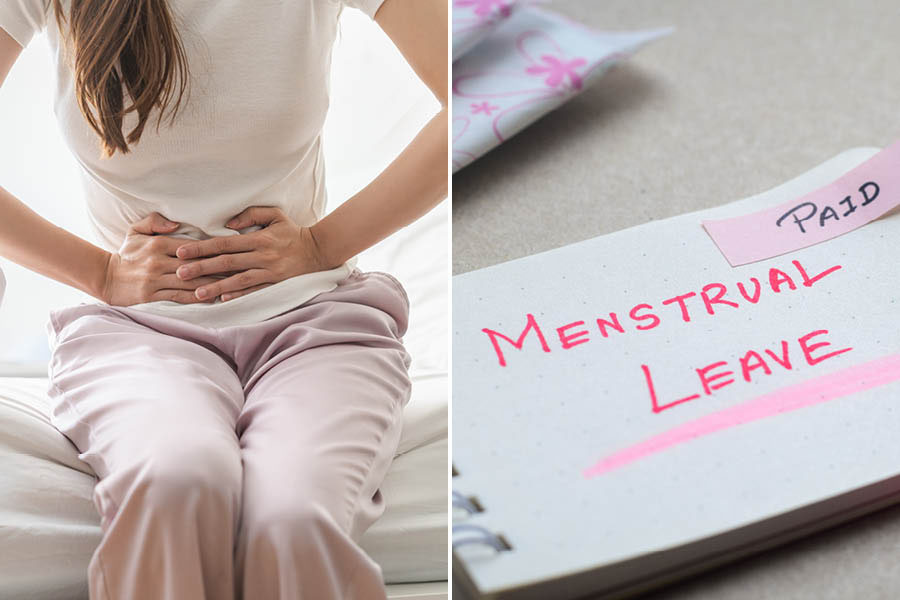
A Menstrual leave means taking rest or a leave when menstruating due to the menstrual pain that women have to go through every month. Menstruation is a multi-dimensional topic and subjective from person to person. It affects half the population and demands a policy to regulate leaves in a systematic way.
It is not the first time this debate has come up in the mainstream, several attempts have been made to implement such a policy at a national level but failed. However, the states of Bihar and Kerala have been successful to implement such policies to help women empowerment and equality.
In 1992 Bihar had become the first state to implement such a policy providing for 2 Days of Paid Menstrual Leaves for female employees every month. It was a bold decision taken under the leadership of Lalu Prasad who became the Chief Minister of the state in 1990 under Janata Dal. This step by the Bihar government was widely praised as it improved condition of women in the workforce at that time period in Bihar.
The state of Kerala has followed Bihar in this matter and provided for a three day leave for female students. The minimum attendance criteria were also reduced from 75 percent to 73 percent. These steps have acted as a relief for many menstruating women.
There have been demands to make a legal framework to mandate such policies for the benefit of menstruating women and providing for better healthcare to them at the centre level too. However, there has been heavy criticism for it as well because there lies a risk of creating more stigma and discrimination against menstruating women in the workforce and may backfire.
Research Methodology
This paper utilises the doctrinal method of research. The primary sources used in the research are already present legal statutes, case laws etc. and uses secondary sources of data from sources on the internet, articles, blogs, and other legal materials. The author also compares the present legal frameworks of other countries to find probable answers to the legal and social issues.
Review of Literature
The concept of menstrual leaves is not new, but has been already in existence from around a couple of centuries. The first evidence of menstrual leave being officially applied were in earth 1900’s, where the menstruating women were provided with leaves from working labour. However, the policy was later to be revoked due to increasing discrimination against women in the workplaces.
After World War II Japan adopted a menstrual leave policy to protect women’s rights. This was followed by South Korea, Zambia, Taiwan Spain, Vietnam, Indonesia, Philippines. The latest being Zambia in 2015 and Spain in 2023. This seems to be a growing trend among nations.
Recently in India, companies like Zomato and Swiggy have decided to provide women employees with Menstrual leaves following the international trends.
“Implementation Menstrual Leave Policy in India: An Empirical Study” by Prithivi Raj & Antra Pandit conducted empirical research in Jammu, conducting a survey which provided answers to vital questions like Suggestions for leave (how many days should leaves be granted) and whether the respondents agreed with working from home instead of taking leaves. The research provides valuable data analysis of around 340 women working in the organised sector in the territory of Jammu, India. The authors also focused on the international perspective on Menstrual leaves and multi-national companies’ implementation of menstrual leaves. The findings of the empirical research showed that a major chunk of respondents preferred for 1 to 2 days (34.7 % for one day leave & 54.8 % 2 days of leave) of menstrual leave. Around 52.2 % of the respondents preferred to work from home instead of taking full day leaves and 27.1% of the respondents answered with maybe.
Another research “Paid Menstrual leaves: A legal Enigma” by Kavya Mittal & Naren Maran dives into the legal aspect of Paid Menstrual leaves. The research focuses on Article 14, 15 and 21 of the Indian Constitution. The authors further explain the concept of ‘protective discrimination’ in article 15 of the constitution. The authors also explain the stand of Equal Renumeration Act, 1976 which says that men and women have to be paid the same when they work in the same conditions under 2(h) of the Act. Now this applies when women will be entitled to a paid leave. Since they have to suffer from discomfort and menstrual pain while working. The authors further provided a comparative study on other countries and explained their legal frameworks and policy suggestions as well.
Why is such a policy required?
Menstruation remains to be a topic covered with misinformation and stigma with major affects on women’s rights and their fight for equality. Even though menstruation is a biological process, it remains to be looked down upon with shame, discrimination and isolation. This paper delves into the details of exclusion of women due to menstruation from Educational and Religious settings. It focuses on the urgent need for codification of menstrual leaves into statutes and understands the financial, social and mental implications of such exclusions.
In a country like India, there is a lack of awareness about menstruation and it is still considered to be a taboo topic and women are even kept out of practicing their religious beliefs when menstruating. For instance, many temples did not allow women to enter the religious premises due to the belief that women release a downward energy while menstruation and the energy of the temple comes into conflict with the energy of menstruating women, resulting in an imbalance of energies. However, the restriction on menstruating women from going to temples was declared to be unconstitutional in the historic case of Indian Young Lawyers Association Vs the State of Kerala (Sabarimala Temple Case). The court held the practice to be violating articles 14, 15, 19(1), 21 and 25(1). This decision brought significant victory for women’s rights and empowerment with respect to their religious freedom.
Women also tend to lose out on education due to the Menstruation Stigma in the Indian Society, many times they even prefer to drop out of school completely. Studies reveal that one out of four girls drop out of school on attaining puberty mainly due to lack of proper menstrual hygiene and healthcare. This leads to far-fetching consequences on a woman’s life, due to non-completion of education, the chances of their employment decrease significantly and they cannot achieve financial independence. A large number of women get married at early ages after dropping out from school, which results in exploitation in many cases and financial dependency of women on their partner. Apart from finance, women also lose out on empowerment and may lead to negative effects on their mental health in the long run.
Therefore, making a policy for menstrual leaves can be expected to bring more participation from women at educational institutions as well as in the workforce. It will also lead to discussion about the topic of menstruation which in turn will lead to reduction of stigma around it.
Attempts to Formulate Policy
There have been several attempts by different members of the parliament to push for the framing of a Menstrual Leave Policy that can provide menstruating employees & students with leaves at a national level but ultimately could not gain enough acceptance from the members.
The first attempt was made by a Congress MP, Ninong Ering, as a private member bill in 2017 in the Lok Sabha, he had presented the Menstrual Benefit Bill, 2017 but the same could not be passed due to lack of support. He later presented the same bill in the budget session (2022) of Arunachal State Assembly but had to be later withdrawn.
Another attempt was taken by Congress MP, Mr. Shashi Tharoor, he introduced the Women’s Sexual, Reproductive and Menstrual Rights Bill in 2018. One of the provisions of the bill was to provide free sanitary pads to women. It aimed to provide easy access to reproductive healthcare to women. However, this bill also was not passed.
Another Bill which aimed to improve this condition was “The Right of Women to Menstrual Leave and Free Access to Menstrual Health Products, 2022”, The Bill provided for three types of Rights for Menstruating women. First, in case of working women, Right to Paid leave and absence from work for three-days while menstruating. Second, in the case of students, Right of Absence from educational institutions for three-days while menstruating. And third, the Right to Access to free Menstrual Health products ranging from menstrual cups, tampons, and sanitary pads. The Bill also quoted research which said 40 percent of girls miss school during their menstrual cycle, the reasons majorly being the lack of healthcare infrastructure available at schools. Nearly 65 percent said that it had an impact at their daily activities and many times they had to skip classes and school due to anxiety, discomfort, concerns about leakage etc.
The Menstrual leave policy can be looked upon as an expansion of Article 21 (Right to Life and Liberty). The article includes the Right to Healthy Life as interpreted by the Supreme Court in the case of Moba Changkai Vs State of Nagaland, it was held that health and medical care came under the scope of article 21. Therefore, Right health and medical care should be extended to menstrual health.
The supporters of Menstrual leave argue that a woman should not be expected to work during their menstrual cycle because many women experience mild to severe cramps, muscle pain, headaches etc. According to a Professor at UCL, patients have described the cramping pain as ‘almost as bad as having a heart attack’. Dysmenorrhea (medical term for period pain) affects around 45-90 percent of who menstruate and half often describe the pain as moderate to severe. This hinders their capacity to work, learn or play for at least 1 to 3 days.
Conflicting views on Menstrual Leaves
In winter session of 2023, Former Union Minister Ms. Smriti Irani while answering to the issue of providing women employees with a fixed number of leaves due to menstruation gave her opinion that “Menstruation is not a ‘handicap’ and it shouldn’t warrant a specific policy for paid menstrual leave”. Her remarks sparked a nationwide debate over the menstrual leave issue. She pointed out that providing Menstrual leaves may lead to Discrimination and Harassment in the workplace.
A similar stance was taken by the CJI DY Chandrachud in July, 2024, he raised concern that framing and mandating a national policy might work against the protection and empowerment of women and make the fight for equality harder.
This is actually a real concern, while a menstrual leaves policy will help women with relief from workload at a time when they are unable to work, it can also lead to discrimination and fuelling the stereotypes of women being not as equal to their male counterparts or women being treated as a weaker gender.
Additionally, male colleagues may develop harsh feelings against women if they suspect that female employees taking leaves aren’t using them for rest. Zambia had also adopted such a leave policy and it was noted that tensions arose in colleagues and employers when employees taking menstrual leaves were using them for personal matters. An employer may become hesitant to employee women because of the extra leaves while menstruation and instead of increasing the proportion of women in workforce, it might lead to reduction.
Such types of policies can undeniably help to improve the situation in the short run but will negatively impact women employment in the long run. Therefore, such measures should be taken considering all such factors carefully while implementation. In Japan menstrual leave is a legal right but there exists no provision regarding wages and companies often give unpaid time off only due to which around 44 percent of menstruating women do not take a leave when they are in severe pain and they are forced to endure physical distress at their offices.
Policy Suggestions (Opinion based)
While making a policy, one should take into consideration the Pros and Cons that come with the legal framework. If the Pros undoubtedly outweigh the Cons, then the policy can be said to be effective and can be applicable. In order to tackle the Cons as discussed previously, the following measures can be taken while framing such a policy.
- In cases of menstruating students, the government can possibly mandate a menstrual leave for at least the educational institutions, as a short-term measure to provide immediate relief to the students. As a long-term measures, the government should focus on bringing awareness among the children of age-groups of puberty and improve the healthcare infrastructure at schools/universities and may even provide to some extent free menstrual health products.
- In cases of working women, rather than forcing companies and business to provide menstruating women with paid menstrual leaves, the government may give incentives or rebates to the companies or any other type of financial reward. This way the employer will not be hesitant to discriminate on gender and will create a positive work environment for menstruating women.
In the new age of technology, there can be a provision for opting work from home for the menstruating women as an alternative of taking full time paid leaves. However, this could only be applied to a limited set of jobs.
These suggestions can reduce the negative aspects of the Menstrual Leave policy. However, these are not full proof answers to the problem at hand. There will still remain the probability for the policy to bring backlash as it cannot change the taboo around menstruation, another problem which may be faced is the discontent of male counterparts as seen in the case of Zambia. Therefore, there always remains scope for betterment in law with the changing dynamics of society.
Conclusion
Menstruation is a vital aspect of a woman’s life. Discomfort as well as the incapacity to work while menstruating is a major concern. It affects a huge chunk of the working population and the need to frame a policy regarding the same is important. Even after several attempts, no legislation could be passed at a national level. However, it would be ignorant to say that Menstrual Leaves Policy cannot be implemented at a national level, since we have seen successful implementation of the policy in the states of Bihar and Kerala.
A Menstrual Leaves Policy does not only affect the physical health of a menstruating woman but also affects her socio-economic environment and mental health. The Stigma around menstruation can have far-ranging side-effects to a woman’s life as discussed. Such a policy will not only mitigate this mindset and but will even foster more open discussion for topic’s relating to reproductive health. However, making such a policy comes with its drawbacks of potential concerns about discrimination and reinforcing of stereotypes against women. If the government takes an incentive-based approach to mandate menstrual leaves, then the downsides could be reduced. By understanding the cases of Japan and Zambia, we can look at the legislative and implementation mistakes, and correct them while making such policy.
At the end of the day, making menstrual leave policy can help to empower women at professional settings but it comes with its own risks of discrimination and employer bias which can be reduced to some extent by raising awareness, providing economic incentives, and improving the healthcare infrastructure in the long-term. Even in 21st Century women have to go through pain and discomfort while working, the international trends are also favouring menstrual leaves for working women and students. Its high time for India as well to frame a policy regarding the same and furthering women empowerment by engaging more women in the mainstream.
Author- Krish Gautam
College- Vivekananda Institute of Professional Studies (VIPS), Delhi