
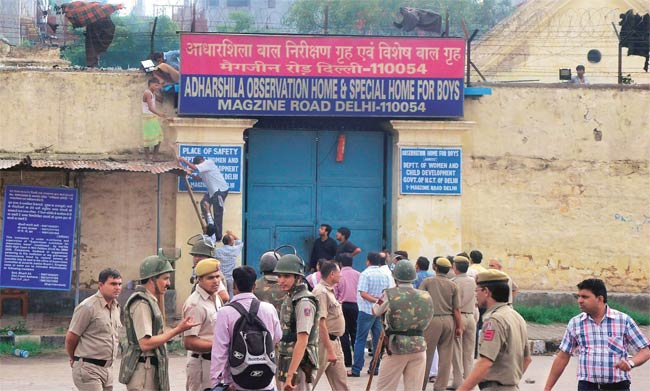
Children are heaven’s lieutenants. They have the right to life and wellbeing; to health care, nutrition and shelter; to protection from conflict, neglect, exploitation, abuse and injustice. They are our future and therefore let them not be denied of their rights to grow. Because the future and stability of a society depends upon the quality of its children and the quality of its children in turn depends upon the manner on which welfare is planned. A child as an important social unit has therefore to be taken care of as a whole instead of some isolated phase in his development and no one should forget the saying, “let children be children.”
Children, being the supremely important national assets, require special attention and protection against all sorts of neglect and exploitation and it is the social responsibility of the state to work in this direction in a strong and positive manner. Accordingly, Indian Constitution, different legislations, national policies etc. in national level and different conventions and recommendations, declarations etc. in international level have tried their best to protect the children in every respect. But with the progress-and development of the society, even in Twenty-first Century, the rights of the children are being squeezed and the plight of the children remains the same. Day by day, rather offences against children are increasing. Child rape, kidnapping and abduction, child prostitution, exposure and abandonment, foeticide and infanticide, child labour, child trafficking, child abuse etc. are now very common in the society. Juvenile Justice focuses on prevention of these offences.
The Juvenile Justice (Care and Protection of Children) Act, 2015 was enacted to consolidate and amend the law relating to children in conflict with the law and those in need of care and protection. The act was prompted by the 2012 Delhi Gang Rape case, where a boy was tried as an adult in a juvenile court. Subramanian Swami, a BJP politician, filed a public interest litigation in the Supreme Court of India, seeking the boy’s trial as an adult. After the court allowed the juvenile court to give its verdict, the boy was sentenced to three years in a reform home. The victim’s mother criticized the verdict, arguing that not punishing the juvenile encouraged other teenagers to commit similar crimes.
Minister of Women and Child Development, Maneka Gandhi, proposed a new law allowing 16-year-olds to be tried as adults, claiming that 50% of juvenile crimes were committed by teens who knew they would get away with it. The bill was introduced in parliament on August 12, 2014, and will allow a juvenile justice board to decide whether a juvenile criminal aged 16-18 should be tried as an adult. It also adopts new features, such as the Hague Convention and cooperation in respect of Inter-country adoption, 1993, and seeks to make the adoption process of orphaned, abandoned, and surrendered children more streamlined. One of the most criticized steps in the new juvenile justice bill is the introduction of a “judicial waiver system,” which allows treatment of juveniles in certain conditions in the adult criminal justice system and punishes them as adults for the first time in India.
KEYWORDS:
Juvenile Justice, heinous crimes, sexual assault, Juvenile delinquency, adults
INTRODUCTION
The Juvenile Justice (care and protection of children) Act, 2015, was passed by the Indian parliament to replace the existing juvenile delinquency law, the Juvenile Justice (care and protection of children) act, 2000. The act aims to allow juveniles aged 16-18 involved in heinous offenses, who are in conflict with the law, to be tried as adults.
Juvenile justice aims to protect the rights of children and prevent them from engaging in violent crimes. It prioritizes prevention and makes custody a last resort, considering the effects on the victim and community. Many ‘Child in Conflict with Law’ are socio-economic victims denied education, health, shelter, care, and protection. Lowering the age of juveniles from 18 to 16 years, except in exceptional cases, is not a solution to the rampant involvement of juveniles in heinous crimes. The Delhi Gang rape case sparked global agitation to prevent such crimes. The law often believes that a child is incapable of committing a crime, but today, children are becoming more matured, and whether a child is matured or not varies between children and age.
HISTORY OF THE LEGISLATION
The Apprentices Act, 1850, and the Reformative School Act, 1897, were the first laws dealing with children in conflict with the law. The scope of juvenile justice law expanded with the establishment of separate juvenile courts and residential institutions in towns like Madras, Bengal, and Bombay. In 1956, the United Nations General Assembly adopted the declaration of the Right of the Child, and India was a party to the declaration. The Children Bill was passed in 1960, and the Child Act, 1960, established two adjudicatory bodies to deal with children in conflict with the law and those in need of care and protection. The Juvenile Justice (Care and Protection) Act, 2000, aimed to address global momentum of securing child rights, moving away from discriminatory definitions of juveniles and replacing archaic terminologies with juveniles in conflict with the law. The New Act aimed to take the agenda of restorative justice and reformation further, but indirectly fell under Retributive Justice and violated constitutional provisions and international provisions.
THE DEFINITION OF CHILD
According to Article 1 of the United Nations Convention on the Rights of the Child, 1989, “a “child’ means every human being below the age of eighteen years unless, under the law applicable to the child, majority is attained earlier.” Hence, this Article grants the discretion to individual countries to determine by law whether childhood should cease at twelve, fourteen, sixteen of whatever age they find appropriate. Accordingly, in India, there is no unanimity regarding the age of the child and it varies in different laws.
THE DEFINITION OF JUVENILE
In terms of law, a ‘juvenile’ is a person who has not reached the age of eighteen years. It has a legal significance. The Juvenile Justice Act, 2015 defines a juvenile as a child under 18 years old, and they should not be treated as adults unless involved in criminal acts for trial and punishment in
court. Juveniles under 16-18 years old and those who commit heinous crimes are considered juveniles. The court can decide whether a juvenile should be treated as an adult in exceptional cases. This amendment differentiates a juvenile from an adult in India regarding any crime committed by them.
NIRBHAYA CASE BROUGHT THE 2015 AMENDMENT
The Delhi gang rape case, involving a 23-year-old girl, led to widespread agitation and criticism worldwide. The death penalty was imposed for all accused, except for a juvenile who was 17 years old at the time of the crime. The juvenile, now 21, was released three years later under the Juvenile Justice Act, 2000, exempt from the death penalty and protected under the provisions of the Juvenile Justice Act, 2000. The juvenile’s behavior suggests he was aware of the consequences of his actions and was mature enough to know the consequences.
In response to the case, the Indian Parliament made several changes to sexual offences against women. The definition of rape under section 375 of the Indian Penal Code (45 of 1860) was changed, making penetration no longer an essential ingredient. Even forceful penetration of a woman’s vagina was considered an offense.
The Minister of Women and Child Development, Maneka Gandhi, moved the Juvenile Justice Bill 2015, which lowered the age of criminal responsibility for juvenile offenders from 18 to 16 years, and in exceptional cases only. This hasty passage was a response to public pressure against the release of the juvenile. However, the question remains whether lowering the age of juvenile offenders from 18 to 16 years will effectively prevent such crimes.
The amendment to the Juvenile Justice Act 2015 maintains that a child who has not completed 18 years old is still considered a child under law. However, for those aged 16-18 who have committed a heinous offense, they can be tried as adults under certain circumstances. The JJA, 2015 applies to two broad categories of children: those in conflict with law and those in need of care and protection. The JJB is constituted by one judicial magistrate and two social workers, and a
practicing professional with a degree in child psychology, psychiatry, sociology, or law may be appointed as members of the JJB and the CWC.
If a person is arrested for an offence committed prior to 18 years old, they are treated as a child and their cases are disposed under the provisions of this Act. The JJB has the power to dispose of all cases of children below 16 years committing any offense, and those between the ages of 16-18 years if they have committed a petty or serious offense. The JJB may choose to dispose of the case itself or transfer it to the children’s court.
The children’s court has the discretion to decide whether to try the child as an adult or deal with them as a child and pass appropriate orders accordingly. Progress of children sent for stay beyond the age of 21 years needs to be reviewed annually, and upon reaching 21 years, another assessment is to determine if the child has reformed and is ready for release in society.
RESEARCH METHODOLOGY
The methodology employed in this research involves a comprehensive analysis of worldwide Juvenile justice legislations and its evolution over time. The method includes the examination of primary sources such as bare acts, newspaper reports, customary laws, and judicial decisions. Additionally, the study explores secondary sources, including scholarly articles, books, and reports, to provide an in-depth understanding of the historical context and modern development in child welfare laws.
REVIEW OF LITERATURE
The Indian Penal Code introduced a new category of juveniles, defined as children under 18 years old, who would be convicted as adults for heinous crimes. Child care institutions were made mandatory, and the State Adoption Resource Agency and Central Adoption Resource Agency were established to control and monitor adoption of children. The Juvenile Justice Board and Child Welfare Committee were established to regulate and monitor the juvenile justice system, with three members on the Boards. The Children’s Court was revived for every district, with at least one-woman member present.
The 2015 Act introduced new definitions for orphaned, abandoned, and surrendered children, as well as petty, serious, and heinous offenses committed by children. Processes for adoption have been streamlined, with timelines for both in-country and inter-country adoption. Rehabilitation and social reintegration measures have been provided for children in conflict with law and those in need of care and protection. Child care institutions must be mandatorily registered within six months of the Act’s commencement.
The Juvenile Justice Act, 2015 in India allows children aged 16 to 18 years who have committed heinous offenses punishable by imprisonment for seven years or more to be tried and sentenced as adults. This act is in violation of the Constitution of India and the United Nations Convention on the Rights of the Child (UNCRC), which was available 150 years ago.
CASE LAWS
Jhabua Murder Case (2017)
The Jhabua Murder Case 2017 involved two minors, aged 16 and 17, who were convicted of a heinous crime and sentenced to life imprisonment. The case has sparked debates about the age of criminal responsibility in India. Some argue it brings accountability for minor crimes and may deter criminal behavior. However, the primary objective of the Juvenile Justice Act of 2015 is to focus on juvenile reformation, and attempting minors as adults may undermine this.
Barun Chandra Thakur vs. Master Bholu (2022)
The case revolves around the juvenile justice system, which aims to rehabilitate offenders rather than punish them. The accused, Bholu, was initially considered a juvenile but was later deemed an adult due to a severe crime. The court ruled that the Board, not the court, should decide whether further assessment is necessary. The court emphasized the importance of the Board’s role in ensuring fairness and consistency in the juvenile justice system. The case demonstrates the application of the Juvenile Justice (Care and Protection Of Children) Act 2015, which focuses on rehabilitation and reformation.
Shilpa Mittal vs. State of NCT of Delhi (2020)
The Shilpa Mittal vs. State of NCT of Delhi case focuses on the classification of a juvenile offense as a heinous crime under the Juvenile Justice Act, 2015. The offender is above 16 years old, making them eligible for consideration as juveniles under the Act. The Juvenile Justice Board conducts a preliminary assessment to determine if a juvenile should be tried as an adult in a heinous offense. The court cites Section 2(33) of the Juvenile Justice Act, which defines a “heinous offense” as one with a minimum sentence of 7 years. The court’s interpretation of the term “serious offense” under Section 2(54) of the Act demonstrates a commitment to aligning the legal framework with legislative intent.
Parag Bhati (Juvenile) through legal guardian v. State of Uttar Pradesh (2016)
The Parag Bhati case, involving a murder case, highlighted the importance of determining an accused’s age in cases involving serious offenses. The Supreme Court ruled that the principle of juvenile status applies only when the accused is prima facie a minor. The court considered the seriousness and planning involved in the crime, as well as the maturity displayed by the accused, to determine if the plea of juvenility was an attempt to evade legal consequences. The ruling underscores the need to prevent individuals from using the plea of juvenility as a tactic to evade legal consequences, especially in cases where the accused demonstrates maturity incompatible with the claim of being a minor. The case provides guidance for future cases contested by the Supreme Court.
Sher Singh Sheru v. State of U.P. (2016)
Sher Singh Sheru v. State of U.P. (2016) is a case that emphasized the importance of a thorough and fair inquiry into the plea of juvenility in criminal cases. The appellant, convicted of kidnapping, claimed to be a juvenile based on his High School Examination Record. Despite being rejected by the Juvenile Justice Board and dismissed in a session trial, the court justified the appellant’s right to raise the plea of juvenility and provided clarity on the process and timeline for such inquiries. The court also highlighted the legal protection granted to juveniles under the Juvenile Justice Act, 2015, and the Juvenile Justice (Care and Protection of Children) Rules, 2007.
The case also affirms the right of an individual to raise the plea of juvenility, even if a writ petition is dismissed or treated as infructuous.
Salil Bali v. Union of India (2013)
The Nirbhaya case, involving a brutal gang rape and murder, sparked public debate on the treatment of juvenile offenders, particularly those aged 16-18. The petitioner argues that the severity of offenses, such as rape, warrants a reevaluation of the juvenile justice system. The Juvenile Justice Act defines a juvenile as someone below 18. Sections 2(k) and 2(l) may define a “juvenile in conflict with the law” and a “child in need of care and protection.” The case could involve a delicate balance between rehabilitation principles and accountability, especially in cases of grave offenses. The outcome of this case, if it leads to a reconsideration of relevant provisions, could have a broader impact on how the legal system addresses serious offenses committed by individuals aged 16-18.
ANALYSIS
The J.J.A., 2015 is violative of the constitution of India and the United Nations Convention on the Rights of the Child (UNCRC). It provides that children between 16 and 18 years, alleged to have committed heinous offences, that is, offences punishable with imprisonment for seven years or more, to be tried and sentenced as adults. Even the Justice J.S. Varma Committee did not recommend any change in juvenile justice law, including for sexual offences. Hence, there was no need to subject juveniles to a different or adult judicial system as it would be violative of Article 14 and 15(3) of the Constitution of India, 1950 respectively. The statistical evidence does not suggest that there is any need to introduce this principle of exclusion of some children from the reformatory system as there is no any major rise in the rate of crimes committed by children. If we look at United States, the policy of exclusion of juveniles committing heinous crimes was introduced in the United States in 1996, USA was experiencing a much higher rate of crimes committed by juveniles. About 8,000 crimes were committed by juveniles out of lakh in United States. This was however not the case in India so there was no necessity to lower down the age of juvenility by suppressing the rights of children. Data of crimes is somewhat unreliable because it was based in the number of First Information Reports (FIRs)registered and not on the number of cases proven in courts. Such data can be useful in for a political campaigning the media but they
can never reflect reality in formulating public policy if not analyzed in connection with other realities. There was a great public uproar in the year 2012 over the realize of juvenile convict in the Delhi gang-rape case. This development showed that policy was guided more by emotion than evidence.
SUGGESTIONS
It can be suggested that the age of juvenility should not be reduced from 18 to 16 years, as it may lead to heinous offenses has committed again by a child below the age of 16. The court should also consider a child’s maturity and understanding of the consequences of their actions. If a child committed a barbaric offense, they should be punished with more severe punishment, such as more than three years of hard labor imprisonment. It is also suggested that special provisions in J.J.A.2015 to empower Juvenile Justice Boards to pass severe punishments in rare cases and rehabilitation. Special homes should be established for these children, providing them with hard labor work and education. The child in conflict with law should be separated based on their age and crime.
CONCLUSION
In conclusion, The Juvenile Justice (Care and protection of Children) Act, 2015 was enacted after the Nirbhaya Rape Case, ensuring that individuals who committed crimes after having proper knowledge and reasonable judgment would be punished with harsher punishments. Whereas If a child commits an offense without criminal intention, they will be treated differently. The law adapts to society’s changing needs, with the responsibility of the state to protect children’s interests. However, implementing the Act requires active participation and a determined political structure of the state.
The Juvenile Justice Act, 2015 in India has been criticized for ignoring the purpose of rehabilitation, lowering the age of juvenility from 18 to 16 years. This drastic amendment was taken after Nirbhaya’s rape case, which led to concerns about the punishment of minors involved in gang-rape cases. The Act has been criticized for disregarding international norms for the rights of children and the fundamental rights guaranteed by the Indian Constitution. The Act has faced criticism from social workers and NGOs who argue that children are considered assets of the nation
and should be protected and given opportunities for their overall development. The Act’s implementation has raised questions about the future of lowering the age of juvenility for children involved in crimes like rape and murder.
By- Bidisha Pratihar
JIS UNIVERSITY, Agarpara