
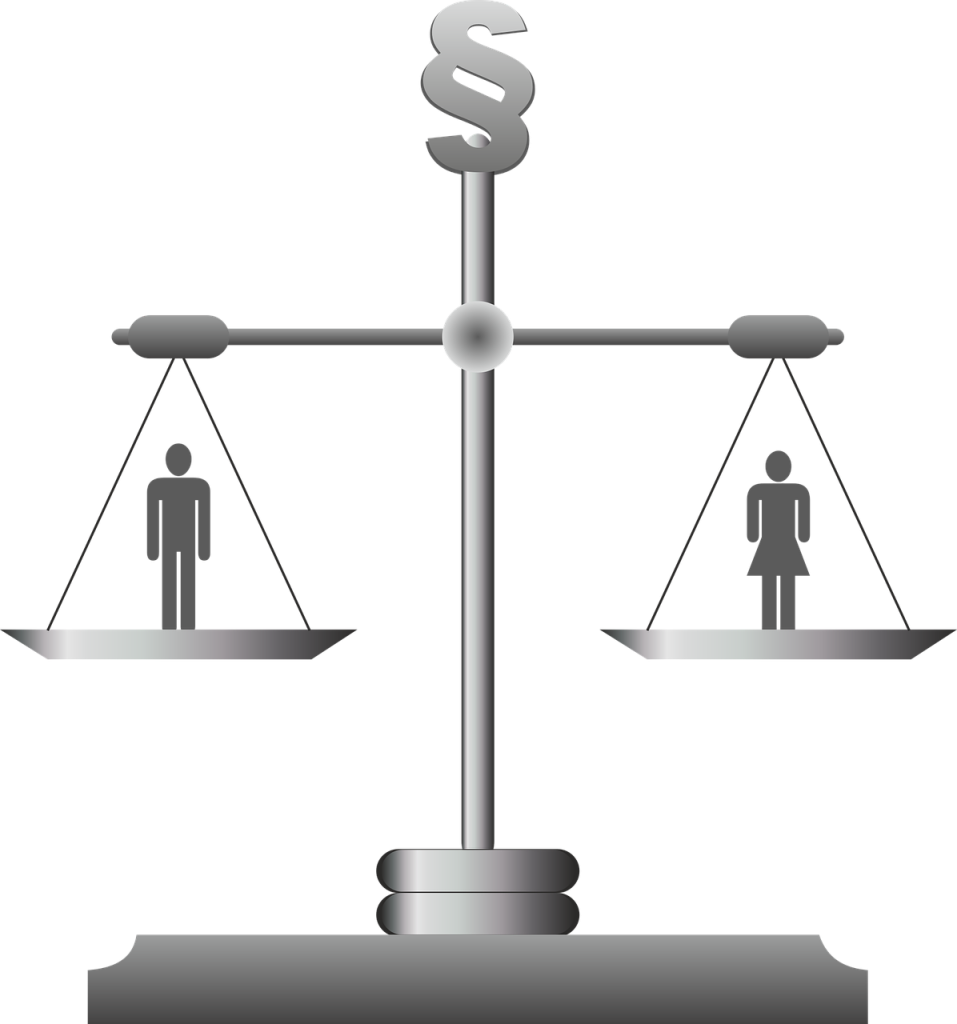
This research paper delves into the intricate relationship between gender and legal discourse,
with a specific focus on the development of gender-responsive policies and language. The
paper aims to critically analyze the existing legal frameworks and language used in policy
formulation and to propose strategies for creating more inclusive and gender-sensitive
approaches. By examining the impact of language and legal norms on gender equality, the
research seeks to contribute to the advancement of gender-responsive policies and the
promotion of a more equitable society. Through a comprehensive review of relevant
literature, case studies, and legal analysis, this paper offers valuable insights for
policymakers, legal professionals, and advocates working toward the realization of gender
equality and social justice.
Keywords
Gender, Legal discourse, Gender-responsive policies, Language, Equality, Reproductive
health, Women.
Introduction
Gender and legal discourse have been intertwined for centuries, with the law often reflecting
and reinforcing societal norms and expectations around gender roles and identities. However,
in recent years, there has been a growing recognition of the need to develop gender-
responsive policies and language within the legal system, in order to ensure that the law is
fair and equitable for all individuals, regardless of their gender.
The study of gender and the law looks at how stereotypes, biases, and inequality related to
gender affect the functioning of legal systems and their results. It looks at the difficulties that
people encounter because of their gender and the advancements and changes made to the law
in an effort to achieve gender equality.
A protracted fight for independence that resulted in the creation of an independent India
constitution led to the establishment of Indian democracy. In the debates held during the
Constituent Assembly, women members advocated for the inclusion of full gender equality in
the constitution. This article aims to revisit those gender discourses. The debates and the
composition of the constitution were influenced by the nationalist discourses on “Indian
womanhood” that were prominent during the years of the freedom struggle. The final text
includes gender-positive provisions that were agreed upon during the nationalist struggle, but
it does not include explicit provisions that would have questioned the foundations of
patriarchal structures.
Therefore, the nationalist movement limited the agenda of transformation even as it gave
women a platform to organize for their rights. The literature on South African and Indian
constitutionalism, which looks at constitutions in terms of their ability to change social
relations, reflects the desire for societal transformation, which is not wholly new.
However, the question of whether gender relations are transformed along with society as a
result of the Indian constitution’s revolutionary changes has been left out of the literature on
transformative constitutionalism in India. Although some feminists view the law as a
patriarchal institution, individuals who seek to alter gender roles cannot afford to ignore the
issues underlying the creation, interpretation, and modification of their nation’s constitution.
There are boundaries to law and legal reform, yet we are powerless to live without
constitutional and legal restrictions. As a result, ongoing interaction with legal and
constitutional frameworks is necessary. Feminists cannot afford to ignore the legal field, even
though they must work in other fields as well. 1
In an effort to overcome these prejudices and achieve gender equality within legal
frameworks, academics, activists, and legislators have focused a great deal of attention on the
relationship between gender and the law. Promoting justice, defending rights, and building an
inclusive and equitable society all depend on an understanding of how gender functions
within the legal discourse.
Another important development in promoting gender-responsive policies and language within
the legal system has been the adoption of gender-neutral language. This involves using
language that is inclusive of all genders, rather than assuming that all individuals are either
male or female. For example, instead of using terms like “he” or “she” to refer to individuals
in legal documents, gender-neutral language might use terms like “they” or “their” to refer to
individuals in a way that is more inclusive and respectful of diverse gender identities.
1 Alisha Dhingra, Gender Discourses and the Making of the Indian Constitution, 29(1), 2022.
https://doi.org/10.1177/09715215211056794
In addition to these broader strategies, there have also been a number of specific policy
initiatives aimed at promoting gender-responsive policies and language within the legal
system. For example, many countries have adopted laws and policies aimed at addressing
gender-based violence, such as domestic violence and sexual assault. These policies often
involve the development of specialized courts or tribunals to handle cases of gender-based
violence, as well as the provision of support services for survivors of violence.
Another important policy initiative aimed at promoting gender-responsive policies and
language within the legal system has been the adoption of quotas or targets for women’s
representation in political and public life. These policies aim to address the
underrepresentation of women in positions of power and influence and to promote greater
gender equality in decision-making processes.
Research Methodology
A multifaceted strategy combining qualitative and quantitative methodologies is used in the
research methodology for the study of gender and the legal discourse. The objective is to
investigate the intricacies of gender prejudices, obstacles, and advancements in legal
structures.
Review Of Literature
Indigenous Feminism and Women Resistance
In this article, the author intends to situate the concerns of women in feminist movement
discourse and discuss the gender implication of customary law vis-à-vis modern state laws in
the ethnographic milieu of North East India. Located in the Indo-Myanmar frontier, India‟s
Northeast region comprises „provincial states‟ of Arunachal Pradesh, Assam, Manipur,
Meghalaya, Mizoram, Nagaland, Tripura, and Sikkim. The region shares international
borders with Myanmar (Burma), Bangladesh, Bhutan, Tibet (China) and Nepal.
Geographically, apart from the Brahmaputra, Barak, and Imphal valleys and some flat lands
remaining two-thirds of Northeast India is hilly terrain, inhabited by tribal people.
Sex Ratio Of India’s Population
The socio-economic pulse of a country is indicated by the sex ratio of its population. ‘ The
relationship between females and males in a community has received significant attention
from scholars. The optimal situation would be one with a sex ratio that is almost equal
between males and females. The analysis in this article relies on data from the 2001 census to
illustrate variations across India’s ages. The socio cultural ethos exhibits considerable
variation across different regions due to the diverse cultural contours of the country. It’s no
wonder that there are diverse patriarchy patterns across the country, resulting in significant
disparities in female social standing and affecting the mortality rate of women. Two factors
that are primarily linked to regional differences in sex ratio in the country, including a
difference in mortality rates for males and female deaths from different sources of birth and
migratory selectivity, have been identified. 2
Son preference and education Inequalities in India
This paper analyzes how gender inequalities in education are affected by son preference
across India. The effects of preferential treatment for boys are distinguished from those of
gender-biased fertility strategies, such as sex-selective abortion and gender-specific fertility-
stopping rules. The findings demonstrate the robustness of sex-based fertility strategies in
shaping education inequalities between girls and boys. ‘ Boys’ preference is also significant,
but its impact is typically more limited. In addition, our research indicates that gender
inequalities arise in education due to gender bias in fertility strategies, which involve girls
and boys being placed in different families and gender inequality within families. Given that
gender inequalities in education in India are partially due to biased fertility policies, they are
unlikely to disappear until there is a son born. 3
Equality, Not Reservation
It is noteworthy that the female members never pursued affirmative action or divided
electorates based on community or gender (Selected Speeches of Women Members of the
Constituent Assembly, 2012, p. v). Women members of the Constituent Assembly fiercely
opposed women’s reservation whenever the topic came up, believing that the formal-legal
2 Gill, M.S., & Bhardwaj, P.D., SEX RATIO OF INDIA’S POPULATION, 27(2), 2012.
3 Congdon Fors, H., & Lindskog, A., Son preference and education Inequalities in India: the
role of gender biased fertility strategies and preferential treatment of boys, 2023.
equality granted by the constitution would have a revolutionary effect. Renuka Ray opposed
group representation and reservations for any group, including women, and maintained that
representation should be grounded in the concept of territoriality.
The principle of gender equality would not be upheld if seats were reserved for women.
According to her, women in this nation have fought for their rights, status equality, fairness,
fair play, and most importantly, the ability to participate in responsible work in the service of
their nation (Constituent Assembly Debates, July 18, 1947). 4
Equality Is Implied and Not Always Explicitly Stated
Important specific provisions of the constitution that suggest gender equality are highlighted.
Though it may be argued that the phrases “sex” and “gender” implied the same meaning when
the Indian Constitution was drafted, the word “gender” is not used specifically in the
document. Although the Indian Constitution’s Preamble upholds the principles of liberty,
equality, and justice, and Article 14 ensures equal protection under the law, any explicit
reference to sex equality is couched in negative terms, specifically prohibiting the state from
discriminating against any group in relation to employment or inclusion on the electoral roll.
There is no unique provision for women in Part XVI of the constitution, in contrast to special
provisions for Scheduled Castes, Scheduled Tribes, and the Anglo-Indian Community.
Overview
Gender mainstreaming is a process of assessing the implications for women and men of any
planned action, including legislation, policies, or programs, in all areas and at all levels. It
involves the integration of a gender perspective into the preparation, design, implementation,
monitoring, and evaluation of policies and programs, with the aim of promoting gender
equality and addressing gender-based discrimination and inequalities
One of the key challenges in developing gender-responsive policies and language is the fact
that gender is a complex and multifaceted concept, which can be understood and experienced
in a variety of ways. For example, while many people identify as either male or female, there
are also individuals who identify as non-binary, genderqueer, or gender non-conforming.
4 Alisha Dhingra, Gender Discourses and the Making of the Indian Constitution, 29(1), 2022.
https://doi.org/10.1177/09715215211056794
Additionally, gender intersects with other aspects of identity, such as race, ethnicity,
sexuality, and disability, which can further complicate efforts to develop policies and
language that are truly inclusive and responsive to the needs of all individuals.
Despite these challenges, there have been a number of important developments in recent
years that have helped to promote gender-responsive policies and language within the legal
system. One of the most significant of these developments has been the adoption of gender
mainstreaming as a key strategy for promoting gender equality and women’s empowerment.
The legal discourse is significantly influenced by the language employed in legal texts.
Stereotypes can be strengthened and certain gender identities excluded by gendered language.
In order to combat prejudice and advance equality, efforts are being undertaken to include
gender-neutral and inclusive wording in legal documents.
Research, activism, and policy creation are all necessary for the future of gender and the legal
discourse. It calls for a greater comprehension of intersectionality, innovative methods to
challenge gender norms and expectations, addressing prejudice in the legal system’s use of
technological breakthroughs, and taking artificial intelligence’s influence on legal decision-
making into account.
Case Study
The Indian Supreme Court examined the legitimacy of Section 377 of the Indian Penal Code,
which makes same-sex partnerships consensually illegal, in the landmark case of Navtej
Singh Johar v. Union of India (2018).
Background
Introduced in early 1861, during British administration in India, Section 377 of the Indian
Penal Code criminalizes homosexuality. It is characterized as a “unnatural offence” and states
that anyone who voluntarily engages in carnal intercourse against the natural order with any
male, woman, or animal is guilty of this crime. will receive a life sentence in prison as
punishment. According to the SC, having consenting adult gay sex is not illegal because
sexual orientation is an intrinsic part of who a person is and cannot be controlled. This is not
the first time the matter has been brought up; in fact, it was brought up in 2001 when the
Delhi High Court heard suits brought by the AIDS Bedhbhav Virodh Andolan and the non-
profit Naz Foundation. But the court rejected both of the applications. 5
Key Issues
Breach of Privacy: The case brought attention to the violation of the Indian Constitution’s
Article 21’s guarantee of the basic right to privacy. It said that making same-sex partnerships
illegal went against a person’s right to privacy and independence.
Equality and Non-Discrimination: The argument focused on how discriminatory Section 377
was, claiming that it helped to keep LGBTQ+ people a target of prejudice, social stigma, and
discrimination. It contested the unfair treatment of people in accordance with their sexual
orientation.
Changing Social Attitudes: The case acknowledged how society’s perception and acceptance
of LGBTQ+ rights had evolved. It recognized that the legal system needed to adapt to
shifting societal standards and guarantee that everyone is treated equally, regardless of their
sexual orientation.
Court’s Decision
The Supreme Court of India unanimously ruled in a landmark decision on September 6, 2018,
that Section 377 was unconstitutional since it prohibited adults of the same sex from
engaging in consenting sexual relationships. The court decided that the legislation
breached the Indian Constitution’s guarantees of equality, autonomy, dignity, and privacy.
With the ruling, same-sex relationships between consenting adults were declared legal again,
and Section 377 was declared invalid insofar as it concerned voluntary homosexual conduct.
The court’s ruling was widely hailed as a key turning point in the legal debate surrounding
sexual orientation and equality as well as a huge victory for LGBTQ+ rights in India.
Impact and Significance: LGBTQ+ rights and the legal discourse in India were revolutionized
by the Navtej Singh Johar case. It set the stage for subsequent discussions on marriage
equality, adoption rights, and anti-discrimination laws, among other LGBTQ+ rights
5 International Journal of Legal Science and Innovation, IJLSI| Volume 1, Issue 1|, 2019
ISSN: 2581-9453
breakthroughs. More awareness, acceptance, and societal discussion about sexual orientation
and LGBTQ+ rights nationwide were sparked by the case.
The ruling inspired similar legal challenges and advocacy campaigns around the world,
contributing to the global conversation on LGBTQ+ rights. The case demonstrated the
efficacy of judicial involvement in rectifying discriminatory legislation and advancing parity
for underprivileged groups.
Suggestions
Despite these important developments, there is still much work to be done in promoting
gender-responsive policies and language within the legal system. One of the key challenges is
the fact that gender-based discrimination and inequalities are deeply entrenched in many
societies, and can be difficult to address through legal means alone. Additionally, there is
often resistance to change within the legal system, particularly among those who are invested
in maintaining the status quo.
It turned out that very few members—both men and women—introduced revolutionary ideas
that, remarkably, were not successful in becoming a part of the constitution. Explicit mention
of the Devadasi system’s abolition, the elimination of discrimination between biological and
adopted children, the removal of obstacles to marriage, the reform of personal laws, and the
extension of equality to the private sphere through the explicit mention of equality in the
context of marriage were among them.
However, there are also many opportunities for progress in this area. For example, the
growing recognition of the importance of gender-responsive policies and language within the
legal system has led to increased collaboration between legal professionals, policymakers,
and civil society organizations. This collaboration has helped to promote greater awareness of
the need for gender-responsive policies and language and has led to the development of
innovative strategies for promoting gender equality and women’s empowerment.
Gender-sensitive and inclusive curriculum should be incorporated into law schools and legal
training institutions. This includes educating about how gender intersects with other social
identities, looking at how gender biases exist in legal systems, and advocating for
terminology and methods that are inclusive of all genders. To alleviate gender disparities,
legislators ought to strive toward broad legal changes. This covers laws that support equitable
job opportunities, prevent gender-based violence, advance gender equality, and provide
access to healthcare and reproductive rights.
Through the implementation of these recommendations and the advancement of current
knowledge, society can cultivate a legal discourse that is more just, equal, and inclusive of all
genders. This necessitates continual work to combat gender prejudices, advance gender
equality, and make sure that the varied needs and experiences of people in society are
reflected in legal systems.
Conclusion
In conclusion, the development of gender-responsive policies and language within the legal
system is an important and ongoing process, which requires the active engagement and
collaboration of legal professionals, policymakers, and civil society organizations. While
there are many challenges to be overcome, there are also many opportunities for progress,
and the growing recognition of the importance of gender-responsive policies and language
within the legal system is a positive sign of the potential for change. By working together to
promote greater gender equality and women’s empowerment, we can help to create a legal
system that is fair, equitable, and responsive to the needs of all individuals, regardless of their
gender. The development of gender-responsive policies and language within legal discourse
is crucial for promoting gender equality and ensuring justice for all individuals. This topic
highlights the need to recognize and address the inherent biases and inequalities that exist
within legal systems.
By adopting gender-responsive policies, legal frameworks can be designed to address the
specific needs and experiences of different genders. This includes recognizing and addressing
the unique challenges faced by women, men, and individuals who identify as non-binary or
transgender. Such policies can help to eliminate discriminatory practices and ensure equal
access to justice for all.
Furthermore, the use of gender-responsive language in legal discourse is essential for
promoting inclusivity and challenging traditional gender norms. By using gender-neutral
terms and avoiding gender stereotypes, legal professionals can contribute to a more inclusive
and equitable legal system. This not only ensures that individuals are treated with dignity and
respect, but also helps to challenge societal norms and promote gender equality in broader
society.
However, it is important to acknowledge that the development and implementation of gender-
responsive policies and language within legal discourse is an ongoing process. It requires
continuous efforts to raise awareness, educate legal professionals, and engage in meaningful
dialogue with diverse stakeholders. Additionally, it is crucial to address intersectionality and
consider the ways in which gender intersects with other social identities, such as race, class,
and sexuality.
In conclusion, the development of gender-responsive policies and language within legal
discourse is a vital step towards achieving gender equality and justice. It requires a collective
effort from legal professionals, policymakers, and society as a whole to challenge existing
biases and create a more inclusive and equitable legal system. By doing so, we can ensure
that the rights and needs of all individuals, regardless of their gender, are recognized and
protected.
REFERENCES
Dhingra, A. (2022). Gender Discourses and the Making of the Indian Constitution. Indian
Journal of Gender Studies, 29(1), 33-54. https://doi.org/10.1177/09715215211056794
Congdon Fors, H., & Lindskog, A. (2023). Son preference and education Inequalities in
India: the role of gender-biased fertility strategies and preferential treatment of boys. Journal
of Population Economics, 1-30.
Gill, M. S., & Bhardwaj, P. D. (2012). SEX RATIO OF INDIA’S POPULATION: A
STUDY OF REGIONAL PATTERNS. SARJANA, 27(2), 10-22.
Shruti Verma, Case Summary: Navtej Singh Johar v. Union Of India, Legal Service India,
available at https://www.legalserviceindia.com/legal/article-6402-case-summary-navtej-
singh-johar-v-s-union-of-india.html.
2019 IJLSI| Volume 1, Issue 1 | ISSN: 2581-9453
AUTHOR
PREET HARIYANI
AMITY LAW SCHOOL, NOIDA