
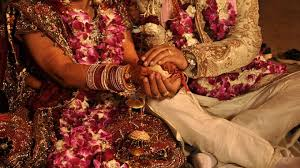
If we ask from a normal prudent man, What is marriage according to you? We would get different answers. But, the most common answer we would get is marriage is a commitment between two people, who want to live together for their whole life. The definition of marriage differs from person to person, religion to religion, place to place. There have been so many changes in the concept of marriage through the age of veda to the modern era. If we talk about Hindu there are many concept which is no more into existence and some concept which came into existence like concept of Divorce. This research paper attempts to analytically explain the changes in the concept of marriage for Hindus. The scholar attempts to explain who is Hindu, what are the changes in Marriage according to The Hindu Marriage Act, 1955 and How Legislation influence Marriage. This paper attempts to give a descriptive view of changes for marriage under Hindu law.
Keywords– Hindu, Marriage, Hindu Law, Hindu Marriage Act 1955, Changes in concept Marriage, Custom, Tradition, Hinduism
Introduction
There is a line by Benjamin Frank, “Marriage is the most natural state of man, and the state in which you will find solid happiness.” Which many people will contradict in today’s era. But this is the belief which every person believes in before He or She gets married. But after some years they are not happy with each other and here comes the concept of Divorce.
In Korea, an unmarried person is called “half” person.
For a usual man Hindu is a person who follows Hinduism and who do worship Hindu god. But, this people are not considered as Hindu according to law.
To understand the concept of marriage under Hindu law, first we need to understand who are Hindus. According to Hindu Marriage Act,1955, the person who is within the Domicile and don’t follow any other religion (Muslim, Christian, Parsi or Jew) and who is Buddhist, Jaina or Sikh by religion, any child, legitimate or illegitimate, one of whose parents is a Hindu, Buddhist, Jaina, or Sikh is considered as Hindus. So, Hindu is not only the person who follows Hinduism even Buddhist, Jaina or Sikh comes under the umbrella of Hindu.
Marriage is a contract for production and maintenance of children.
According to Alfred McClung Lee, “Marriage is the public joining together, under socially specified regulations of a man and woman as husband and wife.”
Marriage is contract and sentimental bond both at the same time. It is considered as bond between two person through emotions and promise between two party to live together and production of children.
Evolution is natural process, which brings about the changes in society and make new development. There is evolution in the concept of marriage from Stone Age to Modern Era. During stone age there was no concept of marriage. Now emerges the concept of Monogamy, Exogamy. After that it shifted to the concept of Live-in relationship, where in, couples live together without marriage. Concept of Polygyny and Polyandry was practiced earlier but Now there is no concept as such under Hindu law, However, it is still practiced under Muslim community, and among certain tribes in India. Abolition of “Sati” Partha, Child marriage, and Dowry Prohibition Act came into existence. And Special Marriage Act of 1954 introduced which would allow inter-caste marriage. Than emerges the concept to separation, that is, Divorce.
The research paper aims to find evolution in marriage through different Act passed by Legislation to control concept of Marriage and make sure that each and every person could get benefit of the same. It further illustrates some case laws relating to Marriage.
Research methodology
This paper is descriptive and analytical in nature and has been collected from various sources. Primary sources include ancient text of Hindu, Article, and various websites to collect information. Secondary sources include newspaper, book and newsletter.
Review of literature
The research provided by Harsimran kaur bedi is comprehensive study of the concept of marriage under hindu law and its changing dimension. It tells how there has been concept of sacrament, and how couples are made in haven, How vedic mantras influence marriage and now its concept is changing throughout. Hindu marriage is done only for reproduction of child.
This research paper is analytical study of how concept of marriage has changed throughout, how the concept of having many spouses has changed to concept of having only one spouse. Factors affecting Hindu marriage, Impact of Industrialisation, Urbanisation, Role of Education and how legislation control power on marriage, various Act implemented by government, what is the effect of the Act and various case law, relating to marriage under The Hindu Marriage Act 1955.
It provide the idea of The Hindu Marriage Act, Section 2 defines Hindu, Section 5 lays down the condition for marriage, Section 7 gives the ceremony for marriage and Section 13 gives the grounds for divorce. It further discuss how abolition of certain act has positively influenced the society and gave new definition of marriage, which was previous done only for reproduction.
Change in concept of Marriage
Marriage was only sentimental bond between the two people. According to Rig Veda, Marriage is a tie that bind two person together all through their life. Marriage has been given prominent importance since ages. For Hindus, Marriage is one of the Sanskar (Vivaha Sanskar) it is a religious duty. Even in some books wife was regarded as a god-given gift, which a men has to take care of.
Hindus believe in concept Marriage is a sacred bond between two person which even death can’t break. It is a tie between the two person for 7 Janam (7 lifes after death). They believe in the fact that after death of both the partner when they enter into new life they both would only marry to each other.
There was a concept of Polygyny wherein, a man having multiple female spouses. During era of Monarchies a king used to have several wives. If a king won a battle he would not only acquire kingdom of the defeated king but also his wives. That’s the reason the kingdom used to have Queen’s palace as they would have multiple wives. The concept of Polygyny was even practiced in Ancient civilisation, Hebrenis, Assyrians, Babylonians, Indians were among some who used to follow concept of polygyny. Under Polygyny there is concept of Sororal Polygyny (wives are sisters), Non-Sororal Polygyny (wives are not related sisters). Polygyny is not allowed under Hindu Law. However it is allowed in Muslim community and is still in practice among some of the tribes in India.
Next comes the concept of Polyandary where, one women has multiple male spouses, which was practiced from the era of one of the holy book of Hindus, that is, Mahabharata, where draupadi was married to five Pandavas brothers. Polyandary are of two types Fraternal Polyandary (husbands are brother) which was in case of Pandava brothers. Second one is Non-fraternal Polyandary (husbands are not related in any way). This practice is also not allowed under Hindu Law. In India, tribes Tiyan, the Toda, the Kata, the Khasa and Ladakhi Bota still practices Polyandary.
Under Endogamy, marriages between two persons happens within the group, like on same caste, which is a group. It is a old concept of marriage but it still prevails in India. Even now people are asked to marry within their respective caste.
Concept of marriage has undergone vast changes, like concept of Polygyny and Polyandary has changed to the concept of Monogamy. And Exogamy has taken the concept of Endogamy. Monogamy is one man with only one women, which is mostly done today. Exogamy is the concept just opposite to the concept of Endogamy, in which a person marries outside his group.
Before, In Hindu religion their exist no concept of divorce, people would have to live anyhow even if they are not happy together, as people believed that marriage is a sacred bond and it should not be broken. But as evolution happened people got educated and got to the thinking if person is not happy living together, its better to get separated. And then comes the concept of Divorce. Divorce was not the concept under Hindu law it is has been taken from Muslim Community. Even till now we don’t have an Hindi word for Divorce. The term “talaq” is an Islamic word which means divorce.
Factors Affecting Hindu Marriage
There are so many changes in tradition, custom and in concept of marriage. There are so many factors affecting changes in forms of marriage. The main factors affecting the changes include:
1.Industralisation
2.Urbanisation
3.Education
4.Influence of Legislation on Marriage
Industrialisation
In simple word Industrialisation means emerging of more and more Industries. But, in here it means growth of modern thinking. And changes happening in family like emergence of Nuclear family. People living outside home and getting settled outside India. Women also wants to be independent so even women are working and contributing towards financial need of family and earning. Now-a-days there exist no concept of house wife every individual want working women. Industrialisation has helped person to go beyond and search for spouses outside the state and not limited to narrow circle of relative. As women are working there is gradually decrease in practice of dowry.
Urbanisation
Industrialisation has a direct influence on Urbanisation. They go hand-in-hand together. Urbanisation simply means growth of town and cities. Rural areas get influenced by the new changes in Urban areas. Urbanisation has changed the way people think and has brought about many changes on age to get married, expenses done on marriages, Ceremonies, like before we didn’t have the concept of sangeet as one of the function on marriages but now its very common even it is done in rural areas. This a perfect example as to how Urbanisation has influenced marriages.
Education
Education has played a vital role in influencing the changing concept of marriage. It brings values and even influence how the person thinks, bring different perspective and different ideologies. Education has helped person to take rational decisions and taught us different ideologies which include democracy, freedom, secularism, equality, rationalism, individualism, etc. As people are educated their exists no concept of forced marriage, a individual can take their own decision and hence prohibiting unwanted marriages.
Influence of Legislation on Marriage
Legislation means how government influence marriage, How government lays law and order according to which different forms of marriage is govern and how could dispute be solved.
There are various law passed by government, some of the important law passed are:
- The Prevention of Sati Act, 1829: Sati was a practice which would force a women to die as soon as her husband dies. This is done to prove the idea of “Patirvrataya”, which means loyal to her husband. Raja Ram Mohan Roy was the person through whom this law came into existence. This law saves the life of widows and made it a punishable offence.
- The Hindu Widow Remarriage Act, 1856: This act is related to the previous act. Even if widows are saved from practice of Sati, they are been exploited in their family. To make sure that they don’t feel this humiliation, this Act came into existence which allows a widow to marry again and live her life.
- The Civil [or Special] Marriage Act, 1872: This act would allow a person to marry in different caste, different religion. And their marriages would be registered. However, this act has been repealed by The Special Marriage Act, 1945, which also would allow people of different religion and caste to marry.
- The Child Marriage Restraint Act, 1929: This act stops the marriage of a child. According to this act marriage of boy under age of 18 years and girls under age of 14 years is illegal. This act is amended to Prohibition of Child marriage Act, 2006. Under this act section 2(a) defines child, which include male child under age of 21 years and female child under age of 18 years, is considered as child. Section 2(b) defines child marriage, child marriage includes where either contracting party is a child. This Act is made so that child could be saved from exploitation.
- The Hindu Marriage Act, 1955: This is most important act as it defines who is Hindu, what are the conditions for valid marriage and Divorce and condition for Divorce.
Section 2, of The Hindu Marriage Act, 1955 defines Hindu , the person who is within the Domicile and don’t follow any other religion (Muslim, Christian, Parsi or Jew) and who is Buddhist, Jaina or Sikh by religion, any child, legitimate or illegitimate, one of whose parents is a Hindu, Buddhist, Jaina, or Sikh is considered as Hindus.
Section 5, provides the conditions for a Hindu marriage, two Hindus can marry each other when neither of the party has a spouse living at the time of marriage. Neither party is of unsound mind, suffering from mental disorder, unfit for marriage (procreation of child), or suffering insanity or epilepsy at the time of marriage. The groom has completed the age of 21 years and the bride has completed the age of 18 years. The parties are not within the degree of prohibited relation and are not sapindas of each other, unless custom or usage governing each of them permits for the same.
Section 7, tells about the ceremonies for a Hindu marriage, A Hindu marriage could be done in accordance with the customs and ceremonies of either party, Or by taking seven steps before the sacred fire (Saptapadi). As an when the seventh step is taken the marriage becomes complete and binding.
Section 13, of The Hindu Marriage Act, 1955, provides the grounds for divorce which includes Adultery, Cruelty, deserted for a continuous period of not less than two years or conversion of religion.
The Hindu Marriage Act, 1955 tells about what are the conditions of valid marriage and the ground through which one can take divorce. Thus, this is the most important Act in today’s Era.
- The Dowry Prohibition Act, 1961: Dowry is money or asset given to husband’s family by Bride’s family during marriage. To stop this practice this act came into existence. It permits exchange of gifts of not more than 2000. It is punishable offence under law.
Cases relating to The Hindu Marriage Act, 1955
- Sarla Mudgal V Union of India:
Here, In this case court held that if the person is getting converted to other religion in order to get second marriage. He should take divorce from his first wife under The Hindu Marriage Act, 1955, than only he is allowed to covert to other religion and can do second marriage.
- Krishnaveni Rai V Pankaj Rai:
Here, Court held that a marriage done during appeal of divorce. Marriage is to be considered ab initio void, which is when at time second marriage took place it became void and didn’t came into existence.
- Lata Kamat V Vilas:
Under this case, it was held that the marriage becomes nullified, when at the time of marriage wife was pregnant by some person other than respondent.
- Prakash Chand Sharma V Vimlesh:
In this case, husband files a case of divorce on wife, on the grounds of cruelty and unsoundness of mind. Cruelty was proved by the plaintiff. However, unsoundness of mind couldn’t be proved.
- Kiran Bala V B.P. Srivastava:
In this Case, first marriage had been nullified on ground of unsoundness. The unsoundness of plaintiff has not been disclosed to the defendant, who was her second husband. Court held that this marriage is void.
Suggestions
Marriage has undergone many changes during past years which include recent trend in Hindu marriage, like changing forms of marriage like concept of Polygamy, polyandry and Bigamy is illegal. Change in aim of marriage before marriage is only done to give birth to children but now marriage is done for companionship, people consider their spouses as their lifetime friend. Before marriage is done only through the choice of parents but now it is done through choice of spouse. Now inter-caste marriage is not a tabu, people do accept inter-caste marriages. The practice of dowry hasn’t fully stopped but it has eventually reduced. Even celebration of marriage has became very costly. There is change in age of marriage before it was 18 years for boys and 14 years is for girls and this changed to 21 years for boys and 18 years for girls. Before there was no concept of divorce under Hindu law people believed marriage is tie between two people for years and no one could break it. But as evolution took, People came to know that every decision is not always correct and then comes the concept of divorce and now rate of divorce has been increasing day by day.
Despite of this changes, marriage is still considered as universal bond and practiced universally.
Conclusion
Evolution is constant. There are many changes in forms of marriage, custom of marriage, function of marriage. Marriage is now a sentimental bond as well as a contract. There are many bond related to marriage as marriage is considered as “Pavitra Rishta” which even death can’t break. Two person are bonded together and there are may emotion connected to marriage. Marriage is considered as a contract as it is a contract (promise) between two people to live together for rest of their life.
Legislation plays a vital role in influencing the change in concept of marriage and protect right of an individual against any unjust happening throughout their married life. And practice coercion to reduce crime in society.
Ojaswi Chandrakar
Bharti Vidyapeeth, New Law College, Pune