
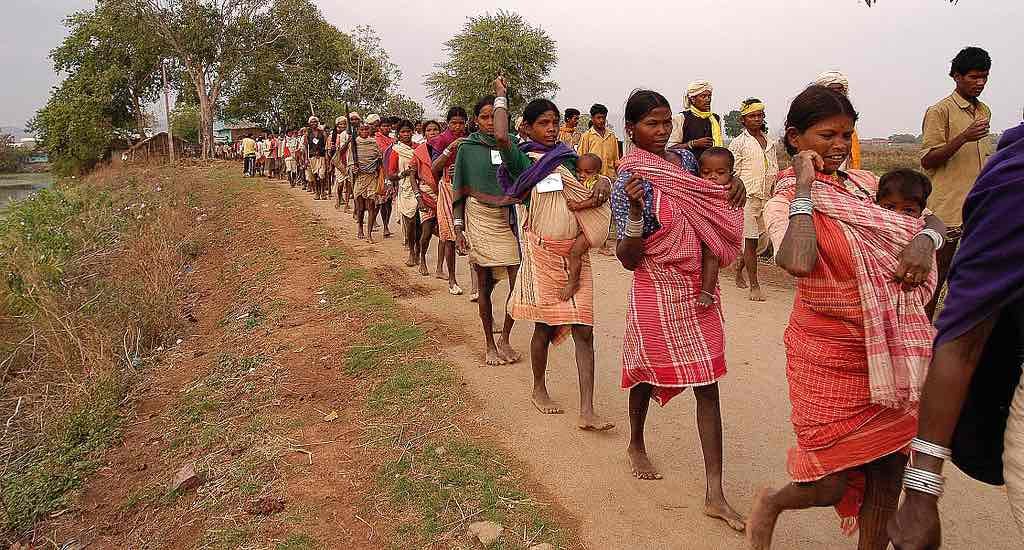
The Prime intent of the research paper is examining different laws and acts, which are provided to the tribals of the country covered under the constitution of India. Research paper also goes through what impact it would have on the Lives of the community through these laws in India. The paper presents detailed exploration regarding the tribal legacy in The Republic of India explaining the resistance of the tribes against the oppressive colonial rule through a system of phases containing numerous revolutions by the tribes. It also presents with the scope of refinement in those acts or laws. The need for the improvement important for the benefits of the tribal community of the nation.
KEYWORDS: LAWS, CONSTITUTION, INDIA, TRIBAL LEGACY, REFINEMENT
INTRODUCTION
India is a country conforming a humongous tribal population which is nearly 100 million. Each tribe in India is unique from each other in various aspects of life, like their living situations which clearly seen with the position of the tribal population in different parts of central India and western India which are very contrasting with the condition of the tribes in northeast and the Andaman Islands. The government of India has treated its tribal population very well after the independence. Over 18 Indian states have a considerable amount of tribal population. In some of the Indian states the tribal population is in majority eg the north-eastern states. Looking at their enormous population the constitution of India has given them various rights under various provisions of the constitution including the rights which maintains their autonomy, land rights and several other rights which safeguards these tribal people from exploitation. These endemic tribes living in various parts of India are called Scheduled Tribes. They amount to 8.6% of the Indian population. The word Tribe means a group of different kinds of people who are sustained by their land as their means of support for living.
The very reason due to which the tribes are called scheduled tribe is because the Indian constitution have vested various types of rights to the tribals under the schedules of the constitution. Our constitution has also defined scheduled tribes in the Article 342(1) where the President in respect to any state or union territory may state tribes or various tribal communities which will be considered as scheduled tribes by virtue of a public notification.
The constitution of India has provided various service related, social economic, cultural and educational rights to the people of the tribal community which are given below:
SERVICE RIGHTS OF TRIBALS
Under Article 16(4): It gives the states the power to make reservations in various posts for the people belonging to backward classes, which aims to increase their number in different services.
Article 16(4A): It permits the states to make various schemes in relation to promotions of SC/ST, if their representation is less.
ECONOMIC RIGHTS OF TRIBALS
Article 275 contains provisions related to various types of subventions to various states covered under fifth and sixth schedule of the Indian constitution.
SOCIAL RIGHTS OF TRIBALS
Under Article 21 of the Indian constitution every citizen in India has the right to life and personal liberty also including the people of scheduled tribes.
EDUCATIONAL AND CULTURAL RIGHTS OF TRIBALS
Article 15(4) of the constitution has given special rights to the scheduled tribes for their increase in educational improvements.
Article 46 gives the states various rights to further advance the academic and economic zeal of scheduled tribes and also to save them from social grievances and their exploitation.
Article 29(1) of the constitution gives rights to their citizens including the scheduled tribes, who are having a different culture and language the right to protect them.
PART X OF THE CONSTITUTION
It is headed as ‘THE SCHEDULED AND TRIBAL AREAS’ it consists of two articles 244 and 244A. Under Article 244 of the Indian constitution, it is given that the specifications mentioned in the 5th schedule is going to be applied in for the control and administration of scheduled areas and scheduled tribes in any state except the states of Assam, Meghalaya, Tripura and Mizoram. Also, the Article 244(2) of the constitution provides that the specifications mentioned in the 6th schedule of the constitution is going to be applied in the tribal areas of Assam, Meghalaya, Tripura and Mizoram. Now the Article 244A of the constitution permits the creation of an autonomous state within the certain areas of the state of Assam. It was added into the Indian constitution during the 22nd amendment in the constitution of India by the Congress government which was in power during that time. It also contains various schemes for the addition of legislature and council of ministers in that autonomous state consisting of various powers which are stated by law. Article 275 was also amended under the 22nd amendment which provided various grants to the autonomous state under article 244A [1].
SCHEDULE 5 OF THE INDIAN CONSTITUTION [2]
5TH schedule deals with administering and controlling of schedule areas and schedule tribes in India. Scheduled areas are declared through the help of a presidential order under article 342 which stimulates the tribal people to defend their land and forest rights and to make up their own local people to do the administrating and developmental works.
10 states are mentioned under the 5th schedule of constitution of India which are: Andra Pradesh, Chhattisgarh, Gujrat, Himachal Pradesh, Jharkhand, Madhya Pradesh, Maharashtra, Odisha, Rajasthan, and Telangana . The core motive of the 5TH schedule is to help the tribal people in developing through their own mind and with least foreign involvement. There are also some important provisions in this schedule as under:
- The report consisting of the management of the scheduled areas is given to the President by the Governor
- Also, the central government has got the authority regarding the administrating purpose in these areas.
- The Governor has got the power to amend any law but he cannot do that without the permission of the president
- The President has also the power to change the boundaries of a scheduled area but after consultation with the governor
- Any kind of specifications that are mentioned under this schedule can me amended, changed or can even be withdrawn from time to time by law.
The states which have scheduled area have also a tribal advisory council with a limit 20 members but 3/4th of the members must belong to scheduled tribe community.
6th SCHEDULE OF THE CONSTITUTION [3]
This was made specifically to integrate ‘North-Eastern Tribal Population’ into India. It allows the formation of ADCs which can form laws regarding water, agriculture, health etc. They have 30 members up to a term of 5 years. Ladakh has also demanded to be under the 6th schedule since it gives a lot of power in governing of their particular regions. There are also various issues involve with this that it contains various problems in the powers regarding the governor. Also, the financial grants received under this schedule is very less. It has also led in the increase in corrupt and illicit activities. The problem pertaining law also arises since there is no codification of customary law.
RESEARCH METHODOLOGY
This research paper did not require any kind of field research since the material of this research are based on the existing study pertaining the topic. The assemblage of the resources relating to the research have been via multifarious sources that including the constitution of the republic of India various seminal rulings bestowed by the Supreme Bench of India and by virtue of existing research papers, articles related to tribal laws.
HISTORICAL BACKGROUND
The history related to laws of tribes in India in the past history of the British rule were majorly very exploitive in nature for all of the tribal community of the country. When the British empire came to India since there was a large amount of tribal population who were dependent on the forest for their entire livelihood, the Britishers made very harsh policies regarding the use of forest which adversely effected the native tribal population of the areas. By make such types of policies the British Empire greatly disturbed the age-old healthy relationship, which was between the tribals and the mother nature.
In the traditional tribal values, the forest holds a very high place, they also worship the forest, since it was included in their beliefs which was challenged by the British Rule. All these harsh treatments of the British towards the tribals lead to the starting of various movements against the British Colonial rule. In the initial stages of these movements, they were comprised only to small areas, since their reach at that time was not that much. Later with passing of time these tribal movements were joined with national level movements as a result of which the popularity of these movements was increased which helped the tribals in fighting against the atrocities committed by the British rule towards the tribal community. There were a lot of movements against the British rule by the tribals which are classified in the form of phases
FIRST PHASE (1795-1860) This was the initial episode of the tribal revolutionary movements against the Britishers which was being done at the time when the British Empire was growing, establishing itself in the subcontinent and was on the path of emergence. The reason for the increase in beginning of these movements by the tribal people were because of the approach in the policies which was being done by the British. The British Government were constantly trying to change the basic structure of the tribal society, which made the natives angry towards the Britishers. The main leaders in this phase came from the upper layer of the tribal population. The main tribal revolts during this phase encompasses Kol revolt, Khond rebellion and early Munda rising.
SECOND PHASE (1860-1920)
After the 1st phase in the 2nd phase the tribal revolutionary movements were getting very close towards nationalism as a result of which these movements became more stronger since nationalistic sentiments were now with the people. Contrary to the 1st phase the pattern of leadership changed in this phase as now the leaders emerged from the lower layers of the tribal groups which benefitted the tribal revolutions. The major uprisings in this phase were The Koya rebellion and another movement which was being led by Birsa Munda.
THIRD PHASE (1920-1947)
The third phase of these tribal uprisings is considered as the best phase out of the other two phase due to various number of reasons as now the tribal movements were working in very close coalition with the nationalistic movements. The leadership in this phase emerged from well-educated tribals which was the main difference in comparison with the other phases. The major revolutions in this phase were the Chenchu tribal movement, the rampa rebellion and the Oraon movement.
The weaknesses which were associated with these movements were that it lacked proper leadership, after the main leaders there was no one left to lead which caused a lot of problems for the movement, also they were majorly localized movements in which there was less support for the locals. Also, they had inferior quality of weapons for fighting against the
Britishers like bow, arrow, stones, wood, these types of weapons were not enough to stop the might of the British Empire which had very high-tech military equipment even at that point of time. These movements also lacked proper structuring which was lacking in them as a result many movements failed. In short, the rebels did not have the proper resources to give a proper long-term fight to the British Rule. This was the condition of the tribals in the history of India as they had been open to exploitation from different organizations in the history from time to time, they were deprived of their basic rights since long time, that’s why in the modern times the tribal people are given special protection in the Indian Constitution through the help of reservation laws and passing of different types of legislations for their protection.
REVIEW OF LITERATURE
This research paper bestows a very thorough analysis about various landmark judgements and crucial acts related to tribal population in India that have played a very crucial role in their overall development and improving their position in the Indian society.
In a recent Supreme Court judgment in 2023 Kamla Neti Through Legal Representatives vs. Special Land Acquisition Officer and Ors [4] In this judgment the apex court gave the decision relating to succession of a property relating to a tribal woman under the Hindu succession act section2(2) under which tribal women cannot be given a share of a property through succession. The decision of the supreme court was based on this act which seems to be clearly biased towards tribal women, in these modern times these types of biased sections should be amended to give proper rights to tribal women in India.
Another land mark judgment which is very important in tribal history is Samantha vs. State Of Andhra Pradesh [5]. In this judgment the High Court of Andhra Pradesh passed the order that allowed the mining of government land on scheduled areas, but the tribals strongly resented against this decision. Samantha a NGO filled a writ petition at the high court about this issue as it is against the 5th schedule of constitution, but the high court rejected their petition, they went to Supreme Court when the decision came in their favor and private companies were not allowed to do mining in scheduled areas. This judgment played a very crucial role in preserving the rights of the tribal people, as it protected their natural habitat, their home. It was only possible with the help of this judgment that the tribal land was rescued from the plight of exploitation.
THE PANCHAYAT (EXTENSION OF THE SCHEDULED AREAS) ACT,1996
OR PESA [6]
With the help of this act the tribal people, who are living in backward areas are able to govern themselves with help of this act, through their own way. This act accepts their traditional rights concerning their natural resources. Its focus is on the schedule 5th states. This act is very crucial for the tribal people since it bestows them with a high amount of power in protecting their resources and they are able to rule themselves with some autonomy which is a great provision under this act. Through this act it would also become very easy for the local bodies to solve various problems as they being local are better aware about that. The main
thing that revolves around this act that, then their resources won’t be subjected to over exploitation and they themselves can handle their utilization according to their requirement.
SCHEDULED CASTES AND SCHEDULED TRIBES (PREVENTION OF ATROCITIES) ACT 1989 [7]
This act is a very good step towards the prevention of daily increasing hate crimes against the people belonging to SC/ST. They have been subjected to harsh behavior by the Indian society since thousands of years and through the help of this act non-SC/ST who will committing such types of crimes which are mentioned under various sections of this act even if they are not covered under IPC will be subjected to punishment as given under this act. Various special courts are also formed under this act to provide justice. This if implemented properly by the government can be a boon for the tribals as it would significantly help in reducing the crimes against their community
THE SCHEDULED TRIBES AND OTHER TRADITIONAL FOREST DWELLERS (RECOGONITION OF FOREST RIGHTS) ACT 2006 [8]
This is another very crucial act for the tribal community that grants them various forest rights regarding their usage of resources and habitat, which they were deprived during the colonial governance in India. This act tries to correct their mistakes by giving the tribal community what they deserve. They for given forest rights from that period and by the help of this act various rights regarding holding, utilizing, developmental and management rights are given to them. The act may seem good on paper but on ground application has not been well of this act and it needs urgent government attention, to have a look into the reasons behind it which could be: non maintenance of various records in relation to that act, non-following of system which is mentioned under this act, there is a problem of transparency surrounding this act and another one is lack of conscious about it .
SUGGESTIONS PERTAINING TRIBAL LAWS IN INDIA
1 MORE TRANSPARENCY
There should be a lot transparency in the formation of various laws as it allows the citizens to see on what basis the laws are formed. In India there is less transparency in this regard due to which we see failure of a lot of government acts which they form and this can be seen in the formation of various tribal laws.
2 MORE ACCOUNTABILITIES
The various tribal laws that the government forms, if it does not satisfy the needs of the tribals then they should be ready to face the backlash from the public, by adopting accountability it will help in creating a situation of trust among its fellow citizens.
3 ICREASING AWARENESS
The different laws that are formed for the welfare of tribals are not even known to them in majority of the cases, this means that there is a massive need for the government to propagate these among the tribals through camps, by skits or by videos.
4 PROPER IMPLEMENTATION OF LAWS
The government though makes laws regarding tribals but on ground effect is nothing, this could be improved by proper analysis of the area, in detail discussion with the natives and getting their feedback regarding it is also very important. There is also a problem of political influence in law making which is the main obstacle behind it’s not so proper implementation should be reduced significantly to ensure that the utmost important motive which involves benefit of the tribal community is not neglected.
CONCLUSION
Tribal laws in India are still at an evolving stage, though several acts regarding tribal protection have been made by our government but they lack significantly in their proper implementation whose reasons have been explained through the help of this research paper. The Laws Related to tribals are not perfect and would require rigorous effort to ensure its effects would be positive on the tribals. Since They have been deprived of it since ages, they have been subjected to immense exploitation by many invaders. Thats the reason they are given various reservations in different aspects which would ensure that they are uplifted from their misery and live a comfortable life as the rest of the Indians do.
But still the conditions of the tribals have improved drastically from the past years, they have been given proper representations, which has transformed their situation and have changed their standard of living. As the various tribes in India possess such a vast amount of uniqueness, it is very important to preserve their uniqueness through the help of laws which would help them to protect their culture, language and heritage. Although the Government of India have made tremendous effort in providing the tribals living in India a good life, still there are many aspects where it can be refined which is the principal objective of this research paper.
NAME: UTKARSH RAINA
GURU NANAK DEV UNIVERSITY, AMRITSAR
Works Cited
| [1] | f. s. o. t. constitution, “fifth schedule of the constitution,” [Online]. Available: https://vikaspedia.in/social-welfare/scheduled-tribes-welfare/fifth-schedule-areas#:~:text=The%20Fifth%20Schedule%20of%20the%20Constitution%20deals%20with%20the%20administration,%2C%20Meghalaya%2C%20Tripura%20and%20Mizoram. |
| [2] | “6th schedule of the indian constition,” [Online]. Available: https://byjus.com/free-ias-prep/sixth-schedule/. |
| [3] | “KAMALA NETI (DEAD) Thr. Lrs.vs Special Land Acquisition Officer,” [Online]. Available: https://indiankanoon.org/doc/66585427/. |
| [4] | “samantha vs state of andhra pardesh and ors,” [Online]. Available: https://indiankanoon.org/doc/1969682/. |
| [5] | “PESA ACT,” [Online]. Available: https://www.drishtiias.com/daily-news-analysis/panchayat-extension-to-scheduled-areas-pesa-act-1996. |
| [6] | “Scheduled Caste and Scheduled Tribe (Prevention of Atrocities) Act, 1989,” [Online]. Available: https://www.indiacode.nic.in/handle/123456789/1920?sam_handle=123456789/1362. |
| [7] | “The Scheduled Tribes and Other Traditional Forest Dwellers (Recognition of Forest Rights) Act, 2006,” [Online]. Available: https://www.indiacode.nic.in/handle/123456789/2070?view_type=browse&sam_handle=123456789/1362. |
| [8] | “PART X OF THE CONSTITUTION,” [Online]. Available: https://en.m.wikipedia.org/wiki/Part_X_of_the_Constitution_of_India. |