
Abstract
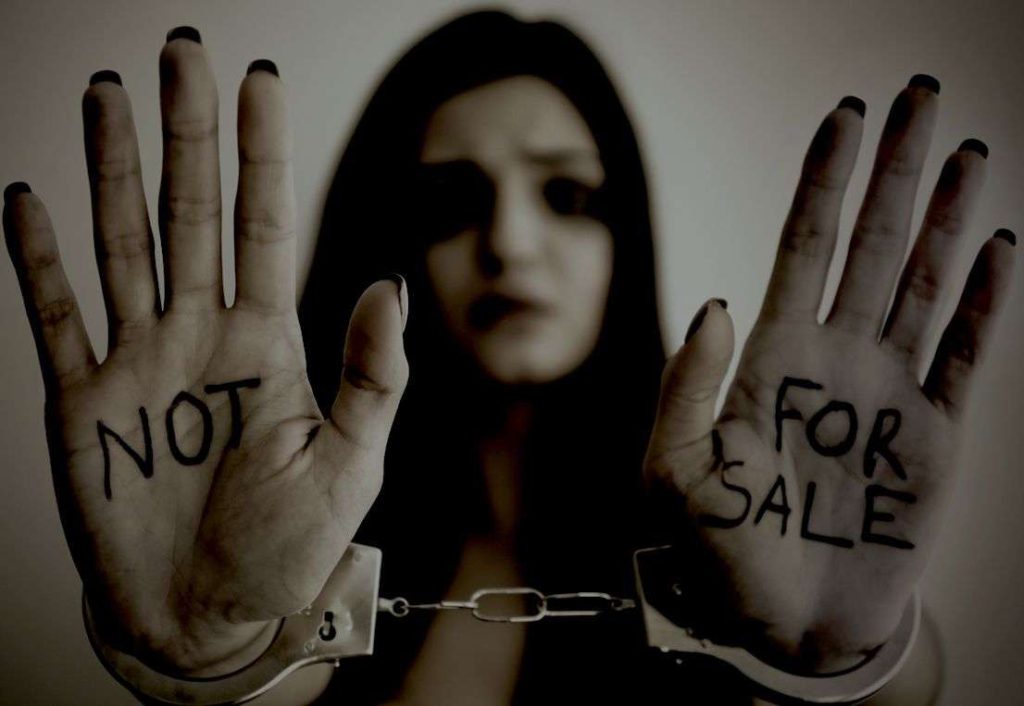
“Gender inequalities throughout the world has made the women a commodity and first axe always fall on the economically deprived women of poor countries.” Human Trafficking is regarded as a modern-day slavery in the 21st century. It has posed a formidable challenge in the new millennium which is hampering the human development of different regions. It is regarded as third largest crime, weapons and drugs being the topmost. Human Trafficking is very gender specific, women being the predominant victims. Globalisation and digital transformation have further escalated this issue as sex tourism, illiteracy, new world technologies, violence, social stigma have led to the surfacing of sex trafficking in the entire region. The rise in cases of sex trafficking has led to the spread of HIV infection in South Asia, which in turn has drastically affected the public health and other facets of human development. This research paper examines the factors due to which trafficking of women has become an international problem, with particular emphasis on sex trafficking. The research paper also highlights the conditions in which victims of trafficking are forced to live. This research paper other than discussing the catastrophic effect of trafficking on women also emphasises upon how the sex trafficking is a threat to public health. This research paper revisits and examines various international instruments to combat trafficking. This research paper also addresses the shortcomings due to which the issue of trafficking is on rise even after laws being in place.
Keywords
Sex Trafficking, right to dignified life, human rights, legislative framework
Introduction
Globalisation and the digital transformation have further escalated the issue of human trafficking. Trafficking of women has become an international problem and there is a dire need to tackle the issue efficiently. With technological advances and modern communication system the cases of sex trafficking have been increasing. The victims of trafficking, especially women are denied even the basic right to bodily integrity and dignity. In this context, it is necessary to identify the shortcomings due to which the issue of trafficking is increasing. Therefore, it is of interest to study the factors contributing to the issue, international instruments and legislative frameworks to combat trafficking in women. The purpose of this research paper is to critically evaluate how sex trafficking as emerged as one of the most formidable challenges of the new millennium, analyse various international instruments to combat and prevent trafficking of women, to know the shortcomings due to which the cases of trafficking on are on rise.
‘Trafficking’, ‘prostitution’ and ‘exploitation’ is defined in Articles 1 and 2 of the Convention for the Suppression on the Traffic in Persons and of the Exploitation of the Prostitution of Others, 1949[1]. It denotes to the actions at both national and international levels. The concept of trafficking is expanded since 1949 and now also includes trafficking for other purposes as well which would come under the forms of exploitation of women. This is reflected in the definition adopted by the United Nations: “Trafficking refers to the recruitment, transportation, purchase, sale, transfer, harbouring, or receipt of persons: by threat, use of violence, abduction, use of force, fraud, deception, or coercion (including abuse of authority or of a position of vulnerability), or of the giving or receiving of payments or benefits to achieve the consent of a person having control over another or debt bondage, for the purpose of exploitation which includes prostitution or for placing or holding such person, whether for pay or not, in forced labour or slavery-like practices, in a community other than the one in which such person lived at the time of the original act described”. South Asian countries are confronted with the with the problems of gender biases, generalized laws, abuses of legal migration due to which they are unable to implement this widely accepted definition in a proper manner.
Literature Review
Review of the existing literature on human trafficking reveal that globalisation and increased means of communication has led to increase in the cases of sex trafficking around the globe. Prominent social inequalities, economic inequalities and political conflicts are the main reason for the movement of people within countries and across borders in South Asia. Trafficking of approx. 200,00 women take place every year for commercial sexual exploitation. Trafficking in 21st century is often linked with modern day slavery. As in both movement of people take place and the traffickers assert the control over the individuals because of which they are denied basic rights and personal autonomy. Since 1904 various international instruments were adopted to deal with the issue of trafficking but they were not effective in dealing with this problem as there was no explicit mention of trafficking. The adoption of Convention for the Suppression of the Traffic in Persons and of the Exploitation of the Prostitution of Others in 1949 specifically mentioned trafficking. Article 17 states that “The Parties to the present Convention undertake, in connection with immigration and emigration, to adopt or maintain such measures as are required, in terms of their obligations under the present Convention, to check the traffic in persons of either sex for the purpose of prostitution.”
During literature review, I noted that the trends of sex trafficking are not the same around the globe. They are very country specific and therefore in addition to combined efforts globally there is also a need of regional efforts so that the issue can be addressed more effectively. The step of SAAC countries in this direction is appreciated by the whole international community. The six regional objectives stated in the charter are ‘sovereign equality’, ‘territorial integrity’, ‘national independence’, ‘non use of force’, ‘non – interference in the internal affairs of other states’ as well as ‘peaceful settlement of disputes. The conditions to which women are exposed to at the time of trafficking is very scary. The movement of women is “either overtly impeded through locks, bars and chains or less conspicuously, restricted by confiscation of their passports, and travel documents, threats of retaliation against family members and physical violence.” “Traffickers use the law, and the threat of deportation, to their advantage.” (Rashida Manjoo, 2014)[2]. They are not treated with the minimum humanitarian approach and are denied fundamental rights. The question of identity of these victims is more pondered upon then the interests and needs of women. They physical injury that these women suffer at the time of trafficking is compounded by the emotional, psychological trauma that they are forced to go through.
The author S. Huda mentions that trafficking victims should be treated as “victims’’ of human rights violations. “Trafficked persons must be recognized as holders of rights from the moment that they are identified as trafficked and States must implement responses underpinned by all elements necessary for such persons to exercise the right to an effective remedy.” (Rashida Manjoo, 2014) Awareness related to human rights should be spread through electronic and print media. The necessary care and security should be provided to the victims of trafficking. Women empowerment is very essential to tackle this issue as majority of women fall prey to trafficking because of poverty, illiteracy, lack of confidence to enforce their rights. Even with numerous international frameworks in place, it is difficult to ban these actions because a powerful organised mafia controls this industry and an enormous amount is involved. Various countries are taking initiatives for example in Netherlands a set of indicators to track human trafficking is established. Under this, if a probable trafficking case matched with certain indicators, then the person is said to be prima facie victim and a time duration of three months is provided to recover from the trauma. If the person agrees to cooperate a temporary resident permit is given to the victim for the time period investigation procedure and prosecution goes on. If the victim disagrees to cooperate, she is deported unless it is proved by her that it is not safe for her to return to her own country. The 3 P’s approach is emphasised upon by the International Organisation for Migration which is, ‘prevention of trafficking through improvement of economic conditions in sending countries, protection of the victims and the prosecution of the perpetrators.’
Argumentation and Analysis
Trafficking of women has received increased attention in recent times because of the rise in reports of commercial sexual exploitation of women and children, fear of women in prostitution being infected with AIDS/HIV while the one who has infected is so easily forgotten, women victims of commercial sexual exploitation coming together to speak up for their right and evolving public attitudes towards sex and morality. It was noted in CATW – Asia Pacific Study (1997) that Asia has become an important spot for sex tourism. The ‘mobility of people’ via tourism, migration policies of government, infrastructure building for sexual entertainment in Asia are the contributing factors towards the growth of sex industry in Asia. Around seven lakh persons especially women are victims of sex trafficking around the globe.
Trafficking of women and children may take place due to some ‘push’ and ‘pull’ factors. However, whether someone is ‘pushed’ or ‘pulled’ does not change the fact that she or he has been trafficked (S. Huda). A large number of trafficking of women and children takes place from ethnic and minority groups. The condition of victims of trafficking is reflected in various reports. The women and children are being raped by the traffickers during the time of trafficking. They have to face sexual abuse at the hands of border personal at the time of crossing and then are sold in red lighted areas for illegal purposes. Poverty is one of the main reasons for human trafficking. They are kept in isolation, unhygienic conditions, not given food and clothes for several days. Sex trafficking violates the right to live a dignified life and also affects them physically, psychologically, socio-economically and in various other ways.
Sex Trafficking also affects the public health, they are prone to health risks such as sexually transmitted diseases, hepatitis, unwanted pregnancy, forced abortion, abuse, sexual assault. It not affects the victims of trafficking but also the general public who can be infected by the carriers of transmitting diseases. 90% of the more than 5 million people in South Asia who are HIV/AIDS positive reside in India. India has one of the biggest absolute populations of HIV-positive people in the world, second only to South Africa, despite the fact that the overall rate of people living with HIV/AIDS (PLHA) is still low. The susceptibility of trafficked women to sexually transmitted diseases is increased due to inability to get the treatment, counselling or other health care services and also language barrier, poverty further escalates the problem.
International Law Standards Relating to Human Trafficking
Here are the international instruments which directly or indirectly specify the principles of international law to prevent human trafficking and the specific international conventions, conferences, declarations, protocols etc. which directly address the issue of human trafficking. The SAARC countries through a regional treaty are tackling the problem of trafficking of women and children. Trafficking of women and children is considered as a global problem by the United States which is to dealt through both domestic policy and holistic international instruments.
Parliament is empowered under Article 253[3] of the Constitution of India[4] to make laws for giving effect to international agreements. International instruments to which India is a party shall become binding in India regardless of Parliamentary legislation. When those international instruments are implemented by Parliamentary legislation it would have an overriding effect to all the previous national laws.
SAARC Convention on Preventing and Combating Trafficking in Women and Children for Prostitution[5]
The SAARC Convention on Preventing and Combating Trafficking in Women and Children for prostitution by the SAARC countries is the first step at an international level to deal with the issue of trafficking of women and children through a regional treaty. The combined efforts of various NGOs and UN agencies have led to the preparation of this convention. The purpose of this Convention is to “promote co-operation amongst member States to effectively deal with various aspects of prevention, interdiction and suppression of trafficking in women and children; repatriation and rehabilitation of victims of trafficking, and preventing the use of women and children in international prostitution networks, particularly where the SAARC member countries are the countries of origin, transit and destination”. The Convention defines ‘child’, ‘prostitution’, ‘trafficking’, ‘traffickers’, ‘person subjected to trafficking’. Also ‘aggravating circumstances’, which increase the gravity of the offence are mentioned in the Convention.
Convention for the Suppression of the Traffic in Persons and of the Exploitation of the Prostitution of Others[6]
The Convention for the Suppression of the Traffic in Persons and of the Exploitation of the Prostitution of Others declares that suppression of women and children who are the victims of commercial sexual exploitation is in violation of basic fundamental rights of women. The convention undertakes various activities to prevent commercial sexual exploitation through education and encouraging active participation of women in the society.
Universal Declaration of Human Rights, 1948[7]
The declaration was proclaimed by the General Assembly as a “common standard of achievement for all peoples and all nations,” in regards to which individuals and societies “strive by progressive measures, national and international, to secure their universal and effective recognition and observance.” The purpose of the Declaration is to lay down the ideals of human rights and freedoms. One of the sections of this Declaration states that “No one shall be held in slavery or servitude; slavery and the slave trade shall be prohibited in all forms.” The declaration is codified into two Covenants. The two Covenants are International Covenant on Civil and Political Rights and International Covenant on Economic, Social and Cultural Rights.
International Covenant on Civil and Political Rights[8]
International Covenant on Civil and Political Rights contains Articles relating to slavery and slave trade, liberty of movement and security.
International Covenant on Economic, Social, and Cultural Rights[9]
The purpose of the Universal Declaration to lay down the ideals of human rights and freedoms can only be met when everybody is guaranteed civil and political rights and also economic, social and cultural rights.
Convention on the Elimination of all forms of Discrimination against Women[10]
The discrimination against women is defined in the Convention as “any distinction, exclusion or restriction made on the basis of sex which has the effect or purpose of impairing or nullifying the recognition, enjoyment or exercise by women, irrespective of their marital status, on a basis of equality of men and women, of human rights and fundamental freedoms in the political, economic, social, cultural, civil, or any other field.” The Convention declares that in order to bring gender equality it is very important to ensure that women are provided equal opportunities and in political and public life.
Research Methodology
This particular research is action-based research. This research work is done by collecting the data from primary and secondary sources across the wide range of aspects of the subject matter to formulate an academic-cum-analytical and exploratory research article. Involving a multiplicity of research papers and descriptive design to formulate this research article, information has been taken from various articles, journals published. Extensive literature review will be undertaken for collection of secondary data – for development of research tools and research components.
Conclusion and Suggestions
“Public opinion is waking up to the reality of modern slavery”, said the Antonio Maria Costa who was appointed as the Executive Director of UNODC in 2002.“But many governments are still in denial. There is even neglect when it comes to either reporting on, or prosecuting cases of human trafficking”. The conviction rate for human trafficking has not increased in every country. In many countries conviction rate seldom exceeds 1.5 per 100,000 people. “Human trafficking is both a cause and a consequence of human rights violations.” It is therefore very much important to combat trafficking of women through the human rights-based approaches. Throughout the research paper we observed the rising cases of sex trafficking of women around the globe which impacts women in a very drastic way. Therefore, a very balanced approach is needed to tackle the trafficking of women. International instruments to combat trafficking of women are already in place, there is a need of combined efforts on part of international community to implement these instruments and convention. The United Nations Protocol against Trafficking in Persons[11] came into force in 2003 and since then many Member Countries have started implementing the Protocol. But still it is observed that in many countries the protocol is not enforced seriously. The crucial UN Trafficking Protocol should be signed and ratified by all the countries and also other United Nations instruments which have provisions to combat other problems such as forced labour, gender-based discrimination. Antonio Maria Costa stresses on the fact that “There are strong international agreements to ensure that people’s lives are not for sale.’’ and urges the respective governments to enforce them. United Nations Recommended Principles and Guidelines on Human Rights and Human Trafficking should be taken into consideration while formulating polices. The safeguards to protect the rights, interests of women and the need to provide them security, necessary care should be given priority over the question of identity of victims. Efforts must be made to ensure that the basic rights and humanitarian treatment is provided to the victims of trafficking. Sex trafficking has increased the fear of spread of HIV infection and therefore adequate safeguards should be in place to protect those who are victims of sex trafficking and affected by HIV infection. It is observed that amongst many factors’ poverty, illiteracy, indebtedness, lack of awareness are the most complex ones. Apart from effective implementation of international conventions and laws, awareness should be spread about the trafficking and its consequences. Legal Framework should be strengthened domestically and internationally so that women can access their rights. NGOs play a very important role in this whole framework as they can come together to devise guidelines and policies which are in best interests of women and would also assist in the investigation procedure.
AUTHOR
Sayali Telang
Institute of Law, Nirma University
[1] Convention for the Suppression on the Traffic in Persons and of the Exploitation of the Prostitution of Others, 1949, Articles 1 and 2
[2] Rashida Manjoo, Trafficking of Women: Norms, Realities, and Challenges, 7 ALB. GOV’t L. REV. 5 (2014).
https://www.constitutionofindia.net/constitution_of_india/fundamental_rights/articles/Article%2021
[4] INDIA CONST. art.253
https://www.constitutionofindia.net/constitution_of_india/fundamental_rights/articles/Article%2021
[5] SAARC Convention on Preventing and Combating Trafficking of Women and Children for Prostitution, 2002
[6] Convention for the Suppression of the Traffic in Persons and of the Exploitation of the Prostitution of Others
[7] Universal Declaration of Human Rights, 1948
https://www.ohchr.org/en/universal-declaration-of-human-rights
[8] International Covenant on Civil and Political Rights
[9] International Covenant on Economic, Social, and Cultural Rights
[10] Convention on the Elimination of all forms of Discrimination against Women
[11] The United Nations Protocol against Trafficking in Persons
https://www.unodc.org/unodc/en/human-trafficking/protocol.html
Insightful, looking forward for such research papers!