
Abstract
This study aims to bring about the effects and outcomes of Citizenship Amendment Act (CAA), 2019. The Citizenship Amendment Act, 2019 aesthetics to give Indian citizenship to lawless exiles from 6 minorities forming from Pakistan, Bangladesh, and Afghanistan. These 6 religious minorities include; Sikh, Buddhist, Hindu, Christian, Jain, and Parsi. Worth to make reference to those Illegal settlers can be detained or ousted under the Foreigners Act, 1946 and the Passport (Entry into India) Act, 1920. In this we will study the provisions and implications of CAA, 2019 on our economy and nation.
Keywords
Citizenship, secular, economy, amendment, minorities, act, religion, constitution, immigrants,
Bill, nation.
Introduction
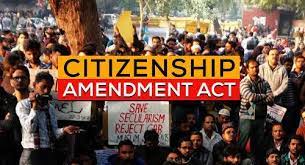
The newly enacted Citizenship Amendment Act,2019 (CAA) has a great deal of political disturbance in India. However, it is designed to give a warm-hearted path to Indian citizenship for some minorities group that faced religious victimization in Bangladesh, Afghanistan or Pakistan, it has broadly identified as a stunt by the Hindu political right in India as an attempt to strip Muslims living in India from their citizenship rights. The validation of the statue faced widely covered and widespread political protest in India. Most of the citizen is in fear that if it implemented, the act will create rust of immigrants that can or may change their linguistic uniqueness and demographic. In other parts of India like Delhi, West Bengal and Kerala, people have objections against the omission of Muslims, claiming it to be against the ethics or code of country’s constitution.
The Citizenship Amendment Bill (CAB), had formerly drafted by the Prime Minister Narendra Modi and government in 2016. The Citizenship Amendment Bill passed by the Lok Sabha in January 2019 with end of its term in May, the legislation expired. The new Citizenship Amendment Bill was passed by both the houses of Parliament in December and on December 11, 2019 one of the controversial pieces of CAB has become The Citizenship Amendment Act, 2019 (CAA). The Act grants citizenship to Hindus, Sikhs, Buddhists, Jains, Parsis, and Christians who are fleeing religious persecution in Pakistan, Bangladesh, and Afghanistan. The Act has been criticized for being discriminatory against Muslims and for violating the secular principles of the Indian Constitution.
Prevalently, for the resident of a country new amendments and law that are implemented and their implications on the country’s imminent condition like nation’s peace, economy of country is one of the major concerns and is same in the case of CAA. The effects of this law not just confined to the inflation, peace and economy but also raise question on the secular status of country. As per the reports and data from reliable sources, the country faced an major destruction like never before in the history of nation.
Research Methodology
This research paper is analytical piece of writing. With the help of various articles, websites as well as my knowledge of law, I complete this research paper. The process I used in writing this research include reading newspaper; reports analysing them and write it in my own words. Efforts were made to find the best sources of information for this dissertation.
Literature Review
The reason to amend the Citizenship Act 1995 is enormously related to the history of India. The plan to amend the Indian Citizenship Act, 1995 was review in July 2016 under the Prime Minister, Narendra Modi. The bill was proposed and on January 8, 2019 it was passed from Lok Sabha, despite facing harsh views from opposition parties. Later, on December 11, 2019 the bill gets approval from Rajya Sabha altering the Citizenship Amendment Act, 1995. The law states that person belonging to the religious group of Sikh, Jain, Hindu, Buddhist, Parsi and Christian who came from Muslim majority bordering country of India like Bangladesh, Pakistan and Afghanistan due to fear of religious persist on or before December 31, 2014 are eligible for the Indian Citizenship. The act also eradicates the required neutralization from eleven years to five years.
The erratic base of religion in the making of a law has led the problem in Secularism in India. The law emphasis on the moral duty to look after the refugees and immigrants of non-Muslim minority group. This method of considering religion as a standard or base for implementing counters the secular status of Indian Constitution. According to the Indian legal philosophy, every citizen of Indian or alien Indian should be consider equal in the eyes of law. Therefore, it violates the Article 14 0f constitution of India which states Equality before the law.
Effects of CAA on Indian Economy
The nation was broadly bombarded with destruction and opposition compromising the social unity and integrity internally. However, the result of it is not confined under the boundaries of our nation. The effect of CAA on the foreign relations of the country are dreadful expressed Shashi Tharoor (Ani, Economic Times, 2019)1 The law also affects the international trade of the country. Various capitalists are in doubt whether to put their valuable assets into a country facing disturbance in its social harmony. Tim Dapper who currently invest in India and one of the famous personalities of Silicon Valley’s has raised its worry about his funding in India (Sanchita Dash, Business Insider India)2.[1]
Before the commencement of law, external affairs minister, S. Jaishankar talk over India’s resolution to bring CAA into effect in the European Summit in Brussels. Although, the diplomats decided to vote not in favour of CAA (Dipanjan Roy Chaudhary, The Economic Times)3. At the international level all the talks and argumentation on this disputed law was suspended. “India has insulated itself through CAA. The former Foreign Secretary Shivshankar Menon stated that “India has gifted its rivals a podium to criticize its country (Economic Times). This changes in the citizenship based on religion is globally criticized. The law is contrary with the international treaty on political, civil and human liberty. Therefore, CAA doesn’t relish the worldwide support.
Many businesses analyst has established a relationship between flourishing economy and the blooming of religious fundamentalism. The information given on monetary matters highlights the consequences of trust and social union. The riots against the CAA freeze the nation economy. Taking into consideration that India is a developing nation, insulate and cutting its ties from the rest of the worlds is like burrowing a pit hole and deliberately moving towards it.
Other Outcomes and Implications of the Act
The CAA has the potential to have a significant impact on India’s social, political, and religious landscape. The Act has the potential to change the demographics of India, as it could lead to a large influx of Hindu immigrants from neighbouring countries. The Act could also lead to increased religious tensions in India, as it has been seen by some as a Hindu nationalist measure. The CAA has been met with widespread protests across India. The protests have been peaceful, but there have been some reports of violence. The government has responded to the protests by deploying security forces in several parts of the country.
The CAA ensue hurdles between India’s relation South Asian neighbour, Bangladesh. When the point of necessity for the law was highlighted in the Parliament, along with Pakistan and Afghanistan, Bangladesh was also added in the list of nations where non- Muslim minorities group faced religious discrimination. As its outcome, Foreign Minister of Bangladesh A.K. Abdul Momen called off his India visit. This was come after the suspensions of other meetings and international affairs. (Amit Ranjan, The Diplomat)4. Consequently, just after the enactment of law, the country faced violent aggressions coming from the citizens, various educational institutions and organizations. This nationwide violence took place to raise people’s voice to strife government’s order related to the Citizenship Amendment Act (CAA), 2019. Shockingly there are around 60 petitions were pending in the hon’ble Supreme Court before the act was legally passed and notified (Japnam Bindra, Live Mint). However, within a day of the enforcement of the law, many petitions were filled in hon’ble Supreme Court against the law or challenging the validity of legal code. The protest against the newly
introduced law is very high. As observed during the situation of pandemic in 2020. The protestors adopted symbolic protesting practice to oppose CAA.
The CAA is a divisive issue in India. The Act has been praised by some, who see it as a necessary measure to protect religious minorities. The Act has also been criticized by others, who see it as discriminatory and a threat to India’s secular values.
The Constitutionality of CAA
The constitutionality of the Citizenship (Amendment) Act, 2019 (CAA) has been challenged in the Supreme Court of India. The petitioners argue that the CAA is unconstitutional because it violates the fundamental rights to equality and secularism guaranteed by the Constitution. The CAA provides a pathway to citizenship for non-Muslim immigrants from Afghanistan, Bangladesh, and Pakistan who entered India before December 31, 2014. The petitioners argue that this provision is discriminatory because it excludes Muslims from these countries. They also argue that the CAA violates the principle of secularism, which is enshrined in the Preamble to the Constitution.
The government has defended the CAA, arguing that it is necessary to protect religious minorities from persecution in these three countries. The government has also argued that the CAA does not violate the principle of secularism because it does not discriminate against Muslims in general. The Supreme Court has not yet ruled on the constitutionality of the CAA. The case is still pending before the Court.
Here are some of the arguments that have been made in favour of and against the constitutionality of the CAA:
Arguments in favour of the constitutionality of the CAA:
- The CAA is necessary to protect religious minorities from persecution in Afghanistan, Bangladesh, and Pakistan.
- The CAA does not discriminate against Muslims in general.[2]
- The CAA is consistent with the principle of secularism, which allows for the state to take affirmative action to protect religious minorities.
Arguments against the constitutionality of the CAA:
- The CAA is discriminatory because it excludes Muslims from Afghanistan, Bangladesh, and Pakistan.
- The CAA violates the principle of secularism, which requires the state to be neutral on matters of religion.
- The CAA is a dangerous precedent that could lead to the creation of a Hindu state in India.
The Supreme Court is expected to rule on the constitutionality of the CAA in the coming months. The ruling could have a powerful effect on the future of India.
Does CAA Violates Article 14 of Indian Constitution
The Citizenship (Amendment) Act, 2019 (CAA) has been challenged in the Supreme Court of India on the grounds that it violates Article 14 of the Constitution, which guarantees equality before the law. The petitioners argue that the CAA is discriminatory because it excludes Muslims from Afghanistan, Bangladesh, and Pakistan from being eligible for citizenship.
The Article 14 of the Indian Constitution grants equals protection of law as well as equality before the law with in the territory of India. This means that the government cannot discriminate against any person on the basis of religion, race, caste, sex, place of birth, or any other arbitrary classification. The petitioners argue that the CAA violates Article 14 because it creates a religious classification. The CAA provides a pathway to citizenship for non-Muslim immigrants from Afghanistan, Bangladesh, and Pakistan who entered India before December 31, 2014. However, the CAA does not provide a pathway to citizenship for Muslim immigrants from these countries. The petitioners argue that this religious classification is arbitrary and discriminatory. They argue that there is no rational basis for excluding Muslims from the CAA. They also argue that the CAA is motivated by animus towards Muslims. The government has defended the CAA, arguing that it is necessary to protect religious minorities from persecution in these three countries. The government has also argued that the CAA does not violate Article 14 because it does not discriminate against Muslims in general.
The classification on the basis of religion is not inherently unlawful; In fact, our Constitution gave some specific rights to the member of India’s minorities religious sects. Another fact that we can take in this aspect is that Article 11 give powers to parliament to pass legislations on Citizenship, the law will be valid if it does not harm the spirit of Article 5 to 11. However, The CAA does not give Citizenship solely on the base of religion nor does it deny Citizenship to anyone on religious bases. But we cannot conclude anything in this regard as matter is still pending before the hon’ble Supreme Court.
Is There an NRC Link?
The National Register of Citizens (NRC) was originally coined in year 1951 by the government. The Indian national Congress was in government during that time. NRC was implemented in Assam on the basis of 1951 census. But after that the register as never maintained. The NRC (National Register of Citizens) is a record which holds the legal citizens of the country. Those who are not in record of NRC ae treated as illegal immigrants.
After the unsuccessful trial in 1951, finally the NRC refurbish for Assam and was bring out on 31, August 2019. Around 1.9 million citizens were recognized as illegal immigrants in Assam through this survey of NRC. On 19th November, 2019 it was declared that NRC would apply all over the country. But this did not grasp much recognition of people until the CAA (Citizenship Amendment Bill),2019 was present before the Lok Sabha.
No, there is no relation or link between NRC and CAA. The Citizenship Amendment Act has uplift different concern in Assam. Many perceive that this will become a path to bring 19 lakh Hindus that are not in the National Register of Citizens (NRC) list. The NRC list was earlier completed under the eyes of the hon’ble Supreme Court of India. The ruling party previously states that lakhs of Bangladeshis were living illegally in Assam. But when the survey was finished, above 19 lakh Hindu was found themselves eliminated from the list of NRCS. Some debated that the CAA is a path for these 19 lakh Hindu residing in Assam to take country’s citizenship. However, the government stated that the citizenship bill focused to inscribe the human rights of the citizen associated with the minorities group and communities who faced discrimination and victimisation for their religious practices and belief.
Petitions
5Petitions challenging the law filled immediately after the bill was passed. The Indian Union Muslim League (IUML) filed a petition under the Article 32 of the constitution challenging the constitutionality of the CAA, Trinamool Congress MP Mahua Moitra, AIMIM leader Asaduddin Owaisi, former union minister and Congress leader Jairam Ramesh, Congress leader Debabrata Saikia, NGOs Citizens Against Hate and Rihai Manch, law students and advocate M.L. Sharma among others. Soon various petition followed and currently there are around 200 petitions tagged to the IUML petition, these petitions mainly challenge the CAA for discriminating on the basis of religion. They also mentioned that it violates the fundamental rights like equality and dignity of illegal immigrants under the article 14 and 21 of the Indian constitution.
However, 6the hon’ble Supreme Court in its hearing om 6, December decided that the petition filed by the Indian Union Muslim League (IUML) was treated as the lead matter. Kerala, become the first state who challenge the CAA under the Article 131 of the Constitution of India and filed a lawsuit. This Article 131 of the constitution of India give power to hon’ble Supreme Court to hear any disputes between the government of India and one or more states.
The government in its statement said that the amendment does not alter or disturb the existing rights of Indian Citizens and that the modifications was a limited legislative measure. It was further delighted that the controversy arising out of the bill do not fall inside the boundaries of judicial review. The final judgments on the constitutional validity of the act is yet to be deliver by the court.
Suggestions
The provisions of Citizenship Amendment Act, 2019 which go against the secular structure of the constitution must be amend or repealed. The protection provided to some person must be elongated to all persecuted groups or communities. The anti-secular arrangements must be repealed from this act. The act must change the specific mention of some religions. So, that person of any religion sect or religion can avail the benefits given[3] to immigrants who migrants due to the fear of persecution. The specific mentioning of origin countries must be ignored. The protection must be elongated to other persecution faced due to associating from some particular community. This way, those fleeing tribal persecution can also granted with the citizenship with this special route.
By adopting or considering these suggestions, the existent concession on the secular status of Indian Citizenship can be remedied.
Conclusion
Since the approval of the disputed Citizenship Amendment Act, 2019 by the Indian parliament, India continuously losing its trustworthy approach at the global level. Shockingly, the outcomes of primary and secondary sources of data gained using different types of techniques do not go along with the hectic or critical situation that arose due to violating protests. A large part of society is unfortunately not aware much about the law. This represent that insufficient understanding or knowledge is very harmful. In spite of unawareness, the nation observes nation-wide riots and violence which have compromised social harmony and peace across the boundary or with in the nation. By analysing various data, it is computed that any which is based on religious aspects has a harsh impact on nation in general. As a consequence, these signs or warning must be taken into examination by the legislation of India.
This research analyses the diverse element associated to the Citizenship Amendment Act (CAA), 2019 and tries to predict the coming events. However, there are various areas wherein researchers can explore and gather more information to further constituting relationships between the CAA and other notable topics.
At last, all we can conclude from the research is that it is important to address the misconcepts and misunderstanding that grown in the mind of general public and inform them about the real motive behind the Act.
Name: Chhavi Arora
College: D.S. College, Aligarh
[1] ] A. (2019, December 15). Terrible consequences of CAA on India’s foreign relations: Shashi Tharoor. Retrieved from https://economictimes.indiatimes.com/news/politics-and-nation/terrible-consequences-of-caa-on-indias-foreign-relationsshashi-tharoor/videoshow/72684783.cms
2Dash, S. (2019, December 20). American billionaire Tim Draper is spooked by India’s new Citizenship Act that “chooses one religion over another”. Retrieved from https://www.businessinsider.in/business/startups/news/american-billionaire-tim-draperis-concerned-about-india-funding-plans/articleshow/72896053.cms
3Chaudhury, D. (2020, February 19). S Jaishankar discusses CAA with EU MPs. Retrieved from https://economictimes.indiatimes.com/news/defence/s-jaishankar-discusses-caa-with-eu-mps/articleshow/74201584.cms
[2]4 Ranjan, A. (2020, January 22). India’s Citizenship Moves May Impact Relations With Its Neighbors. Retrieved from https://thediplomat.com/2020/01/indias-citizenship-moves-may-impact-relations-with-its-neighbors/
[3]5https://www.livelaw.in/top-stories/supreme-court-adjourns-hearing-of-petitions-challenging-citizenship-amendment-act-to-december-6-212820
6https://www.scobserver.in/cases/indian-union-muslim-league-citizenship-amendment-act-case-background/