

Abstract –
The paper deals with the comparative and critical analysis of previous provisions of section 167 of CrPC to section 187 of BNSS and analyse if the modified section fails or succeeds to resolve the issue of overcrowding in jail ? The paper explicitly shows that the NCRB report has proved that 75% of the prisons are occupied by the undertrial prisons. The paper delves deeper to present the systemic failures and inefficiencies leading to the prolonged pre-trial detention, delaying the access to the bail. The paper suggests some solutions and reforms to minimize the overcrowding while upholding the right to speedy justice.
Keywords –
Section 187 of BNSS versus section 167 of CrPC, Undertrial prisoners, overcrowding of jails, speedy trials, Bail
Introduction –
National crime bureau on 31st December 2022 published the official statistics which revealed that there were 5,73,220 prisoners in different prisons which, in fact, in total had a capacity of 4,36,266 prisoners, throughout the country. Out of this total, 4,34,302 were undertrial inmates (inmates who have not been found guilty), making up 75.8% of the overall prison population. India’s jail population is 131.4% overcrowded (NCRB, 2022).
The extended imprisonment of undertrial prisoners continues to be a major concern in India’s criminal justice system, leading to serious overcrowding in prisons. The procedural structure regulating pre-trial detention, as described in Section 167 of the CrPC and its updated version, Section 187 of BNSS, significantly influences whether this crisis is mitigated or intensified by stipulating the length and conditions of custody, default bail rules, and investigation timelines.
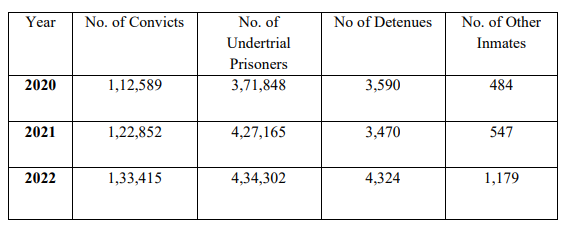
Figure 1: Depicts the total number of undertrial prisoners.
The issue of congestion of jails is significant which the government tried to resolve by introducing modified sections in BNSS and one of them is section 187 which pertains to section 167 of CrPC. Let’s delve deeper into the comparative analysis of the two sections.
Research methodology –
The research methodology in the paper is analytical and critical in nature. The research is grounded on secondary sources that include Code of Criminal Procedure (CrPC) and Bhartiya Nagrik Suraksha Sanhita (BNSS) , official reports by NCRB, scholarly articles, news articles, books such as ‘Ratanlal and Dhirajlal’ and ‘R.V. Kelkar’ and judicial pronouncements to apprehend the changes in the legislation and their influence on the undertrial prisoners. Deep comparative analysis has been made between section 167 of CrPC and section 187 of BNSS. The paper includes a critical analysis to explain the legal as well as social implications of judicial and police custody. The method stands to study legislative intent, judicial trends and policy implications.
Comparative analysis and key differences between Section 167 of CrPC and 187 of BNSS –
Section 167 of CrPC and Section 187 BNSS pertains to procedure when investigation cannot be completed in twenty-four hours. This section of the Research Paper deals with a comparative analysis of both the sections with some modifications in section 187 of BNSS.
Under section 167 of CrPC, when the police fail to complete their investigation within 24 hours (as prescribed by the BNSS) they have to present the accused person before the magistrate. The magistrate has the power to grant the police custody for up to initial 15 days. For cognizable offences the judicial custody is 90 days or more and for non-cognizable offences it is 60 days. In case police fails to file the chargesheet before the magistrate then the accused have the right to default bail under section 167 (2) (a). The bail is granted at the discretion of the magistrate. In short it prescribes the procedure for remand when investigation is incomplete.
Section 187 of BNSS is a replacement of section 167 of CrPC which introduces some vital modifications to improve the entire legal system. Here is the comparative analysis clause-wise:
- 167(1) vs 187(1) – 167(1) states that the accused has to be presented before the magistrate if the police fail to complete the investigation in 24 hours. While 187(1) consist of the same provision with a slight update regarding the electronic submission of the case reports. This allows electronic submission and review of remand reports by police and magistrate respectively. In certain cases, accused may appear via video conferencing instead of being physically presented before the magistrate. This would be helpful in case there is suspicion of the accused absconding from custody and helps prosecution use digital evidence more effectively. This provision has enhanced the efficiency and speed of the criminal proceedings along with the judicial accessibility in remote areas but at the same time it highlights the issue of fair trials because virtual/online hearings may limit adequate interaction between the lawyer and accused. The risk of data manipulation or cyber threats may affect the fairness of the system.
- 167(2) vs 187(2) – Both deals with the duration of initial police custody. There are no specified provisions for the intermittent police custody in section 167 of CrPC. Police custody must be used within first 15 days continuously and not in parts once the accused has been presented before the magistrate and after these 15 days are exhausted, no further police custody is allowed. Under Section 187, BNSS introduced a flexible custodial framework, allowing the intermittent police custody over the longer period, i.e., within 40 days for offences punishable up to 7 years and up to 60 days for offences punishable more than 7 years, which means, police do not have to exhaust this time period altogether as they can request custody at point of time which total up to 15 days. This provides more flexibility to the investigators as they can interrogate the accused as the new evidence are discovered.
- 167(2) (a) vs 187(3) – These deal with the highest time period of judicial custody. The modifications are as follow-
| 167(2) (a) | 187(3) |
| “90 days for offences punishable with death, life imprisonment or imprisonment above 10 years” | “120 days for grave offense (death, life imprisonment or more than 10 years)” |
| “60 days for all other offences” | “90 days for serious offenses and 60 days for lesser offenses” |
- 167(2)(a) vs 187(4) – They discuss default bail, i.e., if police is unable to submit a chargesheet within a time frame of 60 or 90 days (as the case may be) then the accused person has the option for default bail if he/she applies for it. Section 187(4) extends this period of 90 days (as per CrPC) to 120 days for graver offences which extends the time frame for application of default bail. This decreases the chances of failure of completion of the investigation due to time limit and also grants some time for investigation in complex cases like terrorism or economic offences.
- Section 187 (5) to (9) – These are new provisions that were not present there in CrPC which deals with the magistrate’s power to put the investigation to a halt. The magistrate has the power to put a stop to the investigation after 6 months if police are unable to complete the investigation. Magistrate may extend this time frame on reasonable grounds. This decreases the incarceration of the undertrial prisoners encouraging speedy investigation and accountability. This protects the charged individual against harassment as well as lower downs the judicial burden. But these provisions may obstruct the investigation of serious crimes like terrorism or organised crimes which require a longer time frame. Also, the magistrate’s discretionary power for extension may lead to inconsistent closure of the cases. The police may rush to complete the investigation leading to wrongful acquittals or convictions or the defence lawyers may use the legal tactics to delay the cases until 6 months.
While modifications in new section 187 of BNSS improves the judicial process and investigative efficiency, they also have impacted undertrial prisoners and overcrowding of jails. A critical analysis of the extension of default bails, modifications in judicial and police custody and split of police custody over time may result in enhanced overcrowding. Let’s delve into the next section to see that.
Impact of overcrowding on undertrial prisoners-
“By December 2022, India’s prisons were filled to 131% of capacity, up one percentage point from 2021, according to latest data released by the National Crime Records Bureau (NCRB). Further, 119 prisoners died by suicide in 2022, at a rate of 20.8 prisoners per 100,000 prisoners. This is 67% more than India’s suicide rate of 12.4 per 1,00,000 population.” Basic human needs are not met. It has resulted in unhygienic conditions, insufficient medical care, enhanced violence’ risk and severe mental distress.
Prolonged detention of the undertrial prisoners contributes towards the poverty of the nation as imprisonment results in loss of earnings both before conviction and after the release of the person, especially considering the taboo related to the imprisonment. The bail security, legal fees and many more expenses act in furtherance of this poverty. Also, the jurisprudence does not recognise the basic labour rights of the prisoners which results in exploitation of the prisoners.
The prisoners are more vulnerable to the problems related to psychological trauma, drug use and repeated criminal behaviour. The use of drugs inside the prisons ruins the innocent undertrial prisoners harming their physical health and making them dependent on drugs even when they are released back in the normal world. Drugs have a close connection tor crimes. Therefore, it would not be wrong to conclude that when these undertrial prisoners are released back with the addiction of drugs and influence of the bad company, they had in prisons for a long time, changing them and may lead them towards the path of crimes. Apart from that, the mere experience of being in detention causes stress and depression. The tag of “accused” stays with them. Such consequences and effects are more prominent or more pronounced for juveniles, first time offenders and women. This makes the person lose their educational and employment opportunities for lifetime. Such prisoners should be provided with counseling to re-instil the hope and enthusiasm to start again or resume their lives as before. The healthcare system is an aspect where the government needs to work on and this has been pointed out by Justice Seth.
One of the reasons for the overcrowding of jails is the inefficient performance of the police. Delay in the police investigation and delay in filing of the chargesheets prolongs detention. This is a serious issue especially in Assam where eighty percent of the cases are still pending and fifty nine percent of them are awaiting police investigation. The reason for this is shortage of police officers and a high level of corruption in the police force. This often leads to superfluous arrests. Unnecessary arrests also often occur in the cases where police just make the arrests to show that they are actually making some progress in the case. This usually happens in high-profile cases. Such unnecessary and superfluous arrest constitute about sixty percent of the arrests.
A fundamental question is brought up by this crisis: does BNSS improve congestion by implementing procedural improvements, or does it make matters worse? This problem is examined critically in the section that follows.
Critical analysis – Does BNSS resolve overcrowding issues or worsen the problem?
Section 187 (1) discusses the electronic submission and review of reports by police and magistrates respectively. This removes the barrier of the inefficiency of carrying the physical file from one place to other, thus escalating the speed of the remand process and leads to a better sync between various departments of the investigative agency which in turn hasten the chargesheet filing. Since the reports are submitted instantly via electronic medium, bail processing can be quick.
Under section 187(2), police can apply for custody in splits. Secondly, the court may not grant bail due to the leftover police custody time period. This adds on to the undertrial prisoners’ incarceration.
Due to section 187(3), the police fail to finish investigation and file chargesheet on time leading to increased undertrial prisoners and their prolonged imprisonment. To resolve this section 167 of CrPC was introduced which specifies the fixed time period of 60 days or maximum 90 days as the case may be which has been now modified to 90 days or 120 days respectively as per the case. This has increased the pre-trial detention period and the accused has to wait for 30 days more before applying for default bail. The provision affects the financially weaker and marginalised section of society who lack legal awareness of legal representation and are not aware about default bail. “There is a 33% increment in crowd of the prisons because of the extension from 90 to 120 days.”
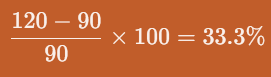
According to section 187(4), the time frame to apply for the default bail has been extended by 30 days. More under trials in detention implies a greater number of pending cases which in turn leads to overburdening of the courts.
Section 187 (5) – (9) has a positive impact on congestion of the prisons as it coerces police and makes them responsible to complete the investigation on time leading to faster case resolution.
Methods and suggestions –
In order to address this grave issue, I suggest the following;
- The congestion of jails due to intermittent police custody can be controlled if the magistrate reviews on a regular basis that custody periods are not used unreasonably and do not lead to extended detention. I strongly suggest compulsory hearings after every 15 days to keep a check on misuse.
- The legal system needs to focus on other alternatives to detention like reforms for bail, community-based services, open or semi-open facilities or reporting conditions. These may be helpful in easing out the judicial backlog and extensive incarceration for not so serious crimes .
- Protecting the fundamental rights as per article 20, 21 and 22 of the accused may prevent him/her from unreasonable detention resulting in decrease of the overcrowding.
- In my opinion the most important and crucial recommendation should be to expand and modernize the infrastructure of the prisons which may lead to the decongestion of the jails.
- Mulla Committee has initially presented an idea to monitor the undertrial review committees and intervene when the State authorities deem fit. This recommendation has also been proposed by the Law Commission reports. The undertrial review committees will carry out the collaboration of all the significant parties to speed up the trial and reduce the number of under trial prisoners by releasing them as soon as possible. These under trial review committees will deter the police officers from making unnecessary arrests.
I believe that to implement these reforms, a structured plan is required. Instructions should be laid down by the judiciary or government making it compulsory to review the remands at least once in two weeks. Paralegals and volunteers must be trained by the State Legal Service Authorities, to assist the undertrial prisoners to apply for the bail and attain the same. A digital case tracking portal can be built to establish coordination between the police, magistrate and officers working in the prisons. All this requires a combination of funding and a sync between the police officers, prison officials and magistrates.
Conclusion –
In my opinion, disenfranchised people are disproportionately affected by the 120-day court custody extension, sporadic police detention, and delayed default bail, which traps them in protracted imprisonment because of systematic delays and a lack of legal help. In addition to taxing resources and compromising the right to a prompt trial, this exacerbates jail overpopulation. Stronger judicial monitoring, speedier trials, and significant bail changes are necessary to protect fundamental rights and avoid extended incarceration in order to guarantee justice.
In my opinion the modified section fails to resolve the problem of congestion of jails and in fact, some provisions worsen the condition.
“The paper sheds light on the concerning prevalence of undertrial prisoners in Indian jails, constituting 75.8% of the total prison population. This reveals systemic inefficiencies, including indiscriminate arrests, a broken bail system and persistence of these trends contributes to prolonged detention periods, delays in the legal process, and exacerbates prison overcrowding. Urgent reforms are necessary to address these issues, including classification of prisoners, improvements in legal aid oversight, and bail system revisions. The paper emphasizes the need for immediate action to ensure the protection of human rights and fairness within the criminal justice system.”
Name – Khushi Sharma
College name – O.P. Jindal Global University